

Thousands of former service members apply for compensation each year after completing their military service, yet many wonder why some VA disability claims succeed and others struggle to gain approval. Some veterans receive an approval letter within a few short months, while others spend years fighting the bureaucratic system. The stark difference between a rapid approval and a frustrating rejection often comes down to preparation and evidence.
You might wonder why a seemingly obvious physical injury gets rejected by the Department of Veterans Affairs. Often, the answer isnât about the severity of the injury itself or how much pain you experience. Instead, success depends entirely on how clearly you can connect your current health conditions to your time in uniform.
Many veterans experience significant financial strain while waiting for a final decision on their pending application. Understanding the mechanics of the va disability claim process gives you a significant advantage over those who apply blindly. This comprehensive guide breaks down the critical factors that separate a successful claim from those that struggle.
A successful va disability claim requires three distinct pieces of proof to satisfy the government reviewers. First, you must show a current, diagnosed physical or mental health condition using proper medical documentation. Second, you must provide proof of an event, injury, or illness that occurred during your active duty timeframe.
Finally, you need compelling nexus evidence linking your current medical diagnosis directly to that specific in-service event. Missing any single component almost guarantees a rejection from the veterans service representative reviewing your file. Reviewers follow strict legal guidelines rather than using personal judgment about your specific medical situation.
They rely entirely on the official documentation submitted within your application packet to make their rating determination. Therefore, you must present a clear, undeniable narrative supported by objective facts and professional medical opinions. Providing a complete picture helps the reviewer approve your disability claim without requiring additional hearings.
Establishing Direct Service Connection
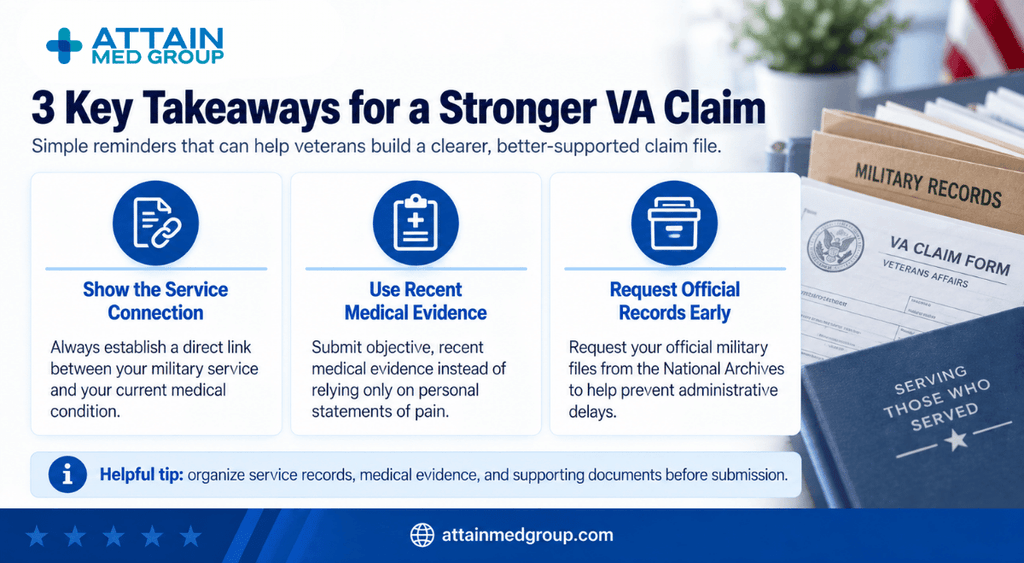
Proving a direct service connection forms the absolute foundation of most successful compensation applications. This means demonstrating that an incident during active duty directly caused your current medical problem. For example, documented hearing loss or a traumatic brain injury after artillery exposure provides a straightforward path to an approval.
You must obtain your complete service record to verify the incident occurred exactly as you described. Relying on memory without written documentation often leads to unnecessary delays or outright rejections. The government requires objective proof that the event happened during your active duty timeframe.
Without this foundational proof, even the most severe health issues will not qualify for monthly compensation. You can request your official files directly from the National Archives to begin building your case. Having these documents in hand prevents the government from denying your request based on missing military history.
Providing Strong Medical Evidence
Your current diagnosis must come from a qualified healthcare professional using accepted diagnostic testing methods. Providing strong medical evidence means submitting recent clinic notes, MRI results, or formal psychological evaluations. A simple letter from a doctor stating you feel pain does not meet the strict government standard.
Evaluators look for specific diagnostic codes and detailed symptom descriptions that match the federal rating criteria. They want to see exactly how the physical condition impacts your daily life and employment capabilities. Veterans receive accurate disability ratings only when their medical files paint a comprehensive, factual picture.
You should continue seeking treatment and building your medical file throughout the entire application timeline. Submitting consistent, ongoing treatment records proves that your condition remains chronic and requires continuous medical intervention. This steady stream of strong medical documentation makes your case incredibly difficult for a reviewer to dismiss.
Filing a VA Disability Claim: Understanding Why Common VA Claim Applications Face Rejection
Even common va disability claims frequently encounter frustrating roadblocks during the initial administrative review phase. Tinnitus and musculoskeletal issues rank among the most frequently claimed conditions by former military personnel. However, these common va claims often lack the necessary detail to earn a fast approval.
Many applicants mistakenly assume the government will automatically connect obvious injuries to their combat deployment. Evaluators process thousands of files daily and cannot make assumptions about missing information in your folder. You must explicitly state and prove how your military duties caused the specific injury you suffer from today.
A poorly constructed application forces the reviewer to deny the request based on a simple lack of proof. Understanding the requirements for a common va disability helps you avoid these frequent administrative pitfalls. Taking the time to build a thorough package prevents you from falling into these easily avoidable traps.
Missing or Incomplete Service Records
Many older veterans discover their service records were lost or destroyed decades ago due to unforeseen disasters. A massive fire at the National Personnel Records Center in 1973 wiped out millions of official military files. When official documents disappear, proving an in-service event becomes a highly difficult claim to win.
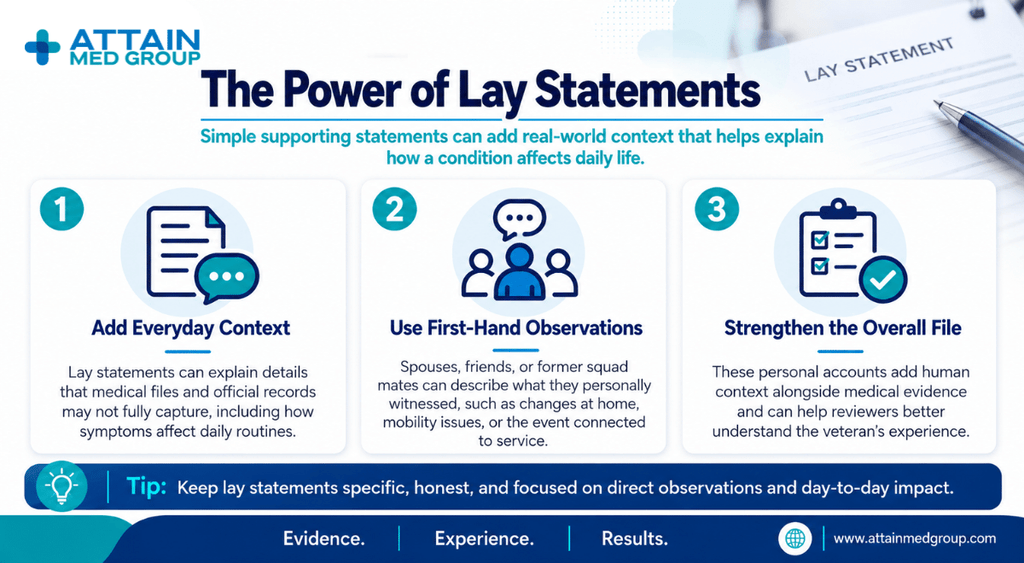
You must reconstruct the historical timeline using alternative sources like unit logs, photographs, or buddy statements. Gathering this secondary proof requires substantial effort and persistent research on your part to locate old contacts. Do not let missing official documents stop you from pursuing the vital compensation you earned.
Alternative evidence carries significant weight if presented clearly and logically to the federal review board. The government provides specific pathways to establish facts when official repositories fail to produce your files. You simply have to work harder to verify your military history through these accepted secondary channels.
The Critical Role of a Nexus Letter
A nexus letter serves as the crucial bridge between your current medical diagnosis and your past service. This document is a detailed medical opinion written by an independent, qualified healthcare provider. The physician must state that your condition is “at least as likely as not” caused by military service.
Many disability claims fail simply because the applicant omitted this highly specific medical statement. Department physicians sometimes provide favorable assessments, but you cannot always rely entirely on their government examinations. Securing an independent letter from a private specialist drastically improves your chances of building a successful va claim.
The doctor must review your entire file before drafting this highly specific medical document. They should reference established medical literature to support their conclusion and strengthen your overall argument. You can learn more about formatting these documents properly through the VA’s official evidence guidelines.
Pro Tip: Always request your complete C-File (Claims File) before filing an appeal. This file contains every document the government used to make their decision, allowing you to spot exactly what evidence is missing.
Strategies for a VA Disability Claim: Managing a Difficult Claim: Mental Health and Secondary Conditions

Some health problems present distinct challenges because they lack obvious physical markers or immediate symptoms. A complex disability claim often involves psychological trauma or physical conditions that developed years after discharge. These cases require a more sophisticated approach to gathering proof and presenting your compelling narrative.
You must demonstrate a clear chain of events connecting the distant past to your current physical symptoms. The burden of proof remains entirely on the applicant to establish these complex medical relationships. Evaluators scrutinize these specific files carefully to prevent fraudulent or unrelated compensation awards from being issued.
Documenting Mental Health Issues
Mental health issues like post-traumatic stress disorder require highly specific diagnostic criteria to warrant an approval. You must identify a verifiable stressor event that triggered the psychological trauma during your actual deployment. The government looks for combat awards, incident reports, or police records to confirm the stressor occurred.
A qualified psychiatrist or psychologist must then formally diagnose the stress disorder using current manual guidelines. They must also explicitly link the current psychological state directly to the verified in-service event. Many veterans struggle to talk about these traumatic experiences, which unfortunately leads to incomplete documentation.
You must speak openly and honestly with your doctors to build a complete and accurate medical profile. Hiding your symptoms from your healthcare provider only damages your chances of receiving appropriate compensation. Proper documentation of psychological trauma remains the most critical factor in securing these specific va disability benefits.
Proving Secondary Conditions like Sleep Apnea
Secondary conditions develop as a direct physiological result of an already service-connected physical disability. For instance, severe knee pain might cause weight gain, which subsequently leads to obstructive sleep apnea. You must prove the primary condition directly caused or significantly aggravated the new health problem.
This requires a strong medical opinion explaining the complex physiological connection between the two distinct ailments. The doctor must cite peer-reviewed medical literature to support their clinical conclusion regarding your health. Many veterans successfully increase their overall disability rating by formally claiming these related secondary ailments.
However, you must establish the medical link with the same rigorous proof required for a primary injury. Assuming the government will automatically connect the two conditions often results in an unexpected denial letter. Detailed medical evidence remains the only way to successfully link a secondary illness to your primary rating.
Evidence for Your VA Disability Claim: How Veterans Build Strong VA Claims
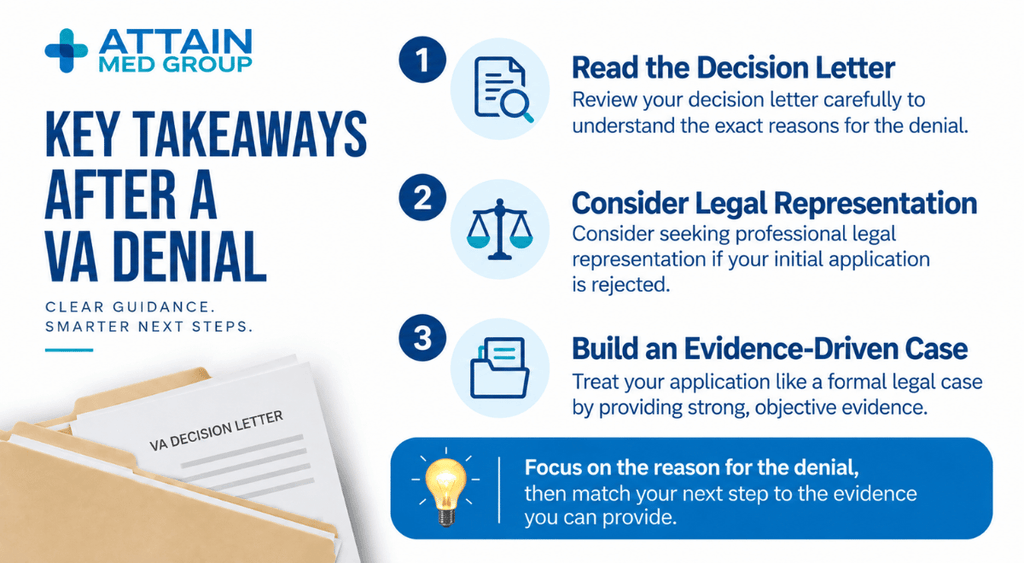
Careful preparation and organization separate an approved va claim from a hastily rejected application. Successful applicants treat the process like building a formal legal case rather than filling out a simple form. They gather every relevant document, organize the files logically, and highlight the most important medical facts.
You should never assume the government will track down missing hospital records on your behalf. Taking proactive control of your application significantly reduces the total processing time required for a decision. Many successful veterans seek guidance from accredited representatives or legal professionals early in the filing process.
They understand that presenting a polished, complete package yields the best possible outcome for their family. To build strong applications, you must anticipate what the reviewer needs before they even ask for it. This proactive strategy prevents the government from delaying your file to request additional information.
Seeking Independent Medical Opinions
Relying solely on government doctors for medical opinions often puts applicants at a significant disadvantage. Independent specialists can spend more time reviewing your comprehensive history and conducting thorough physical exams. These private physicians can write detailed reports that directly address the government’s specific rating criteria.
You might need to pay out of pocket for these independent assessments, but the investment often pays off. A highly detailed private medical report carries immense weight during the formal evaluation process. Review boards must consider all medical documentation submitted, regardless of whether it comes from a private doctor.
This strategic approach helps attorneys build compelling cases for veterans facing initial application rejections. By securing outside expert testimony, you remove the government’s monopoly on evaluating your physical condition. This tactic frequently turns a struggling application into a highly successful disability claim.
️ Warning: Never miss a scheduled Compensation and Pension (C&P) exam. Failing to attend this mandatory appointment will almost certainly result in an automatic denial of your application.
Appealing a VA Disability Claim: What to Do When Facing Denied Claims
Receiving a rejection letter feels incredibly discouraging after months of patiently waiting and hoping for relief. However, denied claims represent just the beginning of the legal appeals process for many injured veterans. The government frequently makes administrative errors in their initial assessments or overlooks crucial pieces of evidence.
You have specific legal rights to challenge their decision through several different formal appeal lanes. Taking immediate and calculated action preserves your original filing date and your potential retroactive back pay. You must carefully analyze the denial packet to understand exactly what the reviewer found lacking.
This analytical approach transforms a frustrating rejection into a clear roadmap for ultimate administrative success. Understanding the specific reasons for denial allows you to gather the exact proof needed to win. Taking emotional reactions out of the process helps you focus on the objective requirements for approval.
Reviewing the Decision Letter

Your official decision letter contains the exact reasons why the reviewer rejected your compensation application. It explicitly lists the evidence they considered and the specific legal criteria you failed to meet. You must read this document thoroughly to identify the missing link in your va disability case.
Perhaps they conceded the in-service event occurred but found your current medical diagnosis lacking severity. Or maybe they acknowledged your physical injury but could not find a nexus connecting it to service. Once you identify the specific deficiency, you can gather the exact medical proof needed to fix it.
Blindly submitting an appeal without addressing the stated reasons for denial wastes incredibly valuable time. You must provide new and relevant evidence that specifically attacks the rationale used to deny your claim. This targeted approach forces the reviewer to reevaluate their initial stance based on updated facts.
When to Seek a Free Consultation
Complex administrative appeals often require professional legal assistance to manage successfully and efficiently. Many accredited disability lawyers offer a free consultation to review your rejection letter and medical file. These legal experts understand the intricate federal frameworks that govern all veterans affairs compensation programs.
They can quickly identify procedural errors the government made during the initial review of your application. If your condition caused significant impairment but was denied, legal representation becomes highly valuable. They generally operate on contingency, meaning they only collect a fee if you win your appeal.
This arrangement allows you to secure top-tier legal strategy without assuming any upfront financial risk. Having an experienced professional guide your appeal prevents you from making costly procedural mistakes. They know exactly how to frame your arguments to maximize your potential disability rating.
Final Steps for Your VA Disability Claim: Securing the VA Disability Benefits You Deserve
The path to securing the disability benefits you deserve requires patience, persistence, and careful organization of your records. You cannot control how fast the government processes your paperwork or schedules your required medical exams. However, you maintain complete control over the quality and volume of medical evidence you submit.
Treating your application as a serious legal filing drastically improves your odds of a favorable outcome. Do not let initial administrative setbacks discourage you from pursuing the financial compensation you rightfully earned. By understanding the core requirements and common pitfalls, you position yourself for long-term success.
A well-prepared medical file speaks for itself and forces the review board to acknowledge your sacrifice. Submitting perfect disability claims requires effort, but the resulting financial security changes lives. Stay focused, gather your evidence, and claim the va disability compensation you deserve.