


Service connection, rating evidence, and secondary sleep apnea claims
Can Sinusitis or Rhinitis Support a VA Disability Claim?
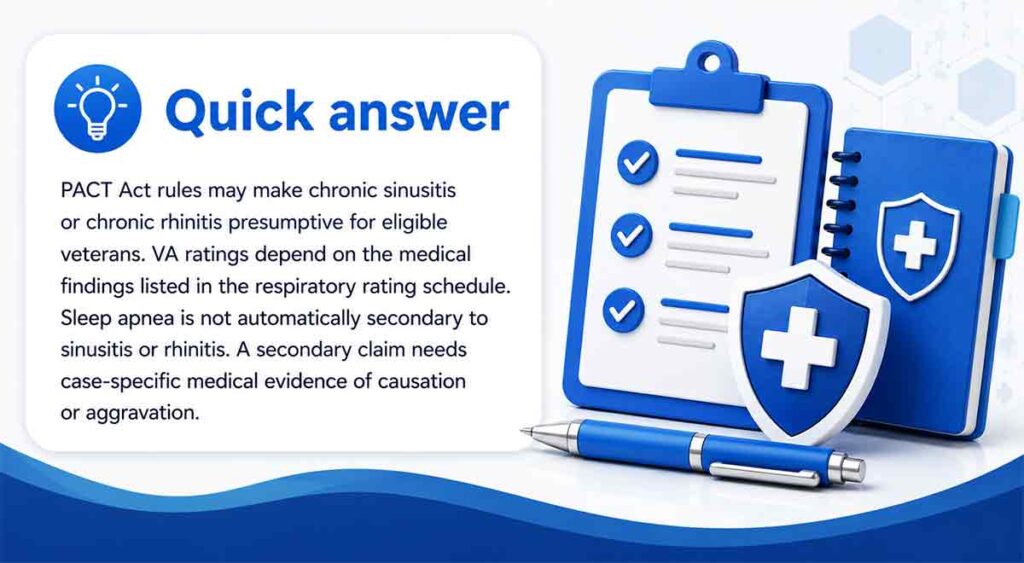
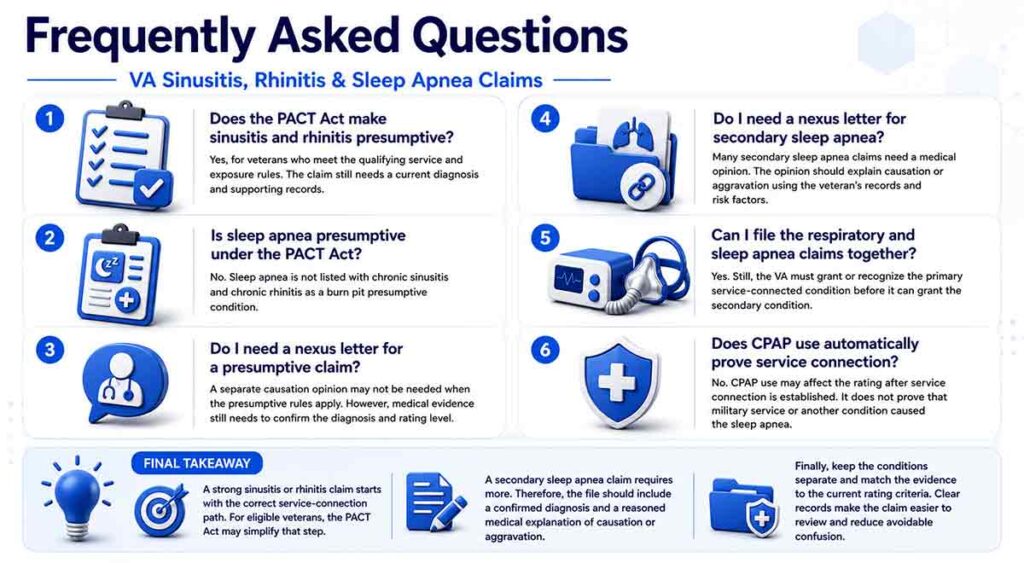
Yes. Chronic sinusitis and chronic rhinitis may qualify for VA disability compensation when the evidence supports service connection. For some veterans, the PACT Act creates a presumptive path based on qualifying toxic exposure. Other veterans may use direct or secondary service connection.
However, the VA does not treat sinusitis, rhinitis, and sleep apnea as the same condition. Each diagnosis needs its own evidence and rating review. Therefore, a strong claim should explain the diagnosis, the service link, and the daily impact of each condition.
Three Ways to Establish Service Connection
The correct path depends on your service history and medical record. In addition, the same veteran may qualify under more than one theory.
1. Presumptive Service Connection Under the PACT Act
The PACT Act added chronic sinusitis and chronic rhinitis to the list of burn pit and toxic exposure presumptive conditions.
As a result, eligible veterans may not need a separate medical opinion proving that the exposure caused the condition. They still need a current diagnosis and qualifying service.
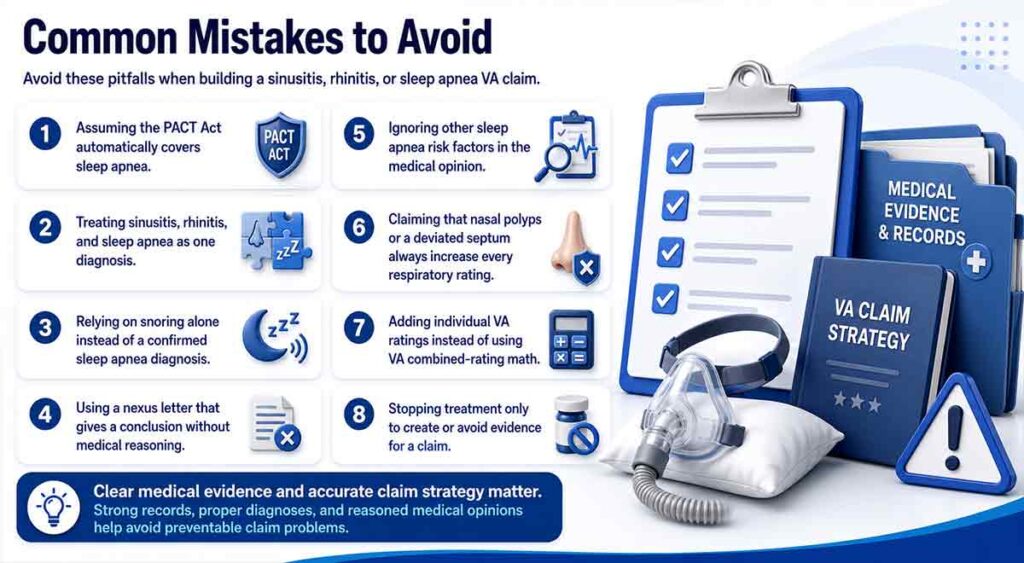
However, sleep apnea is not on the same presumptive list. A sleep apnea claim needs another valid service-connection path.
Official VA guidance: PACT Act and burn pit presumptive conditions
2. Direct Service Connection
Direct service connection may apply when symptoms began during service or when a documented exposure caused the condition.
For example, service treatment records may show repeated sinus infections, nasal symptoms, or treatment after an exposure event.
Therefore, a direct claim usually needs a current diagnosis, an in-service event or illness, and a medical link between them.
3. Secondary Service Connection
Secondary service connection applies when a service-connected condition causes or worsens another condition.
For example, a veteran may claim sleep apnea as secondary to service-connected rhinitis. Still, the link is not automatic.
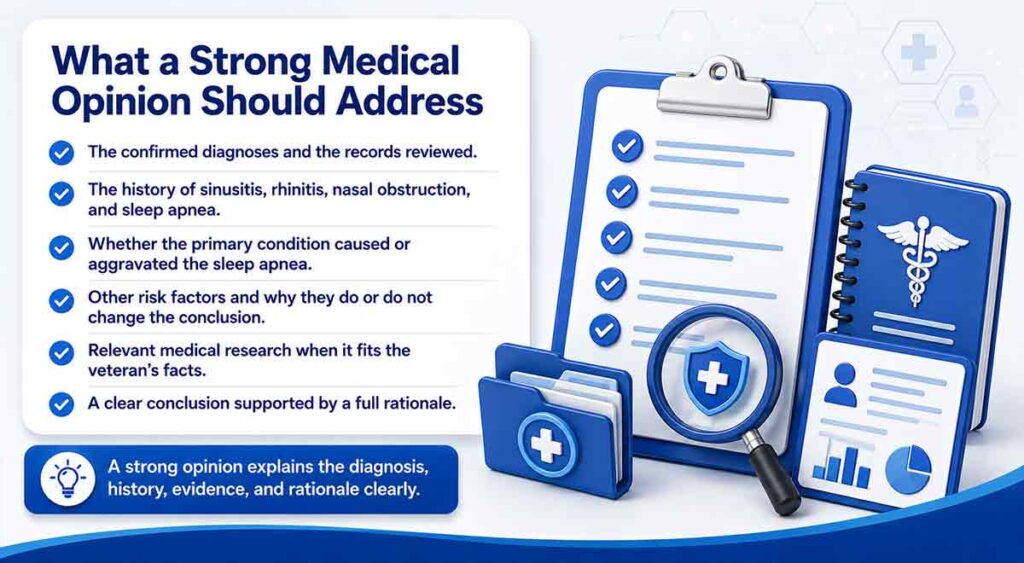
The medical opinion must explain why the veteran’s rhinitis caused or aggravated the sleep apnea. It should also address other likely risk factors.
If aggravation is claimed, the evidence should describe the sleep apnea before and after the worsening when possible.
Official rule: 38 C.F.R. § 3.310 — Secondary service connection
How the VA Rates Sinusitis and Rhinitis
Meanwhile, the VA uses separate diagnostic codes for chronic sinusitis, allergic or vasomotor rhinitis, and traumatic septum deviation.
Therefore, the diagnosis alone does not set the percentage. The rating depends on the findings and symptoms in the record.
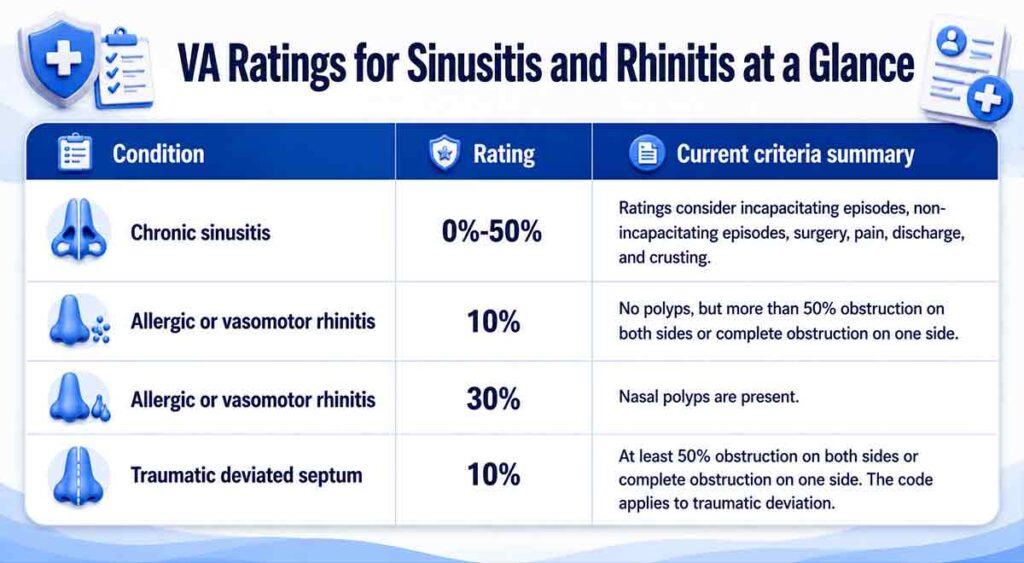
Current rating schedule: 38 C.F.R. § 4.97 — Respiratory system
Evidence for a Sinusitis or Rhinitis Claim
A complete claim should show both the diagnosis and the level of impairment. In addition, the records should match the service-connection theory.
Medical Records and Testing
For example, useful records may include ENT visits, imaging, allergy testing, prescriptions, antibiotic history, and surgery reports. Also, ask the provider to document nasal obstruction, polyps, headaches, facial pain, discharge, crusting, and the number of episodes. For sinusitis, records should state whether a doctor prescribed prolonged antibiotic treatment. They should also note any surgery and ongoing symptoms.
Exposure and Service Records
For a direct or presumptive claim, include records that show qualifying service or the relevant exposure history. For example, personnel records may confirm deployment dates and locations. A personal statement can explain when symptoms first appeared.
Lay Statements
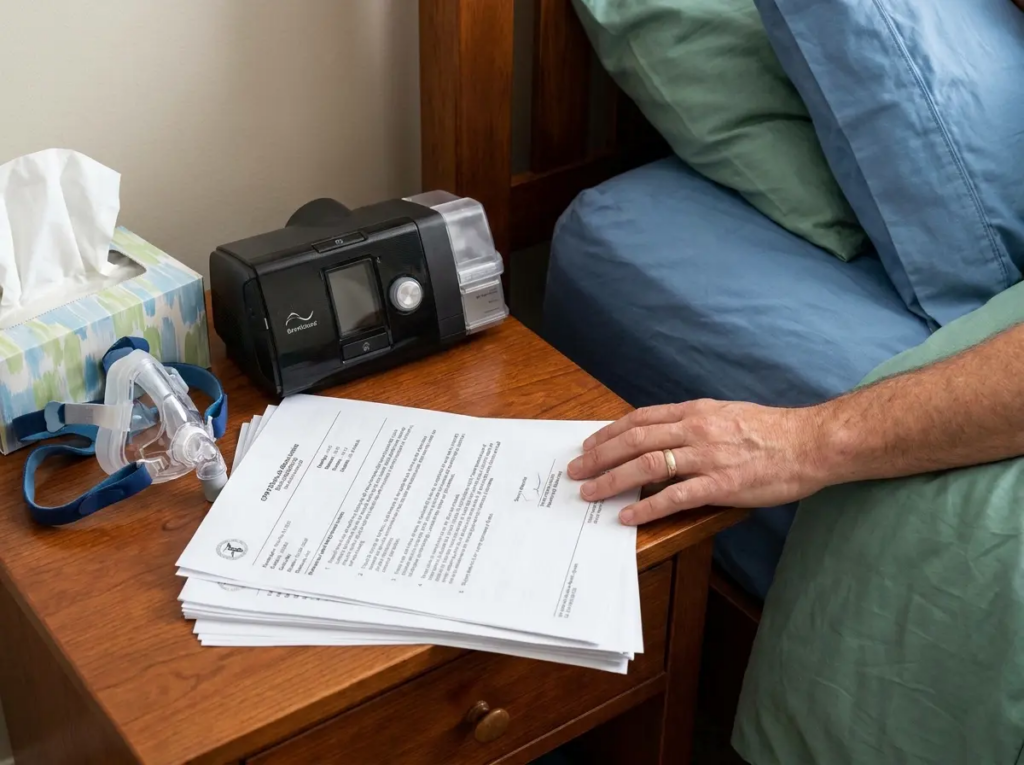
Also, a veteran can describe symptoms that are easy to observe. Family members or coworkers may describe breathing trouble, missed work, or frequent infections. However, lay statements should not offer a medical diagnosis or claim that one disease caused another. A qualified clinician must address medical causation.
Related AMG article: VA Disability for Allergic Rhinitis: What Evidence Do You Need?
Can Sleep Apnea Be Secondary to Rhinitis or Sinusitis?
It can be, but only when the evidence supports the link in the individual case. Obstructive sleep apnea has several possible causes and risk factors. Therefore, a useful medical opinion should review the full history instead of relying on a general statement.
Therefore, the opinion may support causation, aggravation, or neither. The clinician should explain the conclusion with clear medical reasoning.
Causation vs. Aggravation
Causation means the service-connected condition produced the sleep apnea. Aggravation means it made existing sleep apnea worse beyond its natural course. These are different questions. Therefore, the medical opinion should state which theory applies and explain why.
Why a Sleep Study Matters
For example, a sleep study is usually central to confirming obstructive sleep apnea. It can also show the type and severity of sleep-disordered breathing. In addition, treatment records may show CPAP use, daytime sleepiness, and follow-up care. These records help the VA evaluate the current condition.
Related AMG article: Connecting Sleep Apnea to Service: Why a Nexus Letter Matters
Current VA Sleep Apnea Rating Criteria
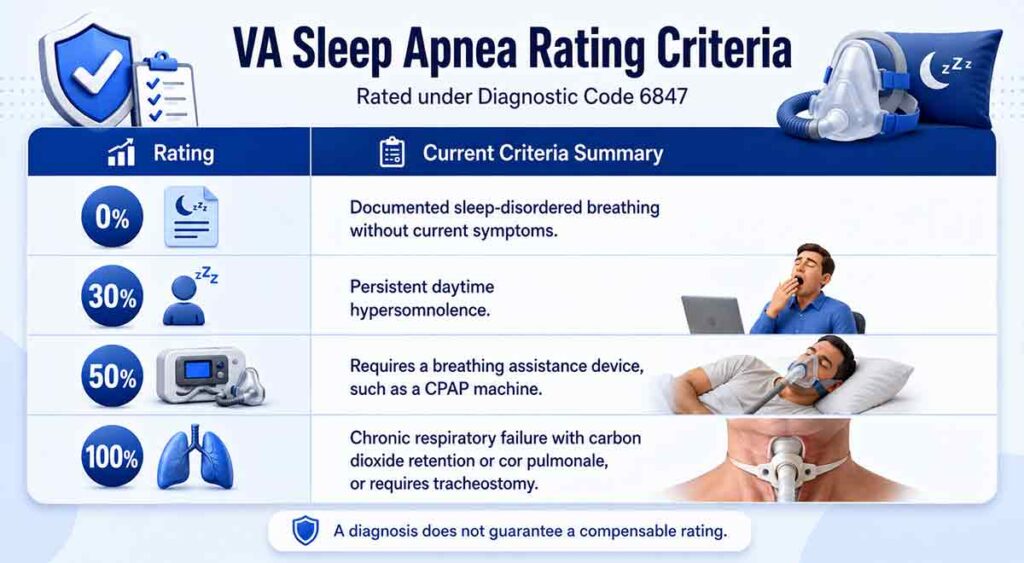
The current schedule rates sleep apnea under Diagnostic Code 6847. However, a diagnosis does not guarantee a compensable rating.
Also, VA combines multiple ratings instead of adding them with simple arithmetic. As a result, a new rating may not increase the combined percentage by the same number of points.
VA combined ratings guide: How VA calculates combined disability ratings
How to File the Claim
First, you can file a new or secondary disability claim online or with VA Form 21-526EZ.
You may file a primary respiratory claim and a secondary sleep apnea claim together. However, the VA must establish the primary condition before it can grant secondary service connection.
Step 1: Identify Each Condition
Next, list sinusitis, rhinitis, and sleep apnea as separate conditions. Also, state the service-connection theory for each one.
Step 2: Gather the Evidence
- Current diagnoses and treatment records.
- Service and exposure records.
- ENT findings, imaging, and medication history.
- Sleep study and CPAP records when relevant.
- A medical opinion for a direct or secondary link when needed.
- Personal and witness statements about observable symptoms.
Step 3: Submit the Claim
Then, file online or use the current VA Form 21-526EZ. Also, keep a copy of the full submission and every attachment.
Official filing page: File a disability claim with VA Form 21-526EZ
Step 4: Attend Any Scheduled Exam
The VA may schedule a C&P exam or request a records review. Therefore, watch for calls, mail, email, and contractor notices.
If you cannot attend, contact the VA or contractor as soon as possible. Missing an exam without good cause can harm the claim.
During the exam, describe symptoms and limits honestly. Also, explain flare-ups and the effect on sleep, work, and daily tasks.
How to Keep the Record Clear Over Time
Continue treatment because it supports your health and creates an accurate medical history. However, treatment alone does not guarantee a rating or prevent every future review. Keep copies of sleep studies, ENT reports, medication lists, rating decisions, and CPAP records. In addition, update the VA when your address or phone number changes.
If symptoms worsen, ask your provider to record the change. Then review whether the evidence supports an increased-rating claim or another condition.
Related AMG article: What Is a Nexus Letter for VA Disability?

Official References