


What an ACE review means, how it works, and how to prepare your evidence
No In-Person C&P Exam? Do Not Panic
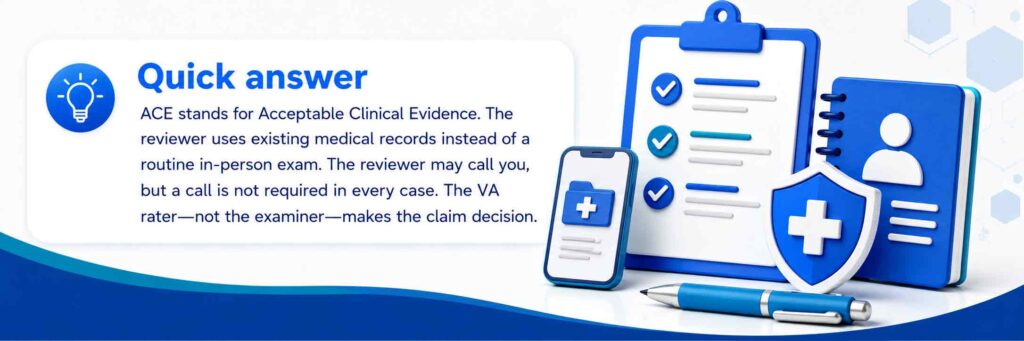
A VA disability claim does not always require an in-person Compensation and Pension exam. The VA may use an Acceptable Clinical Evidence review instead. An ACE review lets a clinician study the records already in your claim file. The clinician may complete a Disability Benefits Questionnaire without meeting you in person.
The reviewer may also call you for details. However, some ACE reviews rely only on the written record. An ACE review is still a formal claim exam. It can affect service connection, the disability rating, or both.
What is a VA ACE Exam?
The ACE process gives the VA another way to obtain medical findings. It uses the clinical evidence already in the record. A qualified clinician reviews documents such as service treatment records, VA records, private records, test results, and prior examinations. The clinician then answers the medical questions requested by the VA.
The examiner may complete a DBQ or write a medical opinion. The report then returns to the Veterans Benefits Administration for review.
Official VA explanation: ACE Eliminates Need for Some In-Person Disability Exams
Related AMG guide: No C&P Exam From VA: What It Means and What to Do Next
How the ACE Review Works

1. The VA Reviews Your Claim File
A VA employee first decides whether more medical information is needed. If the file may support a records-based review, the VA can request an ACE examination.
2. A Clinician Studies the Evidence
The clinician reviews the records available for the requested condition. The review should address the questions listed in the exam request. The examiner may look for a current diagnosis, symptom history, treatment details, test results, and functional limits. A nexus question may also require a medical opinion about service connection.
3. The Examiner May Contact You
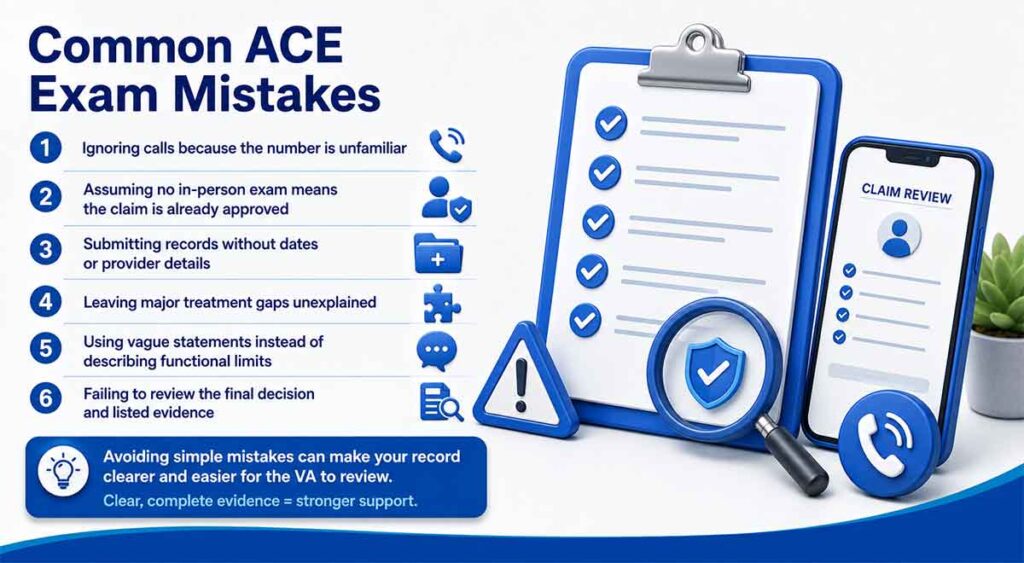
Some ACE reviews include a phone interview. The clinician may ask about symptoms, treatment, flare-ups, or the condition’s effect on daily life. Keep your phone available and answer unknown calls near the scheduled review date. Contractors may call from a number you do not recognize.
4. The VA Uses the Report
The clinician sends the report to the VA. A claims processor then considers it with the rest of the evidence. The examiner does not approve or deny the claim. The final decision belongs to the VA rating team.
Official VA claim-exam guide: VA Claim Exam (C&P Exam)
Why the VA May Use an ACE Review
The VA may choose ACE when the existing evidence can answer the medical questions. This can avoid a duplicate appointment. The process may also reduce travel and scheduling delays. That can help veterans who live far from an exam site or have mobility limits. Still, ACE does not guarantee a faster decision. It also does not guarantee a favorable result. The quality and completeness of the record still matter.
When an In-Person Exam May Still Be Needed
Some medical questions require direct observation or physical measurements. In those cases, the VA may schedule an in-person or approved telehealth exam. For example, the examiner may need to measure motion, test strength, examine a scar, or assess current mental health symptoms. The VA decides which exam format fits the claim.
An ACE request can also change to an in-person exam if the reviewer finds missing or conflicting information.
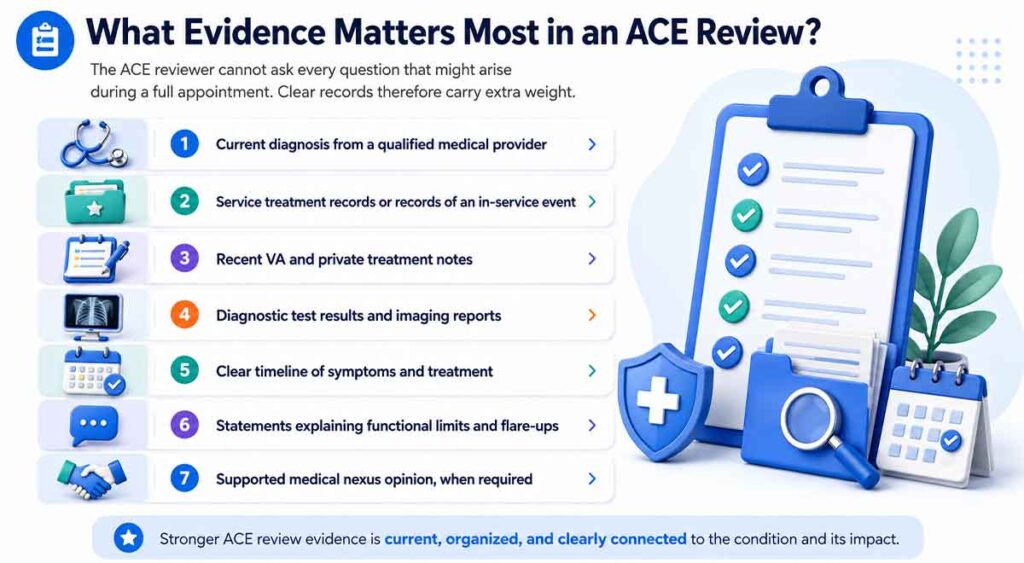
VA evidence guidance: Evidence Needed for Your Disability Claim
Related AMG resource: The Timeline of a Strong VA Claim
The Role of the DBQ
A Disability Benefits Questionnaire organizes medical findings around VA rating criteria. The form helps the reviewer document the facts needed for a claim decision. During an ACE review, the clinician may complete the DBQ from the existing record. A private provider may also complete a public DBQ when appropriate.
A DBQ does not guarantee approval. It must remain accurate, complete, and consistent with the medical record.
Official DBQ page: Public Disability Benefits Questionnaires
The Medical Nexus in an ACE Review
Some claims need a medical opinion that links the current condition to military service. This link is often called a medical nexus. A nexus opinion should identify the records reviewed. It should also explain the medical reasoning behind the conclusion.
For a secondary claim, the opinion should address whether a service-connected condition caused or aggravated the new condition. A bare conclusion may not answer the VA’s question.
Related AMG resource: What Is a Nexus Letter for VA Disability?
How to Prepare for an ACE Exam

Check Your Claim Status
Review your claim status on VA.gov. Look for an exam request or contractor assignment.
Confirm Your Contact Information
Make sure the VA and the exam contractor have your current phone number, email address, and mailing address.
Review the Evidence Already Submitted
Check whether the file includes your recent records, test results, and relevant specialist notes. Do not assume that every private record reached the VA.
Prepare for a Possible Phone Call
Keep a short symptom summary nearby. Include the date symptoms began, current treatment, flare-up frequency, and daily limits.
Answer honestly and stay specific. Do not exaggerate symptoms, but do not minimize them either.
Upload Missing Evidence Promptly
You can continue to submit supporting evidence while the claim remains open. Use VA.gov or follow the instructions in the exam notice.
Upload evidence: Upload Evidence to Support Your Disability Claim
What If the ACE Opinion Is Incomplete?
Read the decision letter and identify the exact reason for the outcome. The letter should list the evidence the VA considered.
If the decision relied on missing facts or an inaccurate exam, compare the report with your treatment records. Note clear errors, omitted history, or unsupported conclusions.
Your next step depends on the problem. A Higher-Level Review uses the existing record and does not accept new evidence. A Supplemental Claim lets you add new and relevant evidence.
Official review options: Higher-Level Reviews | Supplemental Claims
Related AMG guide: How to Challenge a Bad C&P Exam

Official References