


How to track flare-ups, daily limits, and treatment details without overcomplicating the process
Why a VA Symptom Journal Matters
A medical record shows diagnoses, tests, and treatment. It may not show what happens between appointments. A symptom journal fills that gap. It records how often symptoms appear, how long they last, and what they stop you from doing.
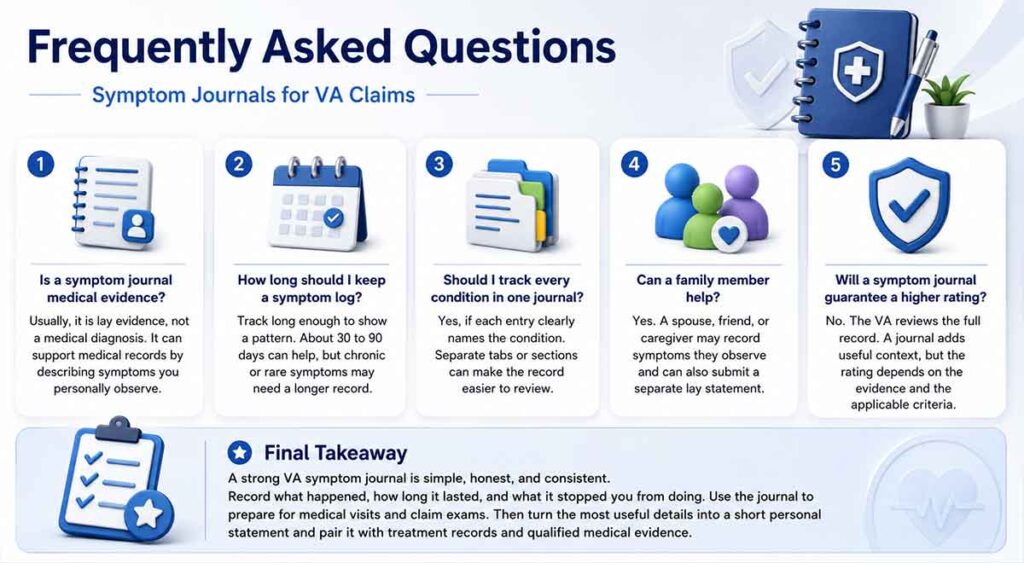
The VA reviews medical records and supporting statements when it decides a disability claim. Your journal can help you prepare a clear personal statement. It can also help a doctor understand patterns that may not appear during one short visit. A journal does not replace medical evidence. It works best when it matches your treatment records, medication history, and exam findings.

What a Symptom Journal Can Show
A useful journal shows a pattern over time. It gives context to symptoms that change from day to day. For example, a migraine may not occur during a clinic visit. A back condition may look mild during a short exam. Anxiety may be hard to explain when you feel rushed.
Your journal can record these missing details. It can show missed work, poor sleep, medication side effects, and help you remember exact examples.
What a Journal Cannot Prove by Itself
A symptom log cannot diagnose a medical condition. It also cannot provide the medical link between a condition and military service. A qualified provider must address medical questions. These may include diagnosis, cause, aggravation, and the meaning of test results.
Related AMG resource: The Role of Medical Evidence in a VA Disability Claim

Describe Function, Not Just Pain
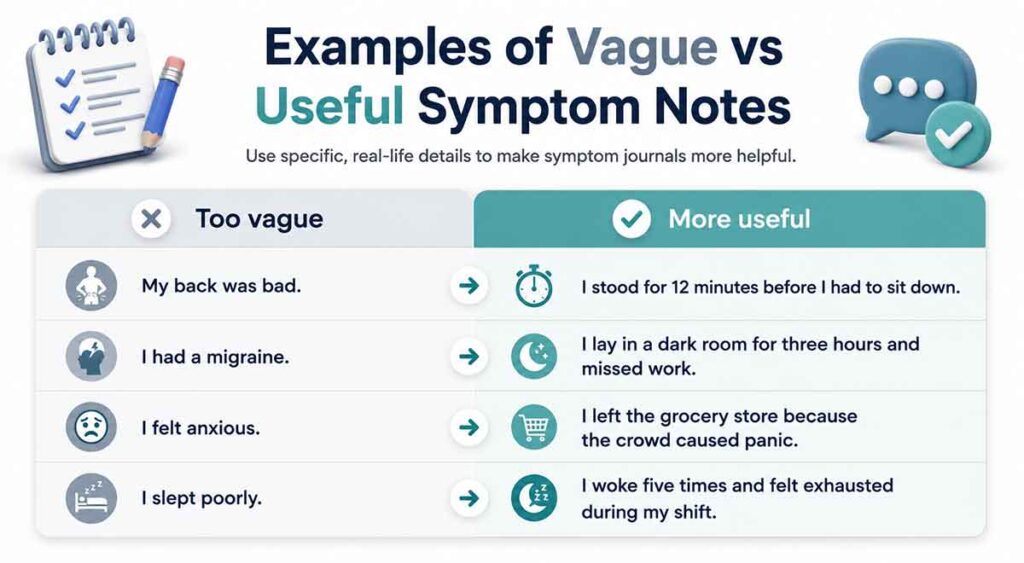
Do not stop at “my knee hurt” or “I had anxiety.” Explain what changed because of the symptom. Write facts that another person could understand. Note the task, the limit, and the result.
How Often Should You Track Symptoms?
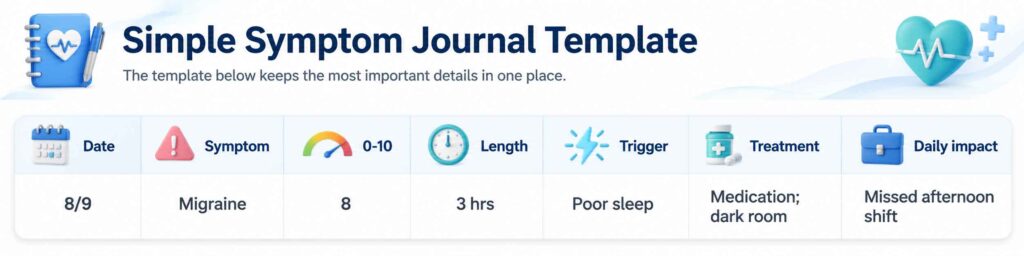
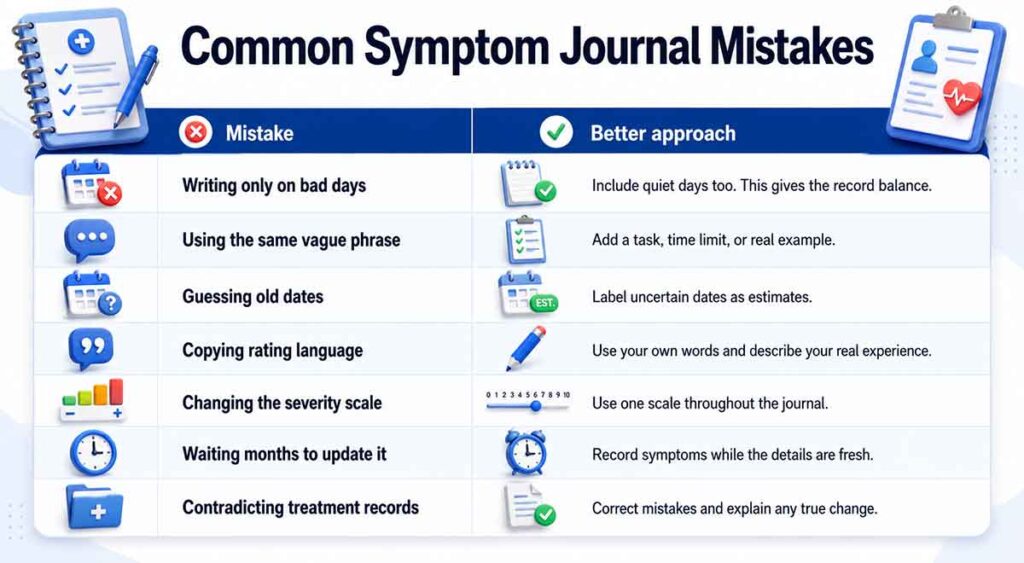
Daily notes work well when symptoms change often. They also help when flare-ups are hard to remember. You do not need to force an entry when nothing happened. Write “no major symptoms” or leave a brief note. For rare episodes, record the event as soon as possible. Include the start time, end time, and effect on your routine.
Use Reminders Without Making It a Chore
Set one reminder in the evening. Keep the journal where you can reach it. A two-minute entry is enough. Consistency matters more than length.
How to Track Common VA Claim Symptoms
Migraines and Headaches
Record how often the headache occurs and how long it lasts. Note nausea, light sensitivity, or sound sensitivity. State whether you had to stop activity, lie down, leave work, or ask for help.
Back, Knee, and Joint Conditions
Track movement limits and flare-ups. Note how long you can stand, sit, walk, lift, or drive. Record the use of braces, canes, ice, heat, or medication. Include any recovery time after activity.
Related AMG resource: VA Disability for Back Pain: How to Document Flare-Ups and Limitations

Mental Health Symptoms
Track sleep, panic, anger, memory, focus, isolation, and motivation. Use plain words. Include the effect on work and relationships. You may also note missed appointments or tasks. Protect your privacy. Record enough detail to explain the impact without writing material you do not want to share.
Digestive and Respiratory Symptoms
Record urgency, pain, bloating, bowel changes, shortness of breath, coughing, or medication use. Note how often symptoms interrupt meals, sleep, travel, or work.
Medication Effects
List the medication and dose when known. Note relief and side effects. Examples include fatigue, dizziness, nausea, poor focus, and sleep problems.
How to Use Your Journal at a C&P Exam
Review the journal before the appointment. Pick a few examples that show your usual limits and your worst flare-ups. Answer the examiner’s questions directly. Do not read every entry unless asked.
Explain how often symptoms occur. Then describe what you cannot do during an episode. Do not exaggerate. Do not minimize symptoms because you feel nervous or embarrassed.
Bring a Short Summary
Create a one-page summary for the last 30 to 90 days. Include totals and clear examples.
- Number of flare-ups.
- Average severity.
- Longest episode.
- Workdays or activities missed.
- Common treatment and response.
How to Submit Symptom Evidence
The VA accepts supporting statements from veterans and other people who know about the claimed condition. Use a clear personal statement to summarize the journal. Attach selected pages or a simple table when they add useful detail. VA Form 21-10210 is the current Lay/Witness Statement form. You can use it for your own statement or for a statement from another person.
Official VA form: VA Form 21-10210, Lay/Witness Statement
Do Not Send an Unorganized Notebook
A large notebook can be hard to review. Summarize the key pattern first. Label any attached pages by date and condition. Keep a copy of everything you submit.
Official VA guidance: Upload evidence to support a disability claim
How a Journal Supports Medical Evidence
A journal can help a provider see patterns in frequency, severity, and duration. It may also show whether treatment helps and how symptoms affect daily function. Share a short summary with your provider. Ask the provider to record important limits in your treatment notes. When a claim needs a medical opinion, the provider must still review the full record. A journal is one part of that record.
Related AMG resource: What Is a Nexus Letter for VA Disability?
Official References