

Back pain ranks among the most common service-connected disabilities in the veteran community. Years of ruck marches, parachute landings, heavy lifting, and long hours in vibrating vehicles place enormous strain on the lumbar spine and thoracolumbar spine. If a doctor has diagnosed you with lumbar spondylosis or cervical spondylosis, you may qualify for monthly, tax-free compensation through a spondylosis VA disability rating. Veterans may qualify for VA disability benefits when a current condition is connected to their military service.
Spondylosis refers to age-related degenerative changes affecting the spine, including the discs, joints, and bones. These changes may cause chronic pain, stiffness, muscle spasms, and reduced mobility. The VA evaluates a spondylosis VA disability rating using specific VA rating criteria, including the general rating formula for spinal conditions, combined range of motion, and functional limitations. Depending on the severity of the condition, the affected spinal region, and the applicable rating criteria, a veteran may qualify for different VA ratings.
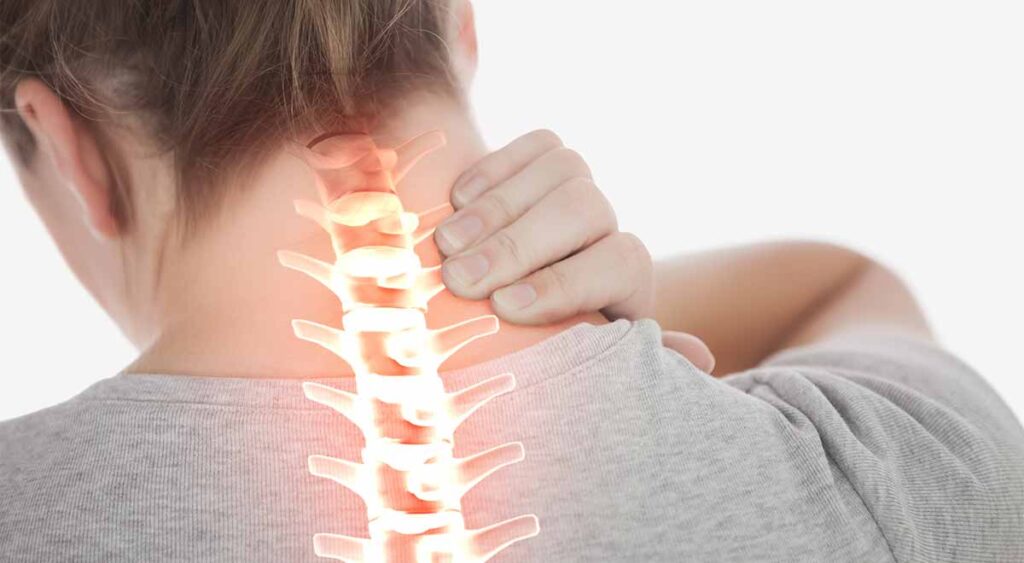
This guide explains how the VA determines a spondylosis VA disability rating, including the rating criteria for lumbar spondylosis, cervical spine conditions, and intervertebral disc syndrome. You’ll also learn how to establish service connection, gather medical records and supporting evidence, understand incapacitating episodes, and prepare a VA claim that accurately documents your symptoms and limitations.
Spondylosis describes the gradual breakdown of the discs, joints, and bones in your spine. As discs lose height and facet joints wear down, bone spurs can form and press on nearby nerve roots. The condition commonly affects the neck, known as cervical spondylosis, and the lower back, known as lumbar spondylosis. These changes can affect the cervical spine, lumbar spine, and thoracolumbar spine, potentially causing chronic pain, stiffness, and functional loss.
Common symptoms include:
- Chronic pain and stiffness in the neck or lower back
- Reduced ability to bend, twist, or turn your spine
- Pain that worsens after long periods of sitting or standing
- Numbness, tingling, or shooting pain into the arms or legs
- Muscle spasm, localized tenderness, and guarding around the spinal column
- Changes in spinal contour or abnormal gait in more severe cases
Military service can contribute to spinal wear and tear through repeated physical demands. Airborne soldiers absorb hard landings, infantry troops carry heavy rucksacks, and vehicle crews experience prolonged whole-body vibration. These activities may place additional stress on the lumbar spine and cervical spine over time. For some veterans, repetitive strain or an in-service event may contribute to a service-connected condition that qualifies for VA disability compensation.
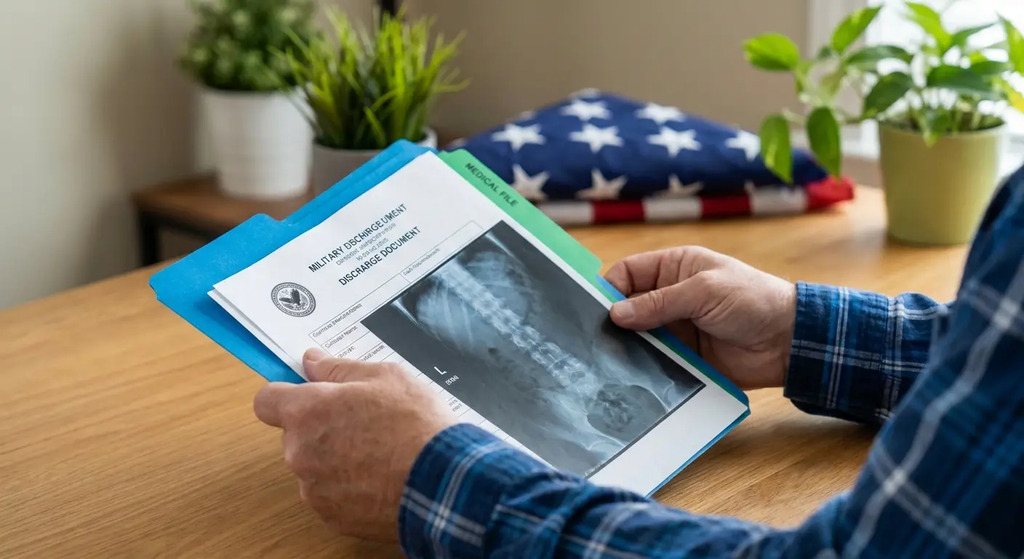
You do not need a single dramatic injury to establish service connection. Repetitive stress accumulated during military service may support a claim when medical records, a current diagnosis, and a qualified medical opinion establish the connection. The VA considers the available evidence when determining a spondylosis VA disability rating, including spinal range of motion, functional loss, and applicable rating criteria under 38 CFR § 4.71a.
How the VA Assigns a Spondylosis VA Disability Rating
The VA rates spondylosis under 38 CFR § 4.71a, Diagnostic Code 5242, which covers degenerative arthritis of the spine. Ratings fall under the General Rating Formula for Diseases and Injuries of the Spine. That formula focuses on range of motion, measured with a device called a goniometer during your compensation and pension (C&P) exam.
Thoracolumbar spine (lower back) ratings
If spondylosis affects your lower back, the VA assigns one of the following ratings:
- 10 percent: Forward flexion between 61 and 85 degrees, combined range of motion of 235 degrees or less, or muscle spasm, guarding, or localized tenderness without abnormal gait or spinal contour
- 20 percent: Forward flexion between 31 and 60 degrees, combined range of motion of 120 degrees or less, or spasm severe enough to cause abnormal gait or spinal contour
- 40 percent: Forward flexion of 30 degrees or less, or favorable ankylosis of the entire thoracolumbar spine
- 50 percent: Unfavorable ankylosis of the entire thoracolumbar spine
- 100 percent: Unfavorable ankylosis of the entire spine
For context, a healthy lower back bends forward about 90 degrees. If you can only bend to 60 degrees, that measurement alone supports a 20 percent rating.
Cervical spine (neck) ratings
Neck spondylosis follows a similar scale with its own thresholds:
Separate ratings for nerve problems
Here is something many veterans miss. If spondylosis pinches a nerve and causes radiculopathy, the VA rates that nerve damage separately from the spine itself. Sciatic nerve involvement can add 10 to 40 percent per leg on top of your spine rating, depending on severity.
Always report numbness, tingling, and radiating pain to your doctor. Ask that the specific affected nerve roots be documented in your records, because that documentation drives the separate rating.
Key Takeaways
- The VA rates spondylosis under Diagnostic Code 5242, primarily using measured spinal range of motion.
- Most veterans receive 10 or 20 percent for the lower back, but flexion of 30 degrees or less supports 40 percent.
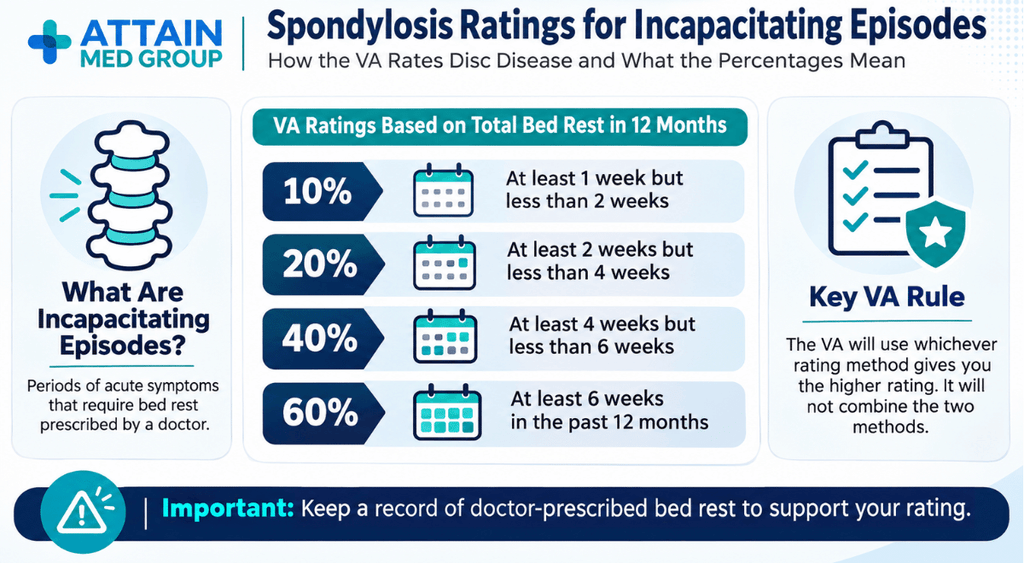
- Disc disease may qualify for a higher rating under the incapacitating episodes formula.
- Nerve damage like radiculopathy is rated separately and can raise your combined rating significantly.
Proving Service Connection for Spondylosis
A diagnosis alone does not win benefits. You must also connect the condition to your military service, and there are three main paths to do it. What if your symptoms did not appear until years after discharge? You still have options.
Direct service connection
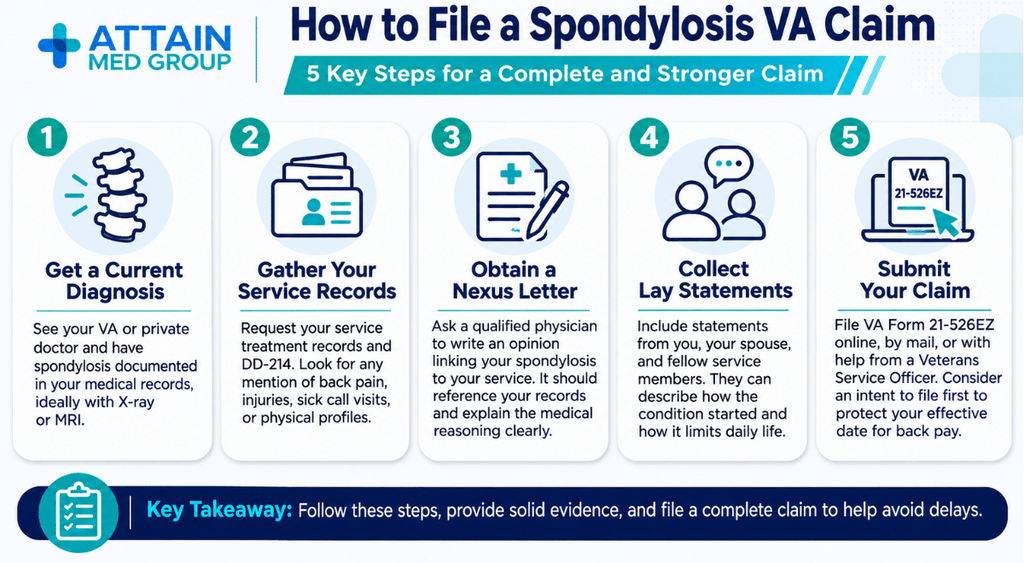
Direct connection requires three elements: a current spondylosis diagnosis, an in-service event or injury, and a medical link between the two. That link is called a nexus, and it usually comes from a physician’s written opinion. Service treatment records mentioning back complaints carry heavy weight with raters.
If your records are thin, a nexus letter from a private doctor can supply the missing piece. The physician reviews your history and explains why your service likely caused or aggravated the condition.
Secondary service connection
Spondylosis can also be service-connected on a secondary basis. A service-connected knee or hip injury that changed your gait, for example, can place abnormal stress on the spine over time. The reverse works as well, since a service-connected back condition can cause secondary radiculopathy, depression, or sleep problems.
Presumptive service connection
Arthritis holds a special status in VA law. Under 38 CFR § 3.309, arthritis that appears to a compensable degree within one year of discharge is presumed to be service-connected. No nexus letter is required in that situation, which makes an early post-service diagnosis extremely valuable.
Final Thoughts
The journey to get a spondylosis VA disability rating can feel long. But knowing what to expect makes a big difference. Many veterans wonder about VA disability for spondylosis. You are not alone in this spondylosis VA claim. We hope this information gives you a clearer path. It helps you move forward with your spondylosis VA disability.
Getting VA disability benefits for spondylosis is important. These benefits can change your life. They help cover medical costs and lost income. Make sure your service connection is clear. This is key for service-connected spondylosis. Medical records are very important here. They show how your service affected your back.
Think about secondary conditions spondylosis VA too. Spondylosis can lead to other issues. These might include nerve pain or mental health problems. You can claim these as well. They can raise your overall spondylosis VA rating. This means more VA disability benefits for spondylosis.
Don’t give up on your claim. Learning how to get VA disability for spondylosis takes time. But the effort is worth it. Many resources exist to give help. Organizations can guide you through the VA disability claims for spondylosis process. They understand the rules. They can make sure your application is strong.
Your health matters. Your spondylosis VA disability rating reflects your suffering. Get the help you need. Stand up for your right to benefits. You served your country with honor. Now it is time to get the support you deserve. This support helps you live better.