


Learn how the VA rates IBS what symptoms qualify and how to file a successful claim. Many veterans return from active duty with medical conditions that disrupt their daily routines and long-term health. Irritable bowel syndrome represents one of the most common digestive disorders facing former service members in the modern era. If you experience chronic gastrointestinal distress, you might qualify for va disability benefits to compensate for your loss of quality of life. Understanding the exact criteria for your va rating helps you secure the financial support you deserve for your service. We will explain the qualifying symptoms, the rating schedule, and the exact steps to submit your disability claim effectively.
The transition from military to civilian life often reveals underlying health issues that were masked by the high-intensity nature of active duty. For many, these issues manifest as persistent digestive problems that do not resolve with standard over-the-counter treatments or minor dietary changes. A formal va disability claim allows you to access specialized care through the VA healthcare system while receiving monthly disability compensation. This financial assistance is designed to offset the impact that chronic illness has on your earning capacity and general well-being. By documenting your journey, you ensure that the Department of Veterans Affairs has a clear picture of your service-connected disability.

Veterans frequently develop irritable bowel syndrome after experiencing intense physical and psychological stressors during their various overseas deployments. This functional gastrointestinal disorder causes significant discomfort and fundamentally alters a person’s quality of life and daily productivity. The Department of Veterans Affairs recognizes this illness as a legitimate va disability requiring comprehensive medical treatment and financial support. Many service members find that their symptoms fluctuate based on stress levels, diet, and environmental triggers encountered during service.
The exact cause of irritable bowel often remains unclear, but medical professionals link it to severe infections and environmental exposures. A war veteran might develop these issues months or even years after returning home from an active combat zone. If your symptoms began during or after your military service, establishing a service connection becomes your primary goal for compensation. Living with chronic bowel syndrome creates frustrating obstacles for anyone trying to maintain a normal schedule or professional career path.
Recent medical research suggests a strong link between the “gut-brain axis” and the development of functional digestive disorders in high-stress environments. Military personnel are often exposed to extreme climates, irregular sleep patterns, and varying food sources that can permanently alter gut flora. These physiological changes often lead to a formal diagnosis of irritable bowel syndrome once the veteran returns to a stable environment. Understanding these biological mechanisms can help you explain the progression of your condition to medical examiners during your va claim process.
Common ibs symptoms include recurring abdominal pain, sudden changes in stool frequency, and noticeable abdominal bloating that persists over time. These issues create significant challenges for individuals trying to maintain regular employment or enjoy normal social activities with their families. Recognizing these signs early provides the foundation for building a strong va claim based on solid medical documentation and history. Proper diagnosis by a gastroenterologist is essential to distinguish this condition from other more serious inflammatory bowel diseases.
Key Takeaways
- The VA recognizes irritable bowel syndrome as a legitimate service-connected medical condition.
- Symptoms often appear months or years after returning from active military duty.
- Early documentation of abdominal pain and bloating strengthens your overall claim.
How the VA Evaluates and Rates Digestive Disorders: Understanding Your VA Rating

The Veterans Benefits Administration uses specific criteria to assign a disability rating for digestive system disorders across all branches. Evaluators reference diagnostic code 7319 within the Schedule for Rating Disabilities to determine your exact monthly compensation level. Recent updates to the rating schedule have changed how the va rates this specific condition to reflect modern medical standards. The VA aims to align their evaluation criteria more closely with modern medical understandings of functional gastrointestinal diseases and impairments.
Under the updated guidelines, your va rating depends heavily on the frequency and severity of your documented physical symptoms. A 10 percent va disability rating typically applies if you experience mild symptoms that occasionally interfere with your daily life. Evaluators look for infrequent abdominal pain or minor alterations in your normal bowel habits that do not require constant care. Even a low rating provides access to VA healthcare and establishes a service connection for future potential increases.
You can secure a 20 percent disability rating if you suffer from recurrent episodes of bowel disturbance that affect your productivity. This level requires documented evidence of frequent abdominal bloating, irregular stool passage, and subjective distension that occurs on a regular basis. Veterans at this tier usually experience noticeable disruptions at work due to sudden symptom flare-ups that require immediate attention. Providing statements from supervisors about your time away from your desk can help support this specific rating level.
The maximum direct va rate for irritable bowel syndrome currently sits at 30 percent for the most severe cases. To receive this highest rating, your medical evidence must demonstrate severe symptoms like severe abdominal pain, high stool frequency, and altered stool form. Your records must clearly show constant distress that includes straining and/or urgency on a nearly daily basis for several months. This level of impairment often makes it difficult to maintain a standard forty-hour work week without significant accommodations.
It is important to note that the VA also recognizes a 0 percent non-compensable rating for veterans with a confirmed diagnosis but minimal symptoms. While this rating does not provide monthly disability compensation, it is incredibly valuable for establishing a service-connected condition. Should your symptoms worsen over time, having that 0 percent rating makes the process of applying for an increase much simpler. Always ensure that your medical records reflect the full scope of your daily struggles to avoid an undervalued assessment.
Pro Tip: Keep a daily symptom journal to track every bathroom visit and pain flare-up for at least thirty consecutive days. This concrete data provides undeniable proof of symptom severity for your evaluator during the compensation and pension examination process.
Establishing Service Connection for Gastrointestinal Issues

Securing va disability benefits requires you to prove that your military duty directly caused your current medical diagnosis. Establishing service connection involves gathering specific medical records and connecting them logically to your time in active duty uniform. The VA recognizes three primary pathways to prove your condition warrants monthly disability compensation based on your unique service history. Each path requires different types of evidence to satisfy the legal requirements set by the Department of Veterans Affairs.
Direct Service Connection and Your Disability Rating
A direct service connection requires evidence that your irritable bowel syndrome started while you were actively serving in the military. You need a current medical diagnosis, evidence of an in-service event or illness, and a valid medical nexus statement. This nexus letter from a qualified physician bridges the gap between your active duty incident and your current symptoms. Without this professional medical opinion, the VA may claim your condition is unrelated to your time in the service.
Veterans who suffered from severe gastrointestinal infections during deployment often qualify for direct service connection due to documented hospitalizations. If your service medical records show repeated visits to the clinic for stomach issues, your claim gains significant evidentiary strength. Consistent documentation makes it much easier to prove that direct service caused your long-term digestive problems and functional limitations. Ensure you highlight any specific dates or locations where your symptoms first manifested during your enlistment period.
Presumptive Service Connection and the IBS Diagnostic Code
The VA offers a simplified path for a gulf war veteran through the concept of a presumptive condition for certain illnesses. Gulf war veterans who served in the Southwest Asia theater of operations often experience unexplained medical issues related to environmental toxins. If you fall into this category, you might qualify for presumptive service connection without needing a specific in-service injury record. This presumption acknowledges the unique hazards faced by those serving in desert environments and combat zones.
Under this framework, irritable bowel qualifies as a medically unexplained chronic multisymptom illness related to gulf war service and exposures. Qualifying as a presumptive condition makes the claims process significantly smoother for affected former service members who lack early records. The VA automatically assumes your military service caused the illness if you served in qualifying locations during specific timeframes. According to the Department of Veterans Affairs, these environmental exposures warrant special consideration for all affected personnel.
Furthermore, the recent passage of the PACT Act has expanded the list of presumptive conditions for veterans exposed to burn pits and other toxins. While IBS has long been a presumptive condition for Gulf War veterans, the new legislation reinforces the VA’s commitment to recognizing toxic exposure. If you served in qualifying locations like Iraq or Afghanistan, your irritable bowel syndrome may be fast-tracked for approval under these expanded guidelines. Consult with a veterans service officer to see if your specific deployment dates align with these new presumptive categories.

Secondary Service Connection for IBS
Sometimes another service-connected condition directly causes or aggravates your digestive problems over a long period of time. In these situations, you can apply for a secondary service connection to increase your overall disability rating and monthly pay. Psychological conditions like PTSD or severe anxiety frequently trigger physical responses, including severe bowel syndrome and chronic inflammation. The gut-brain axis is a well-documented medical phenomenon that the VA recognizes in many secondary disability claims.
Medications taken for a different service-connected disability can also damage your gastrointestinal tract and cause ibs secondary issues over time. You will need a strong nexus letter explaining exactly how the primary condition or its treatment caused the secondary condition. Successfully proving secondary service connection provides a valuable avenue for veterans who developed digestive issues years after their initial discharge. This approach is particularly effective for those already rated for mental health disorders or chronic pain conditions.
How to File a Successful VA Disability Claim and Increase Your VA Rate
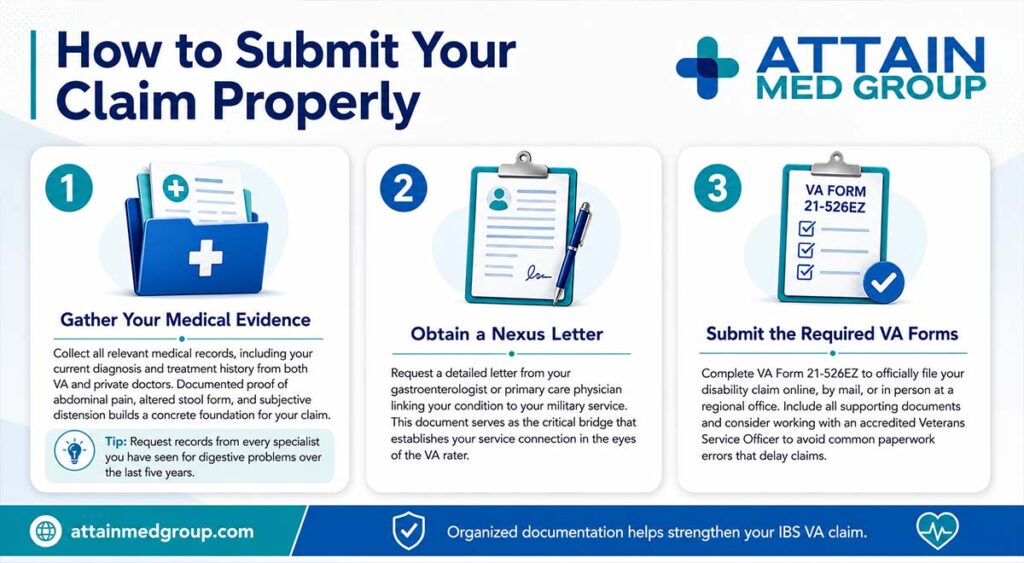
Submitting a successful va disability claim demands careful preparation and thorough documentation of your entire medical history. The Veterans Benefits Administration processes thousands of applications, so presenting clear and organized evidence improves your chances of rapid approval. Follow these specific steps to submit the va claim properly and strengthen your application for va disability compensation today. Treating irritable bowel effectively involves medical professionals, but winning your claim requires administrative diligence and attention to detail.
Learn how the VA rates IBS what symptoms qualify and how to file a successful claim: A Step-by-Step Guide
To ensure your claim is processed correctly, you must understand the intersection of medical symptoms and legal requirements. The VA looks for a clear diagnosis that matches the criteria found in the rating schedule for digestive disorders. By following a structured approach, you can minimize the risk of a denial based on technicalities or missing evidence. Your goal is to make the rater’s job as easy as possible by providing a complete package of information.
One often overlooked aspect of a successful claim is the inclusion of “lay evidence” or statements from friends and family. These personal accounts can describe how your symptoms affect your daily life in ways that medical records might miss. For instance, a spouse can testify to the frequency of your flare-ups or the dietary restrictions you must follow to manage pain. This subjective evidence provides a human element to your file, helping the rater understand the true severity of your condition.
AMG: Learn how the VA rates IBS, what symptoms qualify and how to file a successful claimPreparing for Your VA Compensation and Pension Exam
After you have filed your va disability paperwork, the VA will likely schedule you for a Compensation and Pension exam. This medical evaluation allows a contracted examiner to review your ibs symptoms and determine their severity based on the rating schedule. The examiner will ask detailed questions about your abdominal pain, bowel habits, and how these issues affect your daily life and work. It is important to remember that this is a forensic exam, not a treatment session for your condition.
Honesty and transparency are critical during this evaluation process to ensure an accurate assessment of your disability. You should describe your worst days, not just how you feel on the specific day of your appointment. Many veterans make the mistake of downplaying their symptoms out of pride or embarrassment during the physical exam. If you minimize your struggles with stool frequency or urgency, the examiner will note those diminished symptoms in their final report.

The examiner will likely use a Disability Benefits Questionnaire (DBQ) to guide their assessment of your gastrointestinal health. This standardized form ensures that all relevant symptoms, such as abdominal bloating and altered stool form, are systematically recorded. You can actually review these forms online before your appointment to understand exactly what the examiner will be looking for. Being prepared for the specific questions on the DBQ can help you provide more precise and helpful answers during the exam.
Bring a symptom diary to your appointment to provide concrete data regarding your condition over a long period. A written log detailing your abdominal bloating, pain levels, and bathroom visits gives the examiner objective information to review. This preparation helps them accurately complete the Disability Benefits Questionnaire so an accurate va rating reflects your true physical and social limitations. Be prepared to discuss how your condition impacts your ability to work and maintain relationships with others.
What to Do If Your VA Rating Is Too Low: Exploring Schedular TDIU
If you receive a decision that does not accurately reflect the severity of your condition, you have several options for appeal. You can file a Higher-Level Review if you believe the rater made an error based on the existing evidence. Alternatively, a Supplemental Claim allows you to submit new and relevant evidence, such as a more detailed nexus letter or updated medical records. The appeals process can be lengthy, but it is often necessary to secure the full benefits you earned through your service.
For veterans whose irritable bowel syndrome is exceptionally severe, a standard rating may not be sufficient to cover their needs. If your condition is so debilitating that you cannot maintain substantially gainful employment, you may qualify for schedular tdiu benefits. This allows the VA to pay you at the 100 percent rate even if your individual disability ratings do not reach that level. Proving that your gastrointestinal issues prevent you from working requires strong medical evidence and vocational assessments from qualified experts.

Total Disability based on Individual Unemployability (TDIU) is a critical safety net for those whose service-connected conditions make traditional employment impossible. To qualify, you generally need one service-connected disability rated at 60% or a combined rating of 70% with one disability at 40%. While IBS only goes up to 30% as a direct rating, it can be a significant contributor to your overall combined rating. If your digestive issues, combined with other conditions like PTSD, prevent you from holding a job, TDIU becomes a viable path for maximum compensation.
Navigating the complexities of the VA system requires patience and a thorough understanding of the law and medical requirements. Many veterans find success by working with legal representatives or veteran service organizations that specialize in digestive system claims. Remember that your health and well-being are the priority, and the compensation system exists to support you after your service. Stay persistent in your pursuit of a fair rating that acknowledges the true impact of your service-connected irritable bowel syndrome.
Final Thoughts on Securing Your Disability Benefits
Securing a fair disability rating for irritable bowel syndrome is a vital step in managing your post-service health and financial stability. By understanding the rating criteria and gathering comprehensive medical evidence, you position yourself for a successful outcome in the claims process. Do not let the complexity of the system discourage you from seeking the benefits you deserve for your sacrifices. With the right preparation and documentation, you can navigate the VA system and obtain the support necessary for your long-term recovery.
Ultimately, the goal of the va disability system is to ensure that no veteran is left to struggle alone with the physical consequences of their service. Whether you are dealing with abdominal pain, stool frequency issues, or the psychological toll of chronic illness, there are resources available to help. Continue to advocate for yourself, keep meticulous records, and seek professional guidance when the process becomes overwhelming. Your service to the nation was invaluable, and you have every right to the benefits that support your health and dignity today.