

Veterans frequently experience severe physical strain during their required military service, often leading to chronic issues that require Shoulder Pain VA Rating Evidence Veterans Should Document to receive proper compensation.
Heavy gear, repetitive physical tasks, and high-impact training take a significant toll on the human body over time, frequently resulting in long-term shoulder injuries that persist long after discharge.
Many former service members eventually develop a severe shoulder condition that completely limits their daily activities, prevents them from performing overhead work, and significantly impacts their overall quality of life.
Filing a successful claim for disability benefits requires highly specific documentation and clear medical evidence from qualified healthcare professionals to establish a service-connected shoulder injury. You must understand exactly what the Department of Veterans Affairs looks for during the formal evaluation process to ensure your va rate accurately reflects your level of impairment and functional limitation.
The complexity of the shoulder joint means that a single injury can manifest in various ways, from a rotator cuff tear to chronic instability.
Because the shoulder is the most mobile joint in the body, any damage to the muscles, tendons, or ligaments can lead to a cascading effect of arm conditions.
Veterans often find that an initial injury sustained during military service—such as a fall during a training exercise or the strain of carrying a heavy rucksack—evolves into a degenerative shoulder disability.
To secure the maximum va disability rating, it is imperative to track how these symptoms progress over months and years. This proactive approach to gathering Shoulder Pain VA Rating Evidence Veterans Should Document ensures that the va disability system recognizes the full extent of the veteran’s sacrifice and physical hardship.
Establishing a formal service connection requires solid proof and comprehensive medical records from your doctors to secure a fair va rating. The official claims process demands documents that clearly link your current physical limitations to your time in uniform, meaning you cannot simply state to a medical examiner that you experience severe shoulder pain on a daily basis.
A successful claim for va disability depends heavily on measurable data, professional medical opinions, and a clear timeline showing exactly when the initial injury occurred during your military service. The VA uses the 38 CFR Part 4 Schedule for Rating Disabilities to assign a specific disability rating based on the severity of your symptoms and the impact on your daily life.
When evaluating a shoulder disability, the VA considers how the injury affects your ability to work and perform daily tasks like dressing or driving. This evaluation often involves looking for functional loss, which refers to the inability of the shoulder joint to perform the normal working movements of the body with normal excursion, strength, speed, coordination, and endurance.
If your shoulder condition limits arm movement, the VA will measure how much flexion and/or abduction you can achieve before pain or a physical blockage stops the motion. Understanding these va rates is crucial for any veteran seeking to document their arm condition properly for a compensation claim, as even minor differences in degrees of motion can change your disability ratings.
Furthermore, the VA distinguishes between different types of arm conditions, such as those involving the rotator cuff or those resulting from a recurrent dislocation. The VA assigns each shoulder condition a specific diagnostic code that determines the criteria for different disability ratings. For instance, a flail shoulder, which involves the loss of use of the arm due to extreme instability, will receive a much higher va rate than a minor arm injury with slight external rotation limitations.
Veterans should be aware that the va rates shoulder injuries based on the most severe symptom presented during the examination, ensuring that the va disability rating reflects the highest level of impairment documented.
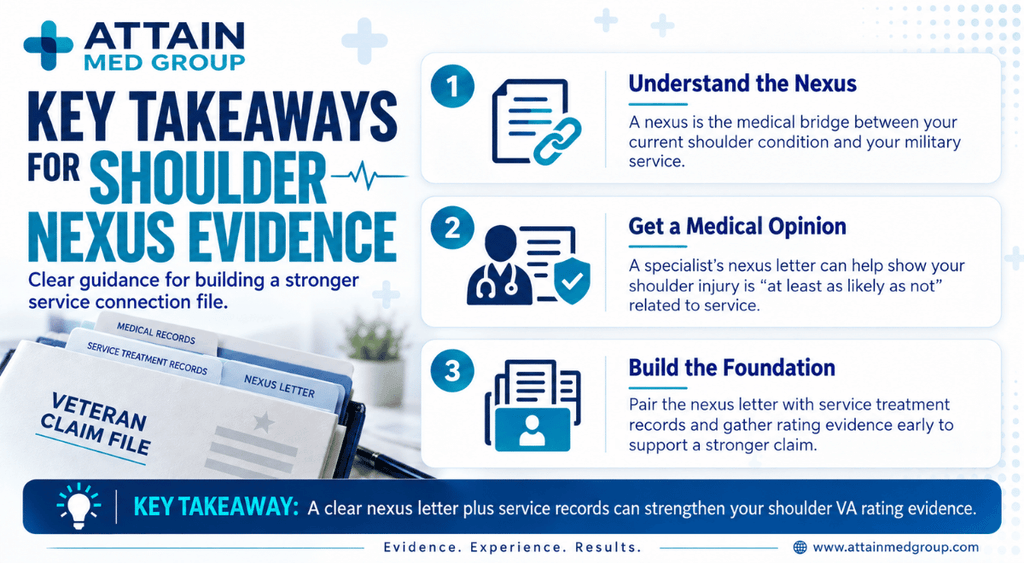
Medical Evidence Required for Service Connection and Shoulder Pain VA Rating Evidence Veterans Should Document
To build a strong case, you must provide a disability benefits questionnaire (DBQ) completed by a medical professional who understands the nuances of shoulder pain. This benefits questionnaire serves as a standardized tool that helps the VA examiner capture all necessary information regarding your shoulder joint health and arm movement.
It is essential to include imaging results, such as X-rays or MRIs, which can provide objective proof of a rotator cuff tear, labral tear, or other structural damage. Without this objective Shoulder Pain VA Rating Evidence Veterans Should Document, the VA may find it difficult to grant a high disability rating, as they often prioritize physical findings over subjective reports of discomfort.
In addition to clinical findings, you should document frequent episodes of pain or instability that occur outside of the doctor’s office. Keeping a “pain log” can help demonstrate how your shoulder condition fluctuates, especially if you experience loose movement or sudden “giving way” of the joint during physical activity. This type of evidence is vital for proving functional loss during a C&P exam, where the examiner might only see you on a “good day” when your symptoms are less pronounced.
Providing a comprehensive history of your arm condition ensures the va rates assigned to your claim are accurate and reflective of your true physical state over a long period. You can find more about how the VA calculates disability ratings to better prepare your evidence.
The VA also looks for evidence of secondary service connection if your shoulder injury has caused other health issues. For example, a veteran with a service-connected shoulder injury might develop neck strain, upper back pain, or even carpal tunnel syndrome due to compensating for their limited arm movement. Documenting these secondary service issues can lead to additional disability benefits and a higher overall VA rating.
Always ensure your medical provider notes any limitations in internal rotation or external rotation, as these specific measurements are key to the diagnostic codes used by the VA to determine the VA rates shoulder compensation levels.
Furthermore, “buddy statements” from fellow service members who witnessed the original injury or family members who observe your daily struggles can be powerful medical evidence.
These statements provide a narrative context that clinical data sometimes lacks, illustrating how shoulder conditions prevent you from performing household chores or engaging in hobbies. When combined with a formal disability benefits questionnaire, these personal accounts create a holistic view of your arm conditions. Remember that the goal of Shoulder Pain VA Rating Evidence Veterans Should Document is to leave no doubt in the examiner’s mind regarding the severity and origin of your shoulder disability.
How Range of Motion and Painful Motion Determines Your Disability Rating for an Arm Condition

The primary way the VA determines a VA rating for the shoulder is through range of motion (ROM) testing using a tool called a goniometer. During your exam, the doctor will measure how far you can move your arm in various directions, including flexion and/or abduction.
If your abduction is limited to 90 degrees (at the shoulder level), you may qualify for a specific VA rate under the diagnostic code for limited motion. It is critical to stop moving as soon as you feel painful motion, as the VA is required to rate you based on where pain begins, not just where your arm physically stops moving due to mechanical resistance.
The concept of painful motion is established under 38 CFR § 4.59, which states that joints should be rated for functional loss if they are painful to move. This means even if you have a normal range of motion, you could still receive a 10% disability rating if you experience pain during the test. When the examiner asks you to perform internal rotation or external rotation, be honest about when the discomfort starts.
This ensures that the rates shoulder evaluations fairly and accounts for the “DeLuca Criteria,” which considers factors like fatigue, weakness, and lack of coordination that contribute to shoulder disability during repetitive use.
For many arm conditions, the VA will look at flexion and/or abduction specifically to gauge the impact on your life. Flexion refers to moving the arm forward and up, while abduction is moving the arm away from the side of the body. If your arm cannot reach shoulder level without significant pain, this must be documented in the disability benefits questionnaire.
The VA uses these measurements to apply the correct diagnostic codes, which can range from 0% to 40% or more depending on whether it is your major arm or minor arm being evaluated. Consistent arm movement testing is the cornerstone of Shoulder Pain VA Rating Evidence Veterans Should Document.
It is also important to discuss “flare-ups” during your range of motion exam. A flare-up is a period of increased shoulder pain and decreased mobility that can be triggered by weather, activity, or even stress. If your shoulder condition is significantly worse during a flare-up, the VA should ideally rate you based on that increased level of functional loss.
Since examiners rarely see you during a flare-up, you must describe these frequent episodes in detail. This ensures your va disability rating accounts for your worst days, not just your best ones, providing a more accurate va rate for your arm condition.
Specific Diagnostic Codes Rules for a Rotator Cuff Tear and Other Shoulder Conditions
The VA uses several diagnostic codes to categorize shoulder injuries and determine disability benefits. For a rotator cuff tear, the VA often uses diagnostic code 5201, which covers “limitation of motion of the arm.” If the cuff tear is severe enough to require surgery, or if it results in a shoulder replacement, different rules and va rates will apply.
Understanding which diagnostic code fits your shoulder condition is the first step in ensuring you receive the correct disability rating and that your medical evidence aligns with the VA’s specific criteria.
Another common diagnostic code is 5202, which deals with “humerus, other impairment of,” including recurrent dislocation and loose movement of the shoulder joint. If you suffer from a flail shoulder, where the joint is completely unstable and the arm hangs uselessly, you may be eligible for a much higher va rating.
The VA also considers diagnostic codes for arm conditions that involve the clavicle or scapula (code 5203), as these bones are integral to the shoulder level function. Each of these diagnostic codes has specific criteria that must be met through Shoulder Pain VA Rating Evidence Veterans Should Document and arm movement testing.
When dealing with a rotator cuff injury, the VA will also look for signs of muscle atrophy or weakness. If a rotator cuff tear has led to permanent functional loss, the VA rate may be increased to reflect the inability to perform manual labor or daily tasks. It is important to have your doctor specifically mention the rotator cuff in your records, as this helps the VA adjudicator select the most appropriate diagnostic code.
Proper documentation of a cuff tear can be the difference between a 10% and a 30% disability rating, making it a vital part of your VA disability claim strategy.
In some cases, the VA may use “analogous ratings” if your specific shoulder condition is not listed in the diagnostic codes. This means they will find the code that most closely matches your symptoms and functional loss.
For example, if you have chronic tendonitis that isn’t a full cuff tear, they might still use code 5201 for limitation of motion. Being aware of how these diagnostic codes work allows you to tailor your medical evidence to highlight the symptoms the VA values most. This targeted approach to Shoulder Pain VA Rating Evidence Veterans Should Document is essential for navigating the complex va rates shoulder system.
Dominant Arm vs Non-Dominant Arm: Calculating Your VA Disability Rating and Arm Conditions

One unique aspect of the va rating system for arm conditions is the distinction between the major arm and the minor arm. Generally, the VA provides a higher disability rating for injuries to your dominant arm (major) because it is considered more essential for daily functioning and employment.
For example, if you have limited internal rotation in your major arm, your va rate might be 10% higher than if the same injury occurred in your non-dominant arm. This “bilateral factor” can also come into play if both shoulders are injured, potentially increasing your overall disability benefits by adding a 10% boost to the combined rating.
When documenting Shoulder Pain VA Rating Evidence Veterans Should Document, always clarify which arm is dominant in your disability benefits questionnaire. The VA defines the major arm as the one you use for writing and most tasks; however, if you are truly ambidextrous, the VA will typically rate the more severely injured arm as the “major” one.
This distinction is applied across various diagnostic codes, including those for rotator cuff issues and shoulder replacement. Ensuring this is correctly noted can significantly impact your final VA rates shoulder calculation and the total VA disability compensation you receive each month.
The difference in disability ratings between the major arm and minor arm reflects the VA’s attempt to compensate for the loss of earning capacity. A veteran with a service-connected shoulder injury in their dominant arm may struggle more with employment that requires arm movement, lifting, or fine motor skills.
Therefore, the va rates are structured to provide more support for those whose primary limb is affected by shoulder injuries. Whether you are dealing with flexion and/or abduction issues or external rotation limitations, the “major vs. minor” rule is a critical component of your arm condition claim and should be highlighted in your medical evidence.
It is also worth noting that if you have a shoulder condition in your non-dominant arm that causes you to over-rely on your dominant arm, you might develop a secondary service connection in the “good” arm.
This is common in veterans who have lived with a shoulder disability for many years. By documenting the strain on both limbs, you can ensure that your disability ratings reflect the total impact on your body. This comprehensive view of arm conditions is a key part of the Shoulder Pain VA Rating Evidence Veterans Should Document that leads to a successful and fair va rating.
Maximizing Your Disability Benefits for a Chronic Shoulder Condition and Shoulder Replacement
If your shoulder condition is so severe that it requires a shoulder replacement, the VA has specific rules for how this is rated. Under diagnostic code 5054 (often referenced alongside 5333), a total shoulder replacement (prosthetic replacement of the shoulder joint) is initially rated at 100% for one year following the surgery to allow for recovery.
After that one-year period, the VA will re-evaluate the arm condition and assign a permanent va rating based on the remaining functional loss and painful motion. This permanent disability rating will not be lower than 20% for a minor arm or 30% for a major arm, even if the surgery was highly successful.
To maximize your disability benefits, you should also explore secondary service connection for related issues like depression or sleep apnea. Chronic shoulder pain often leads to “overuse” injuries in the opposite arm or issues with the neck and upper back. By documenting these secondary service conditions, you can increase your combined va rating.
Always ensure that your benefits questionnaire includes a discussion of how the shoulder disability affects your overall health, including any mental health struggles resulting from chronic pain and limited arm movement. This holistic approach to medical evidence is essential for a high va disability rating.
Another avenue for maximizing benefits is Total Disability based on Individual Unemployability (TDIU). If your shoulder injuries are so severe that you cannot maintain “substantially gainful employment,” you may be eligible for TDIU, which pays at the 100% va rate even if your combined disability rating is lower.
This is particularly relevant for veterans in manual labor trades where arm movement and shoulder level strength are required. Providing Shoulder Pain VA Rating Evidence Veterans Should Document that specifically addresses your inability to work can be the key to securing these life-changing disability benefits.
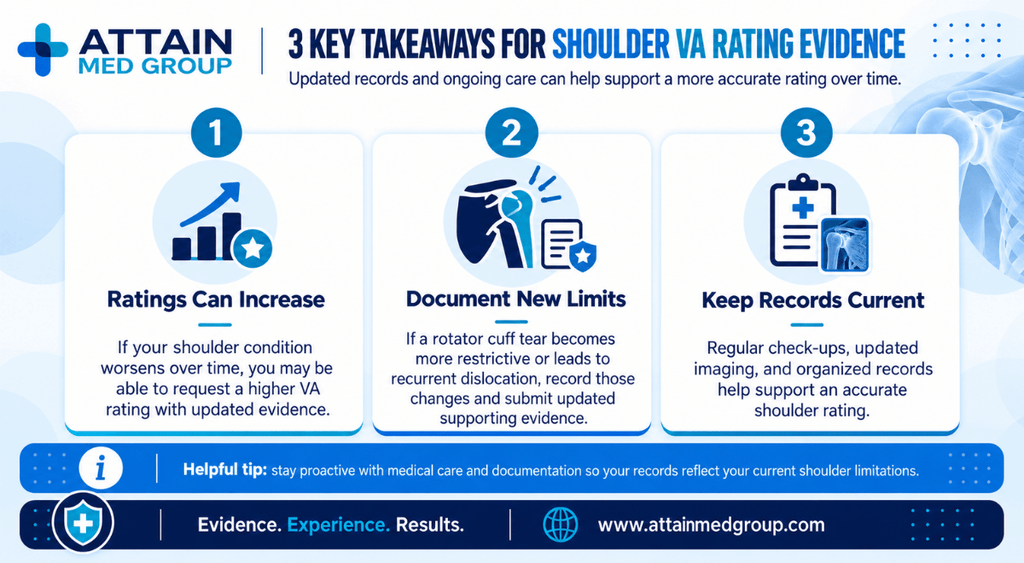
Final Thoughts on Securing the Right VA Disability for Your Arm Condition
Navigating the complexities of va rates for shoulder injuries requires patience, thoroughness, and a deep understanding of the 38 CFR. By focusing on Shoulder Pain VA Rating Evidence Veterans Should Document, such as precise range of motion measurements and the correct diagnostic codes, you can build a compelling case for the disability benefits you deserve.
Whether you are dealing with a rotator cuff injury, a shoulder replacement, or general functional loss, the key is to provide clear, objective medical evidence. For more detailed information on filing, visit the VA’s Public DBQ page to see exactly what your doctor needs to fill out during your evaluation.
Don’t let a shoulder condition go uncompensated because of a lack of documentation or a rushed C&P exam. Be sure to mention every instance of painful motion, recurrent dislocation, and limitation in internal rotation or external rotation during your exams.
Your service to the country often came at a high physical cost, and the va rating system is designed to provide the support you need to manage your arm condition. With the right disability ratings and a clear understanding of va rates shoulder criteria, you can secure a future that accounts for your sacrifices and provides the va disability support you have earned through your military service.