


Filing for disability benefits often feels like an incredibly confusing process for many returning military veterans, especially when navigating a va claim without diagnosis. You might experience chronic pain, debilitating fatigue, or respiratory issues that clearly began during your military service. However, you might currently lack a formal medical label to perfectly describe your daily physical suffering.
This situation raises a critical question about submitting a va claim without diagnosis through official government channels. Can you actually win a disability case based on symptoms alone? The short answer is yes, you can successfully initiate the claims process based strictly on your observed symptoms.
Understanding these specific rules helps you secure the VA disability benefits and financial compensation you rightfully earned during your active duty. We will thoroughly explore exactly how symptom-based claims work and what specific medical evidence you need to succeed. Proper preparation and documentation significantly improve your overall chances of receiving a highly favorable VA rating decision.
Standard VA disability claims require three fundamental elements for a successful outcome at the regional office level. First, you need documented proof of an in-service event, physical injury, or toxic exposure illness during your military career. Second, you must have a current, officially diagnosed medical condition that negatively impacts your normal daily functioning to receive a standard VA rating.
Finally, you need a clear medical nexus letter linking your current condition directly to the initial in-service event. Submitting a va claim without diagnosis seems to directly violate that second major administrative requirement for disability benefits. Yet, the VA system provides alternate legal pathways for veterans suffering from chronic, medically unexplained physical symptoms.
You do not need to wait for a specialized medical professional to figure out the exact diagnostic code. The VA recognizes that some debilitating physical conditions completely defy immediate and accurate medical classification by civilian doctors. You can file a formal claim for the specific symptoms you experience, such as severe chronic knee pain, to establish a service-connected disability.
The legal process then focuses on uncovering the medical truth through official evaluations and comprehensive physical examinations. Filing your paperwork early establishes a critical effective date while medical professionals investigate the root cause of your condition. This strategy protects your legal right to receive maximum retroactive compensation once a formal diagnosis finally materializes.
Key Takeaways
- Standard claims require an in-service event, a current condition, and a medical nexus.
- Veterans can successfully file claims based on chronic symptoms even if a formal disease name is missing.
- Filing early establishes your effective date while medical professionals formally investigate your physical condition.
Presumptive Service Connection: How Undiagnosed Illnesses Qualify for VA Disability Benefits

The most prominent exception to the strict diagnosis rule applies specifically to Gulf War veterans. Under 38 CFR 3.317, the VA presumes presumptive service connection for qualifying chronic disabilities related to toxic environmental exposures. These recognized disabilities often stem directly from undiagnosed illnesses or medically unexplained chronic multi-symptom illnesses affecting returning troops.
A medically unexplained chronic multi-symptom illness, or MUCMI, presents a confusing cluster of symptoms without a clear underlying cause. Common medical examples include chronic fatigue syndrome, severe fibromyalgia, and various functional gastrointestinal disorders like irritable bowel syndrome. If you served in the Southwest Asia theater of operations, the VA treats these specific symptoms very differently when processing a VA claim without diagnosis.
Veterans from other service eras can also successfully claim undiagnosed conditions, though the legal path requires significantly more medical evidence. You must conclusively prove that your unexplained symptoms cause severe functional impairment in your normal daily life. The VA rating schedule ultimately evaluates the severity of your physical symptoms rather than the specific disease name.
Pro Tip: If you served in the Gulf War, explicitly state that you are claiming an undiagnosed illness under 38 CFR 3.317 on your application. This formally forces the VA rater to apply the presumptive rules to your specific case.
Service-Connected Disability: The Role of the C&P Exam

When you submit a va claim without diagnosis, the VA typically schedules a Compensation and Pension exam immediately. The designated C&P exam examiner carefully evaluates your physical symptoms and reviews your entire military medical record history. During this mandatory appointment, the examiner often provides the formal medical diagnosis needed to complete your disability claim.
The assigned examiner acts as the medical expert who translates your physical symptoms into a recognizable VA condition. For example, you might file for chronic back pain based on a severe lifting injury during active duty. The C&P exam examiner will take official X-rays and potentially diagnose you with degenerative disc disease or spinal stenosis.
This evaluation process highlights exactly why you should never delay filing your claim for lacking a doctor’s note. The official VA claim exam serves as an essential investigative tool, not just a simple administrative verification step. However, you must attend this critical exam and accurately describe exactly how your symptoms negatively affect your life.
Sometimes, the examiner cannot pinpoint a specific medical diagnosis despite conducting a highly thorough physical examination. In these rare cases, the VA can still grant service connection based purely on the undiagnosed illness framework. The rater will assign a VA rating percentage based on how much the mysterious symptoms impact your future earning capacity.
VA Rating Guide: Filing Your VA Claim Without Diagnosis
Starting the claims process correctly protects your effective date and maximizes your potential retroactive back pay amounts. You must organize your medical evidence to clearly communicate what physical limitations you experience on a daily basis. Following a highly structured approach makes it significantly easier for the VA to process your symptom-based disability claim.
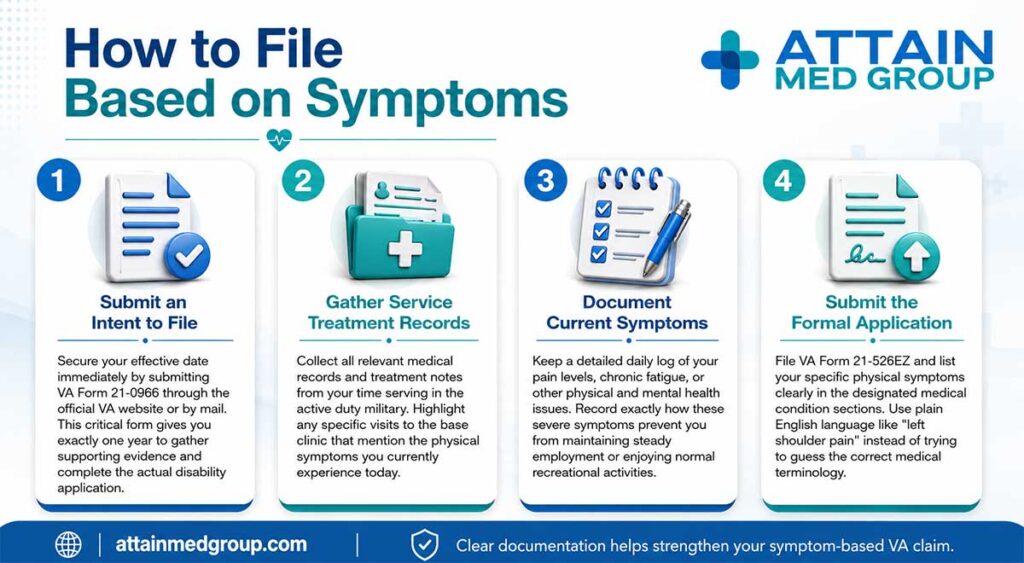
Medical Evidence: Utilizing Lay Evidence to Support Your Symptoms
Medical records provide the solid foundation for your claim, but personal lay evidence fills in the crucial evidentiary gaps. Lay evidence consists of written statements from you, your immediate family members, or your former fellow service members. These official statements describe the initial onset of your symptoms and their ongoing impact on your daily functioning.
When writing a personal statement, focus exclusively on what you personally observe and feel in your own body. Describe the exact frequency, severity, and overall duration of your physical symptoms using plain, straightforward English language. Do not attempt to diagnose yourself or use highly complex medical jargon in your official VA support letters.
Buddy statements carry significant weight when you lack formal medical documentation from your active duty military days. A fellow soldier can officially confirm that you severely injured your ankle during a mandatory combat training exercise. Veteran Service Organizations like the Veterans of Foreign Wars often help veterans gather and format these critical buddy letters.
The VA considers veterans completely competent to report physical symptoms they can observe with their own basic senses. You can legally testify that your knee swells up every morning or that your back constantly aches. However, you are considered legally incompetent to declare that your knee swelling definitely represents a torn anterior cruciate ligament.
️ Warning: Never use internet symptom checkers to self-diagnose your medical condition on official government VA forms. The VA only accepts formal medical diagnoses from qualified healthcare professionals, so stick strictly to describing your observable symptoms.
VA Disability Benefits Mistakes: Filing a VA Claim Without Diagnosis
Many veterans inadvertently sabotage their disability claims by waiting several years for a definitive medical answer from doctors. They suffer through unexplained joint pain or chronic respiratory issues, assuming the VA will reject an incomplete application. Why surrender your rightful VA disability benefits just because a doctor cannot find the right label? This unnecessary delay costs them thousands of dollars in potential back pay and access to immediate medical treatment.
Another frequent error involves exaggerating physical symptoms during the mandatory C&P exam medical examination process. You must describe your absolute worst days accurately, but stretching the truth severely damages your overall legal credibility. Experienced examiners easily recognize obvious inconsistencies between your verbal claims and your actual physical movements during the appointment.
Veterans also frequently make the critical mistake of missing their scheduled C&P exam without providing proper advance notice. Missing this essential medical appointment almost always results in an automatic denial of your symptom-based VA disability claim. If a scheduling conflict arises, you must contact the VA immediately to reschedule your exam for another date.
Finally, veterans often fail to follow up on their personal medical care after filing the initial administrative paperwork. Even if you completely lack a formal diagnosis today, you must continue seeking medical treatment for your symptoms. Consistent medical visits provide ongoing medical evidence that demonstrates the severe, chronic nature of your physical condition to the VA disability rating officials.
Key Takeaways
- Waiting for a formal medical label before filing costs you valuable time and retroactive back pay.
- Personal statements should focus entirely on observable symptoms rather than unsupported medical theories.
- Consistent follow-up care proves that your symptoms are chronic and severely impact your daily life.
Conclusion: Taking Action on Your VA Claim Without Diagnosis
Submitting a va claim without diagnosis is a viable path for veterans suffering from persistent, unexplained symptoms. By documenting your physical limitations and utilizing lay evidence, you can build a strong case for VA disability benefits. Do not let the lack of a formal medical label prevent you from seeking the service-connected disability rating you deserve.