


Tinnitus and migraines are among the most commonly reported conditions by veterans seeking VA disability benefits. While the VA evaluates these conditions separately, research shows they frequently co-occur, share overlapping neurological pathways, and can exacerbate one another. Understanding how to medically link tinnitus and migraines—and providing solid evidence—can improve your combined VA rating and strengthen your claim.
This guide outlines the process for proving service connection, gathering supporting evidence, and leveraging medical nexus letters to maximize VA benefits.

Understanding Tinnitus and Migraines in Veterans
- Characterized by ringing, buzzing, or hissing in the ears.
- Often caused by noise exposure, head trauma, or age-related hearing loss.
- In veterans, prolonged exposure to firearms, aircraft, or combat noise is a common contributor.
- Severe, recurring headaches often accompanied by nausea, light sensitivity, or visual disturbances.
- Can be triggered by stress, sleep disruption, or neurological conditions.
- Studies suggest a significant overlap between migraine sufferers and tinnitus, likely due to shared neural pathways involving the auditory and trigeminal systems.
Step 1: Establish a VA-Recognized Diagnosis
Before connecting the two conditions, the VA requires formal diagnoses from a qualified provider:
- Tinnitus: Typically documented via audiology exams, hearing tests, and symptom reports.
- Migraines: Diagnosed by a neurologist or primary care physician, often supported by patient headache diaries and clinical history.
Tip: Keep detailed logs of symptoms, triggers, and treatment responses—this strengthens claims for both conditions.
Step 2: Understand How the VA Rates These Conditions
Tinnitus Ratings
- Rated under 38 CFR § 4.87, Diagnostic Code 6260.
- Typically assigned a 10% rating, the maximum allowed for a single-ear or bilateral tinnitus claim.
Migraines Ratings
- Rated under 38 CFR § 4.124a, Diagnostic Code 8100.
- Ratings vary from 0% to 50%, depending on frequency, severity, and impact on occupational and social functioning.
Key insight: When tinnitus and migraines co-exist, linking them can justify secondary service connection or support aggravation claims, potentially increasing the overall combined rating.

Step 3: How Tinnitus and Migraines Can Be Linked
Medical Evidence Showing Connection
Research indicates that chronic tinnitus can trigger migraine episodes, and conversely, migraines may worsen auditory symptoms. Linking these conditions for VA purposes often involves demonstrating:
- Shared neurological or vascular pathways
- Symptom correlation (e.g., migraines coincide with tinnitus flare-ups)
- Treatment overlap (e.g., medications or therapy addressing both conditions)
Secondary Service Connection
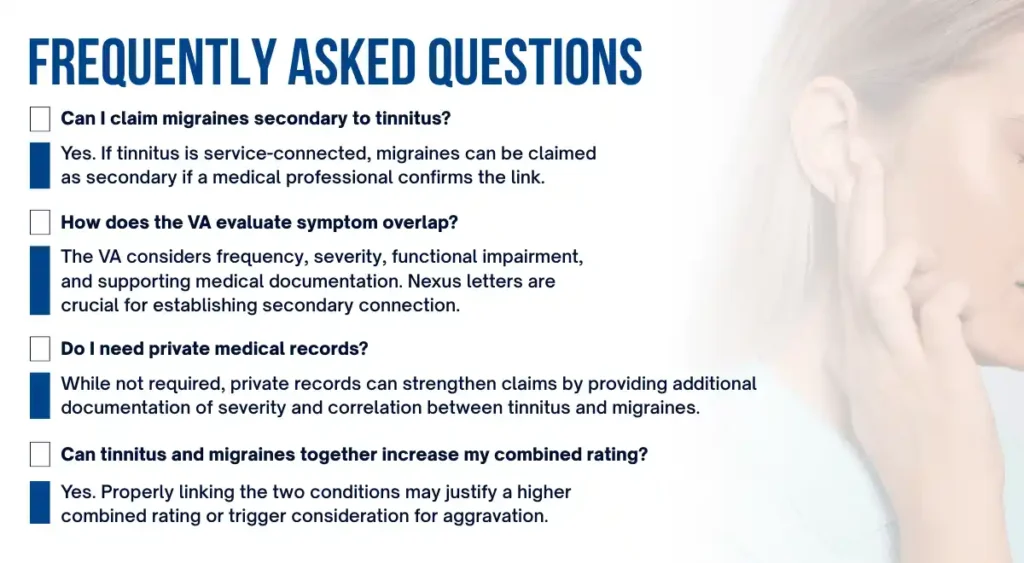
If tinnitus is service-connected, a veteran may file for migraines as secondary to tinnitus. A properly documented nexus letter can explicitly connect migraine development to the existing service-connected tinnitus.
Step 4: Leveraging a Nexus Letter
A nexus letter is one of the most persuasive tools in VA claims. Here’s how it works:
- Written by a qualified medical professional
- Reviews service records, medical history, and current evaluations
- Explains how tinnitus and migraines are “at least as likely as not” connected
- Clarifies whether migraines are secondary to the service-connected tinnitus
Why it matters: Many VA denials cite insufficient evidence linking secondary conditions. A strong nexus letter addresses this gap directly.
Step 5: Supporting Documentation to Strengthen Your Claim
Submitting a well-documented claim is essential to increasing your chances of VA approval—especially when trying to establish a connection between tinnitus and migraines. The VA evaluates claims based on medical evidence, symptom consistency, and functional impact. Collecting thorough documentation can make your claim more compelling and reduce the likelihood of denial.

1. Medical Records
Medical records are the backbone of any VA claim. Include:
- VA Records: Clinic visits, audiology reports, neurology consults, and prior VA C&P exam findings.
- Private Medical Records: Notes from private neurologists, audiologists, or primary care physicians who have treated your tinnitus or migraines.
- Why it matters: These records provide objective proof of diagnosis, treatment history, and the chronic nature of your conditions. They also demonstrate continuity of care, which is critical for both primary and secondary service connection claims.
2. Symptom Logs or Headache Diaries
Detailed symptom tracking provides the VA with a clear picture of the frequency and severity of your conditions:
- Record migraine episodes, duration, triggers (stress, noise, sleep disruption), and severity.
- Track tinnitus flare-ups, including ringing intensity, duration, and impact on concentration or sleep.
- Include notes on functional limitations, such as missing work, avoiding social activities, or difficulty completing tasks.
Why it matters: VA examiners look for consistency over time, and a documented history helps validate both the severity and chronicity of your symptoms.
3. Specialist Evaluations
Specialist reports are highly persuasive when connecting tinnitus and migraines:
- Neurologists can document migraine frequency, severity, and potential neurological links to auditory disturbances.
- Audiologists can confirm tinnitus severity, hearing loss, and interactions with neurological conditions.
- Integrated Reports can highlight overlapping mechanisms, supporting a secondary connection argument.
Why it matters: Specialist documentation lends expert credibility to your claim, providing medical reasoning the VA often requires for approval.
4. Lay Statements
Statements from family, friends, or coworkers are valuable for corroborating symptoms that may not be fully captured in medical records:
- Describe observed migraine attacks, visible discomfort, or behavioral changes due to tinnitus.
- Note daily life impact, such as missed work, limited social interactions, or inability to perform household tasks.
Why it matters: The VA recognizes lay evidence as supportive of functional impairment, particularly when symptoms fluctuate or are difficult to measure objectively.
5. Treatment History
Documenting your treatment history demonstrates ongoing management and severity of your conditions:
- Medications: Prescriptions for migraine prophylaxis, pain management, or tinnitus-related therapies.
- Therapies: Physical therapy, vestibular therapy, biofeedback, or cognitive behavioral therapy addressing migraines or tinnitus.
- Procedures or Interventions: Botox injections, neuromodulation, hearing aids, or other relevant treatments.
Why it matters: Treatment history not only shows chronicity but can also support higher disability ratings if symptoms persist despite ongoing therapy.
Pro Tip: When preparing your supporting documentation, organize it clearly, label each record, and reference it in your claim submission. Providing the VA with a well-structured evidence package demonstrates thoroughness, making it easier for examiners to understand and approve your claim.
Step 6: Filing and Tracking Your VA Claim
Submitting your claim correctly and monitoring its progress is critical to ensuring timely review and maximizing your chances of approval. This step consolidates all your evidence and positions your claim for success.

1. Determine the Type of Service Connection
Before filing, decide whether you are claiming:
- Primary Service Connection: For either tinnitus or migraines as directly linked to military service.
- Secondary Service Connection: For migraines caused or aggravated by service-connected tinnitus, or tinnitus exacerbated by service-connected migraines.
Why it matters: The VA evaluates primary and secondary claims differently. Secondary claims require a clear medical nexus linking the new condition to an existing service-connected disability.
2. Submit the Correct VA Form
Choose the appropriate VA form based on the type of claim:
- VA Form 21-526EZ (Application for Disability Compensation and Related Compensation Benefits): Use this for new claims.
- VA Form 20-0995 (Decision Review Request: Supplemental Claim): Use this for previously denied or rated claims when submitting new and relevant evidence.
Tip: Include all supporting documentation with your initial submission. Doing so avoids delays and reduces the need for follow-up requests.
3. Attach Comprehensive Evidence
Your claim should include a full package of documentation, such as:
- Nexus Letters: Linking migraines and tinnitus, or connecting a secondary condition to a service-connected disability.
- Symptom Logs or Diaries: Demonstrating chronicity, frequency, and severity over time.
- Medical Records: VA and private treatment notes showing diagnosis, progression, and functional limitations.
- Specialist Evaluations: Neurology, audiology, or other relevant reports supporting the link.
- Lay Statements: Corroborating the impact on daily life.
Why it matters: A well-organized, evidence-rich submission reduces the chance of denial and helps VA examiners make informed, favorable decisions.
4. Track Your Claim Status
Once submitted, actively monitor your claim:
- VA.gov: Use your VA account to check claim status, view documents, and receive updates.
- Respond Promptly: If the VA requests additional evidence or schedules a C&P (Compensation & Pension) exam, respond quickly to avoid delays.
- Keep Records: Maintain copies of every submission, correspondence, and medical document.
Why it matters: Staying proactive ensures your claim doesn’t stall and allows you to provide missing or clarifying information as needed.
5. Additional Tips for Success
- Organize documents chronologically and label each clearly.
- Include a cover letter summarizing your claim, highlighting service connection type, and referencing all attached evidence.
- Consider expert guidance from medical professionals familiar with VA claims to maximize approval chances.
Bottom Line: Filing and tracking your VA claim is not just administrative—it’s a strategic step. By clearly establishing service connection, submitting complete evidence, and actively monitoring progress, you position your tinnitus and migraine claim for success and a potential higher combined rating.
Why Veterans Trust Attain Med Group
At Attain Med Group, we specialize in providing veteran-centered medical documentation that bridges gaps in evidence:

- Expert nexus letters linking tinnitus and migraines
- Comprehensive review of VA and private medical records
- Secondary service connection and aggravation evaluations
- Support navigating complex VA rating criteria
Veteran-owned and veteran-focused, we provide the expertise and guidance needed to maximize your VA disability benefits.
Take Action: Strengthen Your Tinnitus & Migraine VA Claim
If you suffer from tinnitus, migraines, or both, don’t wait. Working with a qualified medical professional can significantly increase your chances of VA approval.

✅ Contact Attain Med Group today to:
- Review your medical and service records
- Obtain a professional nexus letter
- Ensure your claim is fully supported and VA-ready
Accurate medical evidence can be the difference between a denied claim and the benefits you deserve.