

If you recently filed a VA disability claim, you may receive a development letter from VA requesting additional evidence. This VA development letter is an important part of the claims process. How you respond can affect your claim status, decision timeline, and potential back pay.
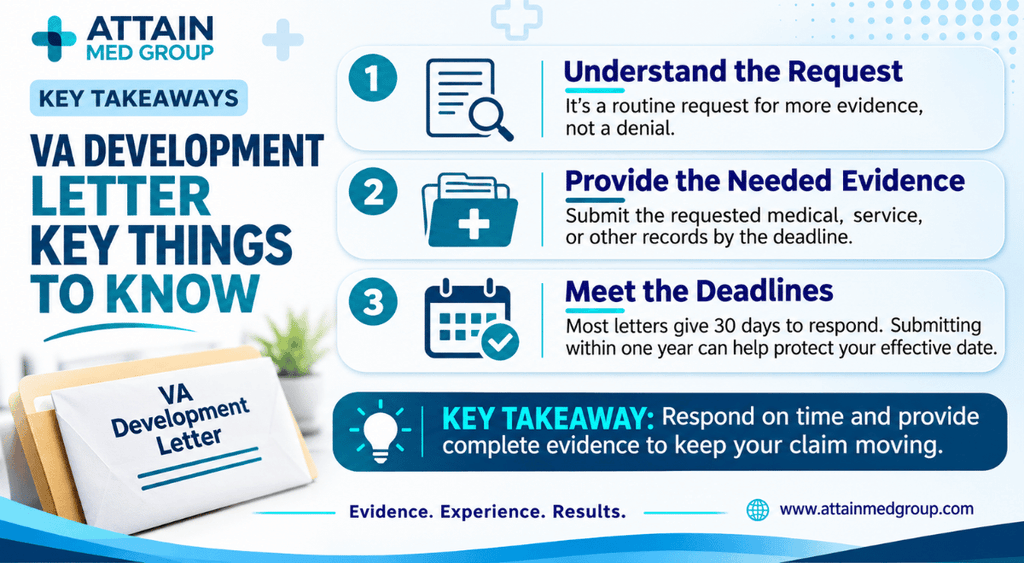
Receiving a development letter from VA can feel overwhelming, especially if you don’t understand why it was sent. However, VA development letters are often a routine part of the VA’s duty to assist rather than a denial. They typically mean the VA needs more information to properly evaluate your claim.
This guide explains why the VA sends development letters, what medical evidence or service records may be requested, and how to respond properly. You’ll also learn about important deadlines, VA benefits, and ways to prevent delays in your VA disability claims.
A development letter from VA is an official notice requesting additional evidence or information needed to evaluate your VA disability claim. The VA typically sends these letters during the evidence-gathering stage of the VA claims process. You may receive the letter by mail, while your claim status on VA.gov may also update.
The VA development letter has a legal foundation under the Veterans Claims Assistance Act of 2000 and 38 U.S.C. § 5103. These rules require the VA to explain what medical evidence or other information is needed and who must provide it. This notice is sometimes called a “5103 notice” or duty-to-assist letter.
The VA must make reasonable efforts to obtain federal records, including military records, service records, and VA medical files. However, private medical records generally require your authorization or assistance. Understanding these responsibilities helps prevent delays in your disability claim.
What the Letter Typically Contains
Most VA development letters identify the requested evidence, explain what the VA will obtain, and provide a response deadline. The letter may also include submission instructions, your claim file number, and details about the additional evidence needed to support your VA benefits application.
Read every page carefully before responding. Missing a request for medical evidence, service records, or other documents can delay your claim decision. Reviewing the complete letter and understanding the VA’s duty to assist helps ensure you provide the necessary information on time.
Why the VA Sends Development Letters
Missing, incomplete, or conflicting evidence can delay VA disability claims. Rather than immediately issuing a decision letter, the VA may send a development letter requesting additional evidence. This helps the VA properly evaluate your disability benefits claim before making a decision.
Why does the VA send development letters? During the claim development process, reviewers may identify gaps in your medical records, service history, or evidence connecting your condition to military service. These requests help clarify information needed for a fair VA decision.
Common Evidence Requests
The requested evidence varies by claim, but most VA development letters ask for one or more of the following:
- Medical records from private doctors, clinics, or hospitals
- Military records or service treatment records the VA could not obtain
- A signed VA Form 21-4142, allowing the VA to request private records
- Buddy statements from family, friends, or fellow service members
- Employment and income information for pension or individual unemployability claims
- Marriage, divorce, or birth documents to verify dependents for additional VA benefits
The VA may also schedule a Compensation and Pension (C&P) exam during the claims process. Missing this exam can affect your claim decision. If you cannot attend, contact the VA immediately to reschedule and prevent delays.
Note: Your C&P exam notice may arrive separately from the development letter. Treat both with the same urgency, because exam results often carry more weight than any other single piece of evidence in your file.
How to Respond to a VA Development Letter
Responding correctly is simpler than most veterans expect. The steps below walk you from the moment the envelope arrives until your evidence is confirmed on file. Following them in order keeps your claim moving and protects your effective date.
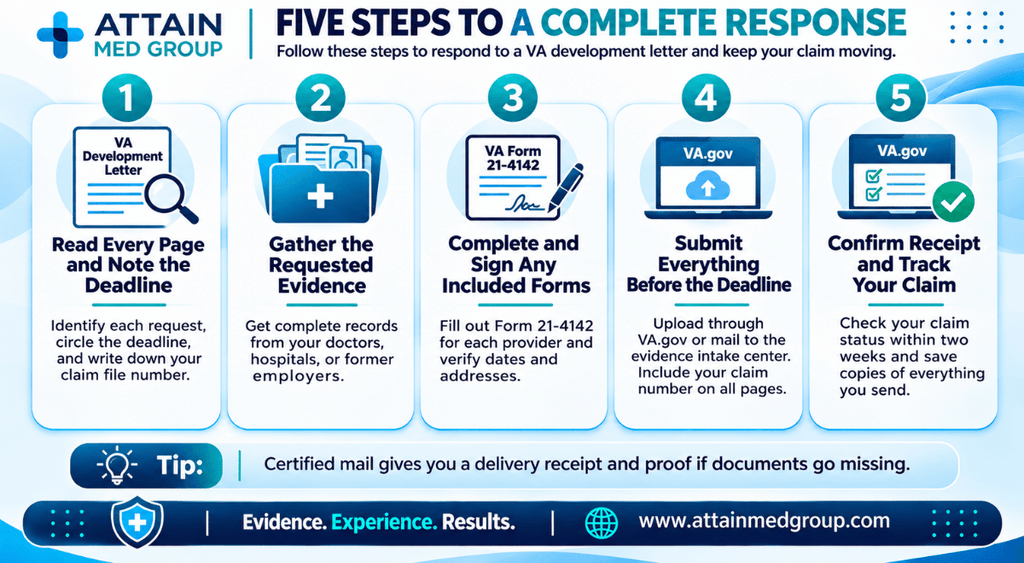
Should veterans submit medical evidence themselves or let the VA handle it? The answer is both. Submit the requested evidence you already have and sign the necessary authorization forms so the VA can obtain additional records. This helps keep your disability claim moving through the VA claims process.
Responding promptly can help prevent delays in your claim decision. According to VA claims processing data, processing times vary depending on evidence requirements and claim complexity. Providing additional evidence early helps the VA properly evaluate your claim and move toward a decision.
Pro Tip: Make a complete copy of everything you submit, and save your upload confirmation or certified mail receipt. If the VA misplaces your documents, that proof lets you resubmit instantly without losing your place in line.
Deadlines and What Happens If You Do Not Respond
Most VA development letters request a response within 30 days. Under 38 CFR § 3.159, the VA may issue a claim decision based on available evidence after the stated response period, depending on the circumstances. Responding promptly helps prevent delays in your disability claim.
However, veterans generally have up to one year from the date of a notice under 38 U.S.C. § 5103 to submit requested evidence. Evidence received within that period may preserve potential VA disability benefits tied to the original claim. If the VA has already issued a decision, different review deadlines and effective-date rules may apply.
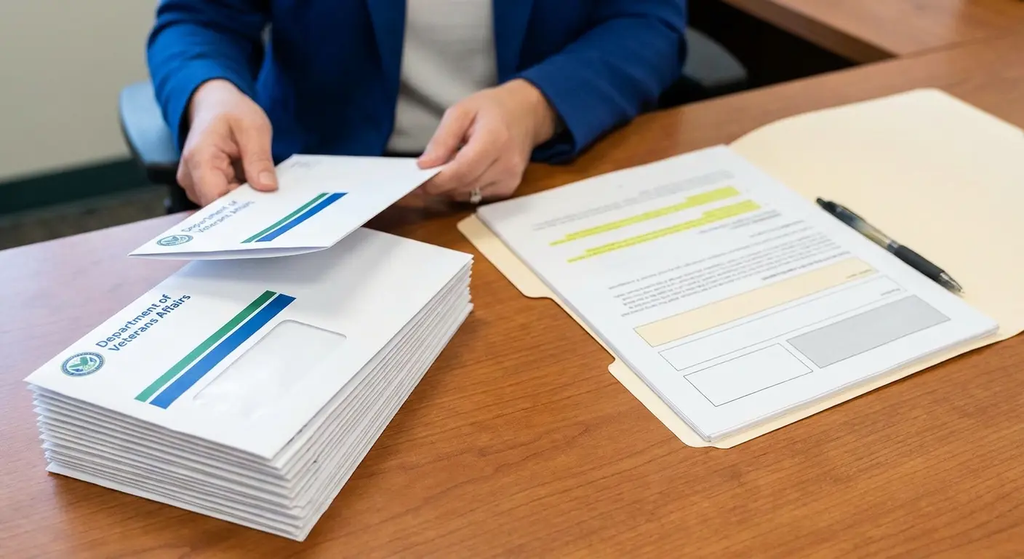
Missing deadlines can affect your VA benefits and potential back pay. For example, if a veteran receives a decision letter before submitting important medical evidence, additional steps may be necessary to have that evidence considered. Understanding the VA decision review process can help veterans protect their rights and avoid unnecessary delays.
️ Warning: Never ignore a development letter or assume the VA will locate the records on its own. A decision made on an incomplete record is one of the most common reasons strong claims end in denial.
What if you genuinely have nothing new to submit? You can respond in writing stating exactly that and ask the VA to decide based on the current record. This simple step often shaves weeks off your wait, because the agency no longer has to hold the claim open on your account.
Practical Tips to Keep Your Claim Moving
Your response to the development letter is only one lever you control. A few broader habits make the entire process faster and far less stressful:
- File fully developed claims going forward. The Fully Developed Claims program lets you submit all evidence up front in exchange for a faster decision.
- Work with an accredited representative. A Veterans Service Organization officer costs nothing and can spot missing evidence before the VA does. You can find one through the VA’s accreditation search tool.
- Upload instead of mailing. Documents submitted through VA.gov post to your file faster and generate instant confirmation.
- Attend every scheduled exam. Reschedule conflicts immediately instead of missing an appointment.
- Keep your address and dependents current. Letters sent to an old address still start the 30-day clock, whether you see them or not.
If the letter asks for lay evidence, our guide to writing effective buddy statements walks through format and real examples. And if a C&P exam is coming, reviewing what happens during a C&P exam will help you show up prepared rather than surprised.
The Bottom Line
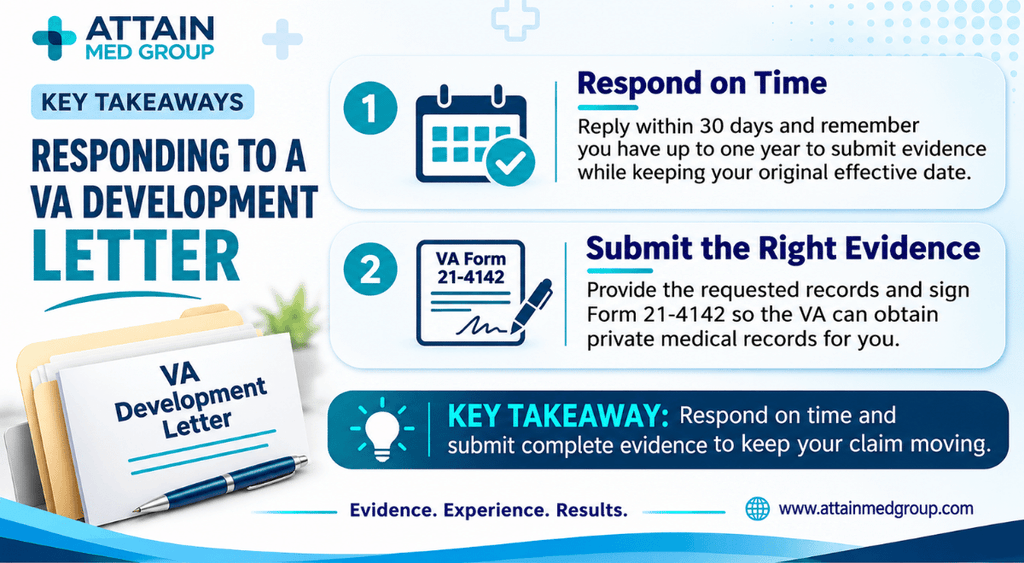
A development letter from VA is not a denial. It means the VA needs additional evidence to properly evaluate your disability claim. Responding promptly, providing complete medical evidence, and keeping proof of submission can help prevent delays in your claim decision.
Remember to read every page, gather the requested evidence, complete authorization forms, and respond within the deadline stated in your letter. If you have nothing to submit, notify the VA and request a decision based on the available records. Following the VA claims process carefully can help protect your eligibility for VA disability benefits and applicable effective-date rules.
Veterans deserve a fair review of their VA benefits applications. If you need guidance, a VA-accredited representative can help you understand the development letter, review evidence requirements, and prepare an appropriate response.