


If you have a pulmonary function test coming up, you may be wondering how to pass a pulmonary test and what you can do to prepare. For veterans and military families, these tests can be especially important because the results may influence VA disability ratings and treatment plans. According to VA.gov, medical evidence plays an important role in evaluating service-connected conditions, including respiratory disabilities.
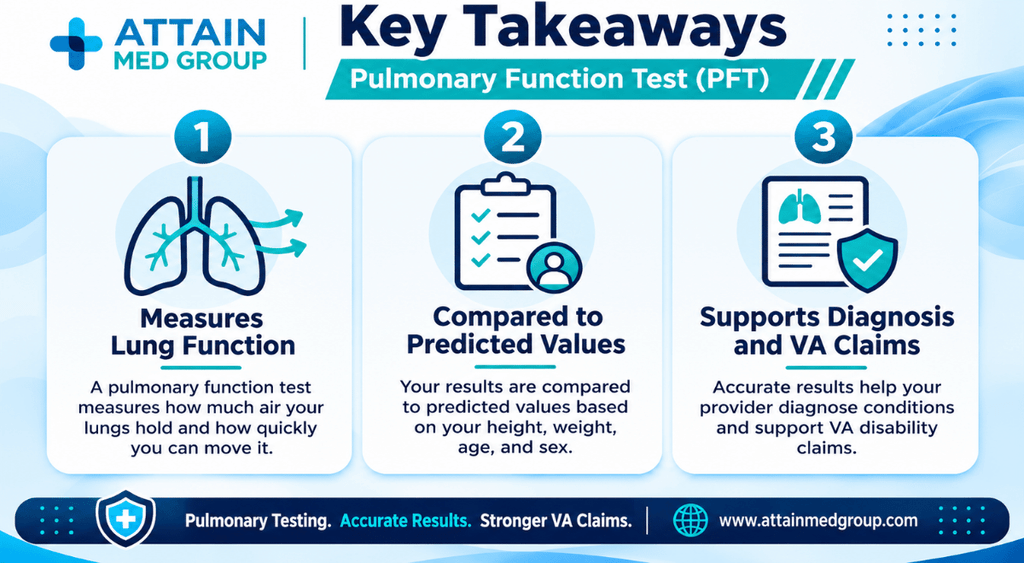
The good news is that understanding how to pass a pulmonary test can help you feel more confident and prepared. A pulmonary function test (PFT) measures how well your lungs work, including how much air you can inhale and exhale and how efficiently your lungs transfer oxygen.
Here is the most important thing to know upfront: You cannot technically fail a pulmonary function test. The goal is not to achieve a passing score but to provide accurate results that reflect your actual lung function. Proper preparation, following your healthcare provider’s instructions, and giving your best effort can help ensure reliable measurements. This guide explains how to pass a pulmonary test by preparing correctly, understanding what the test measures, and knowing what to expect on test day.
A pulmonary function test (PFT) is a series of breathing tests that show how well your lungs work. If you are wondering how to pass a pulmonary test, understanding what these tests measure is an important first step. PFTs evaluate lung volume, lung capacity, airflow speed, and gas exchange. Your healthcare provider uses these measurements to assess how efficiently air moves in and out of your lungs.
During the most common breathing test, called spirometry, you breathe into a mouthpiece connected to a small electronic machine called a spirometer. This device records how much air you can exhale and how quickly you can release it. Your results are compared with predicted values based on factors such as age, height, and sex. Understanding the procedure can help you prepare properly and produce accurate results.
Doctors order pulmonary function tests to help diagnose respiratory conditions such as asthma, chronic obstructive pulmonary disease (COPD), and pulmonary fibrosis. These tests also help monitor changes in lung function and evaluate how well treatments are working. For veterans, pulmonary function test results may also play an important role in VA disability evaluations. According to VA.gov, medical evidence helps determine eligibility for disability benefits related to service-connected conditions.
Learning how to pass a pulmonary test does not mean trying to achieve a specific score. Instead, it means following your healthcare provider’s instructions, giving your best effort, and ensuring the test accurately reflects your lung function.
Why Veterans Often Need Pulmonary Function Testing
Military service can expose veterans to airborne hazards that may affect breathing for years after deployment. Burn pits, desert dust, diesel exhaust, and industrial chemicals have been associated with respiratory health concerns. The VA Airborne Hazards and Open Burn Pit Registry provides information about potential exposures and supports research into long-term respiratory health among veterans.
Understanding how to pass a pulmonary test is especially important for veterans undergoing respiratory evaluations. Pulmonary function testing provides objective measurements of lung function that healthcare providers can use to assess breathing difficulties. The VA also considers these results when evaluating certain service-connected respiratory conditions, including chronic obstructive pulmonary disease (COPD) and constrictive bronchiolitis. Under the VA Schedule for Rating Disabilities, pulmonary function measurements are used to determine disability ratings for many respiratory conditions.
Preparing properly for your test helps ensure accurate measurements that reflect your actual breathing ability. Reliable results can support your medical documentation and help the VA evaluate your condition fairly. You can also learn more in our guide to VA disability ratings for respiratory conditions.
Research continues to expand our understanding of deployment-related respiratory illnesses. Researchers are studying how airborne exposures may contribute to long-term lung problems among veterans. You can explore ongoing studies through ClinicalTrials.gov, which provides information about clinical research, including studies involving respiratory conditions and military-related exposures. Participating in an eligible clinical trial may provide access to investigational treatments while contributing to research that could benefit future generations of service members.
Common Types of Pulmonary Function Tests
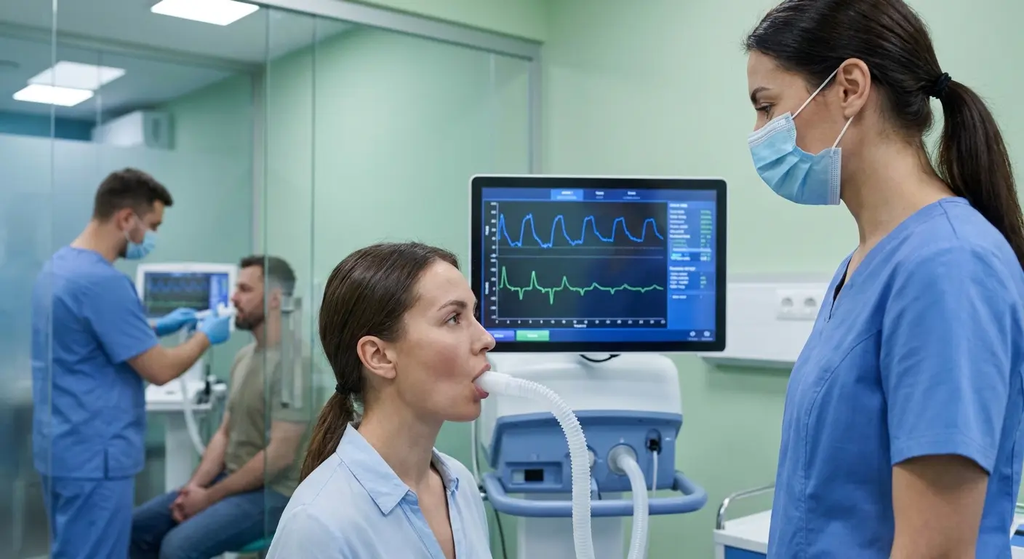
Your appointment may include one function test or several, depending on what your doctor needs to know. Here are the three most common pulmonary function tests and what each one measures.
Spirometry
A spirometry test is the function test you will almost certainly complete first. You take deep breaths, seal your lips around a mouthpiece, and blast the air out as hard as you can. Spirometry measures how much air you exhale in one second (FEV1) and your total exhaled volume (FVC).
Lung Volume Testing
Some function tests measure lung volume more precisely than spirometry alone. During body plethysmography, you’ll sit inside an airtight box about the size of a phone booth and breathe through a mouthpiece. Pressure changes in the booth let technicians calculate the exact amount of air in your lungs, including air you cannot exhale.
Diffusion Capacity (DLCO)
The diffusion capacity test shows how well your lungs transfer oxygen into your bloodstream. You inhale a tiny, harmless amount of carbon monoxide, hold your breath for about ten seconds, then exhale. This measurement can reveal pulmonary disease that other tests miss, including early damage from toxic exposures.
How to Prepare for Your Pulmonary Function Test
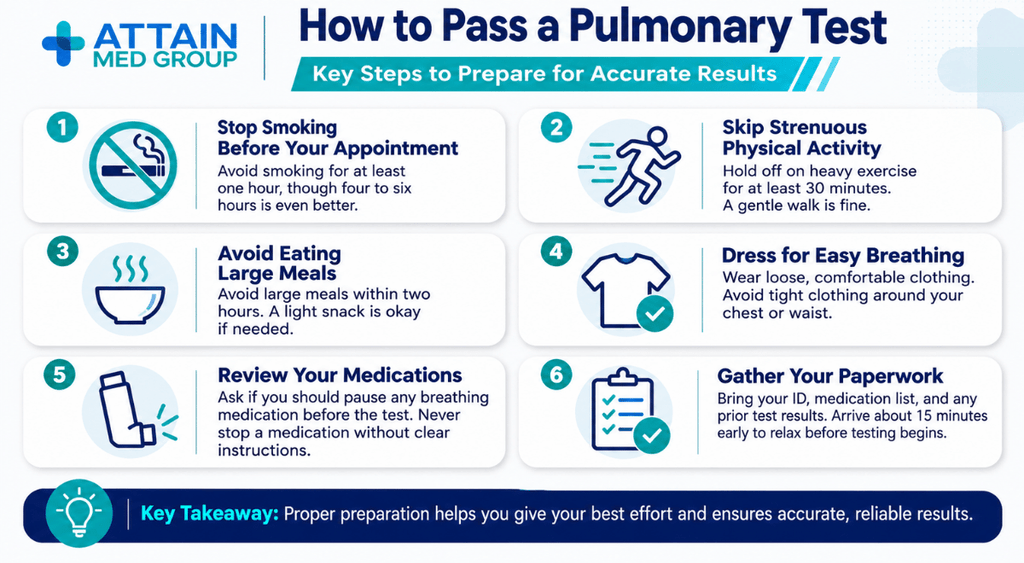
Preparation starts about 24 hours before your appointment. Small choices, like what you eat and wear, can shift your results in either direction. Follow these steps so your numbers reflect your true lung health. You can also review the VA’s respiratory disability evaluation criteria to understand how pulmonary function test results may be used in VA disability evaluations.
If you are wondering how to pass a pulmonary test, knowing what happens during the procedure can help you feel more prepared and confident. A pulmonary function test typically takes 30 to 90 minutes, depending on the types of breathing measurements required. Trained healthcare professionals will guide you through each step, explain the instructions, and help you perform the breathing techniques correctly.
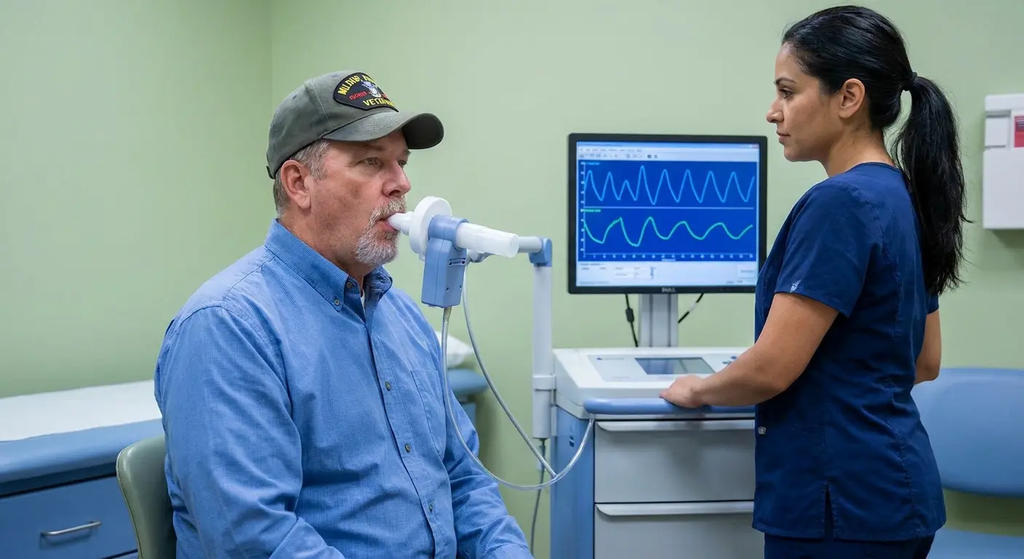
During spirometry testing, you will breathe through a mouthpiece connected to a specialized machine. You may also wear soft nose clips to prevent air from escaping through your nose. The technician will ask you to take a deep breath and exhale forcefully to measure how much air your lungs can release and how quickly you can breathe it out.
For spirometry, technicians generally aim to obtain at least three acceptable breathing efforts to confirm that the results are reliable and consistent. The American Thoracic Society and European Respiratory Society establish standardized guidelines for pulmonary function testing to help ensure accurate measurements.
Between attempts, you will have time to rest and breathe normally. The most important part of learning how to pass a pulmonary test is following your technician’s instructions, giving your best effort, and allowing the results to reflect your actual lung function.
What to Expect During the Test
If you are wondering how to pass a pulmonary test, knowing what happens during the procedure can help you feel more prepared and confident. A pulmonary function test typically takes 30 to 90 minutes, depending on the types of breathing measurements required. Trained healthcare professionals will guide you through each step, explain the instructions, and help you perform the breathing techniques correctly.
During spirometry testing, you will breathe through a mouthpiece connected to a specialized machine. You may also wear soft nose clips to prevent air from escaping through your nose. The technician will ask you to take a deep breath and exhale forcefully to measure how much air your lungs can release and how quickly you can breathe it out.
For spirometry, technicians generally aim to obtain at least three acceptable breathing efforts to confirm that the results are reliable and consistent. The American Thoracic Society and European Respiratory Society establish standardized guidelines for pulmonary function testing to help ensure accurate measurements.
Between attempts, you will have time to rest and breathe normally. The most important part of learning how to pass a pulmonary test is following your technician’s instructions, giving your best effort, and allowing the results to reflect your actual lung function.