

Two veterans can submit similar paperwork but receive very different decisions. One receives approval with an appropriate VA disability rating, while the other faces delays or a denial. Understanding why some VA disability claims are stronger than others starts with recognizing how the Department of Veterans Affairs evaluates medical evidence, service connection, and the severity of each veteran’s condition.
Strong VA disability claims typically include a current diagnosis, supporting medical records, and a credible medical opinion connecting the condition to military service. However, missing documentation, unclear symptoms, or incomplete evidence can weaken a claim. According to VA.gov’s disability eligibility guidelines, veterans generally need evidence showing that their condition is connected to military service.

Veterans seeking higher VA disability ratings or appealing denied claims should also understand how the VA reviews additional evidence. Depending on the circumstances, submitting a supplemental claim with new and relevant evidence may help address a previous denial.
Conditions related to Agent Orange exposure and certain other presumptive conditions may follow different service connection rules. Understanding VA disability benefits and how disability ratings are evaluated can help veterans prepare more complete documentation.
This guide explains what strengthens a VA disability claim, how medical evidence influences the rating assigned, and which common mistakes veterans should avoid when preparing or reviewing their claims.
Understanding Why Some VA Disability Claims Are Stronger Than Others
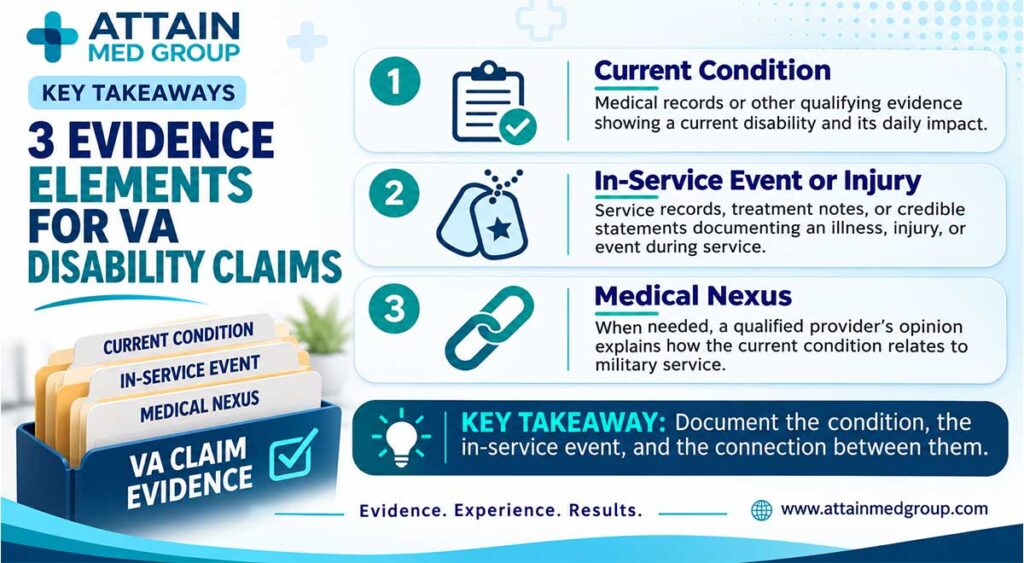
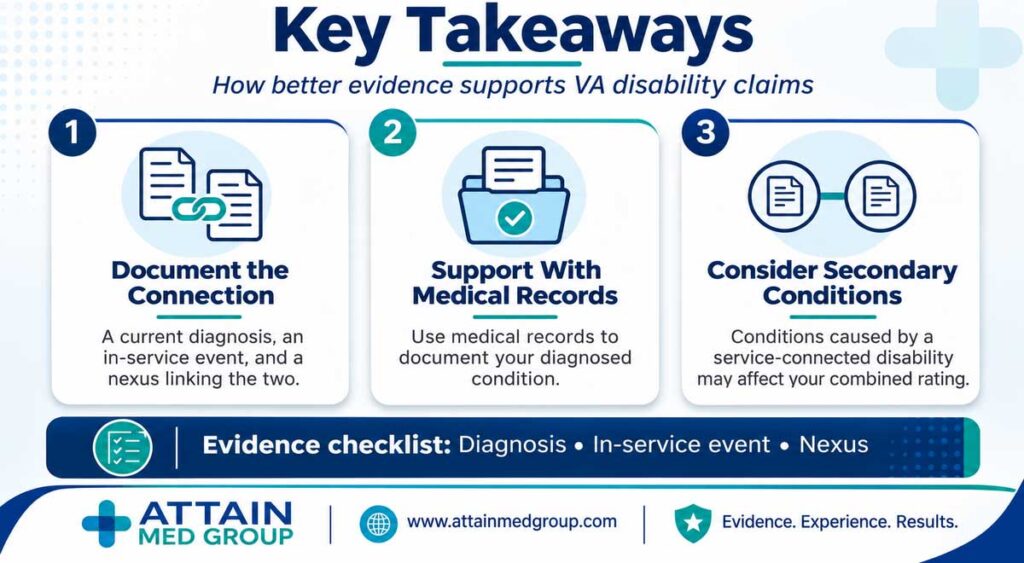
Strong VA disability claims generally rely on three essential elements: a current disability, an in-service event, injury, or illness, and evidence connecting the two. Understanding these requirements helps veterans avoid common mistakes and prepare stronger documentation. According to the Department of Veterans Affairs, these elements are central to establishing service connection for many disability claims.
Understanding VA disability claims also means recognizing that missing documentation can create challenges. For example, a veteran experiencing persistent knee pain may need medical evaluations, treatment records, or evidence of functional impairment to support the claim. Although a formal diagnosis is often important, certain symptoms causing functional impairment may also qualify as a disability under applicable VA rules.
Veterans should review their medical records carefully before filing. Incomplete evidence, unclear service history, or an unsupported connection between a condition and military service can lead to a denial. Learning how to avoid common VA disability claim mistakes can help veterans submit more complete evidence and communicate symptoms accurately during evaluations.
Secondary conditions also deserve attention. A service-connected knee injury that changes a veteran’s walking pattern may contribute to hip or back problems over time. When supported by appropriate medical evidence, these conditions may qualify for secondary service connection and potentially increase a veteran’s combined VA disability rating. Learn more about secondary service-connected claims through VA.gov and VA disability compensation.
Medical Evidence Shapes Your Disability Rating
Establishing service connection is only the first step toward receiving VA disability benefits. The VA disability rating assigned to a veteran’s condition determines the level of monthly compensation. Strong medical evidence helps establish the connection to military service while documenting the severity, frequency, and impact of the condition.
Veterans looking to strengthen VA disability claims should focus on submitting accurate, relevant documentation. According to the Department of Veterans Affairs, supporting evidence helps the VA evaluate eligibility and determine appropriate disability ratings.
The strongest claims often include several important records:
- Service treatment records documenting injuries, illnesses, or symptoms during military service.
- Medical records from VA and private healthcare providers showing the history and progression of a veteran’s condition.
- Nexus letters containing a qualified provider’s medical opinion connecting the condition to military service, when needed.
- Disability Benefits Questionnaires (DBQs) documenting symptoms, clinical findings, and functional limitations relevant to the rating criteria.
- Lay statements from family members, fellow service members, or caregivers explaining observable symptoms and their impact on daily activities.
Incomplete documentation can make understanding VA disability claims more challenging. For example, a veteran with consistent treatment records may provide a clearer picture of how a condition has progressed. However, gaps in treatment do not automatically result in denial, particularly when credible statements or other supporting evidence explain the missing records.
Veterans seeking to increase a VA disability rating should also document changes in their condition and communicate symptoms accurately during medical evaluations. The VA considers the available evidence when determining whether a higher rating is warranted.
Another important consideration is the benefit-of-the-doubt rule. Under 38 U.S.C. § 5107, when the positive and negative evidence regarding a material issue is in approximate balance, the VA must resolve reasonable doubt in the veteran’s favor. However, this rule does not replace the need for sufficient supporting evidence.
Ultimately, well-organized medical documentation can help the VA understand a veteran’s condition, evaluate the evidence fairly, and assign a disability rating that reflects the applicable criteria.
Why Nexus Letters Carry So Much Weight
A nexus letter is a written opinion from a qualified provider stating your condition is “at least as likely as not” connected to service. That phrase mirrors the VA’s legal standard of proof, which explains why the exact wording matters so much. The strongest letters explain the reasoning, cite specific records, and address other possible causes.
Pro Tip:A one-paragraph letter with no rationale carries little weight. Ask your provider to reference specific service records, treatment notes, and medical literature that support the connection.
DBQs Translate Your Condition Into Rater Language
Disability Benefits Questionnaires (DBQs) help healthcare providers document the medical findings needed to evaluate a veteran’s condition under the VA disability rating criteria. These forms capture important details, such as range-of-motion measurements for knee conditions or laboratory results for kidney disease. A properly completed DBQ provides structured medical evidence that can help the VA assess the severity of a service-connected disability.
Veterans may also ask a qualified private healthcare provider to complete a publicly available DBQ. The VA considers relevant private medical evidence when reviewing disability claims, although it may still request a Compensation and Pension (C&P) examination if additional information is necessary.
A detailed DBQ can help support an accurate VA disability rating by documenting symptoms, functional limitations, and clinical findings. However, submitting a DBQ does not guarantee a higher percentage or approval. The final rating depends on the applicable VA Schedule for Rating Disabilities and the evidence available in the veteran’s claim file.
Why Certain Conditions Win More Often
Not every diagnosis follows the same service connection requirements. VA disability claims involving presumptive conditions may be easier to establish because the VA presumes certain illnesses are connected to qualifying military service or exposures. For example, veterans who meet the eligibility requirements for Agent Orange exposure may qualify for presumptive service connection for conditions such as type 2 diabetes and Parkinson’s disease without having to prove an individual medical nexus to that exposure.
The PACT Act of 2022 expanded VA benefits eligibility for veterans exposed to burn pits, Agent Orange, and other toxic substances. It added several presumptive conditions associated with qualifying service in specific locations and periods. Veterans who meet the applicable requirements may benefit from a simplified service connection process, although evidence of a current qualifying condition and eligible service is still necessary.
The Most Common VA Disability Claims
Tinnitus and hearing loss are among the most commonly recognized service-connected conditions. Military personnel may experience hazardous noise exposure from aircraft, weapons, machinery, and other equipment. Under the VA Schedule for Rating Disabilities, recurrent tinnitus generally receives a maximum schedular rating of 10 percent, while hearing loss ratings depend on audiometric testing, including puretone thresholds and speech discrimination scores.
Mental health conditions, including post-traumatic stress disorder (PTSD), are also common among veterans seeking VA disability benefits. The VA has specific rules for establishing service connection for PTSD, including certain circumstances involving fear of hostile military or terrorist activity. According to the VA’s PTSD disability benefits guidance, eligibility depends on the required evidence connecting the condition to military service. PTSD disability ratings reflect the severity of symptoms and their effects on occupational and social functioning.
Musculoskeletal conditions, including back, knee, shoulder, and ankle problems, also represent a significant portion of VA disability claims. These conditions are evaluated using criteria such as range of motion, functional limitations, and other documented findings. Under 38 CFR Part 4, disability ratings vary depending on the affected joint, diagnosis, and severity of impairment. Accurate medical documentation helps the VA determine the appropriate rating for each service-connected condition.

How the VA Assigns Your Disability Rating
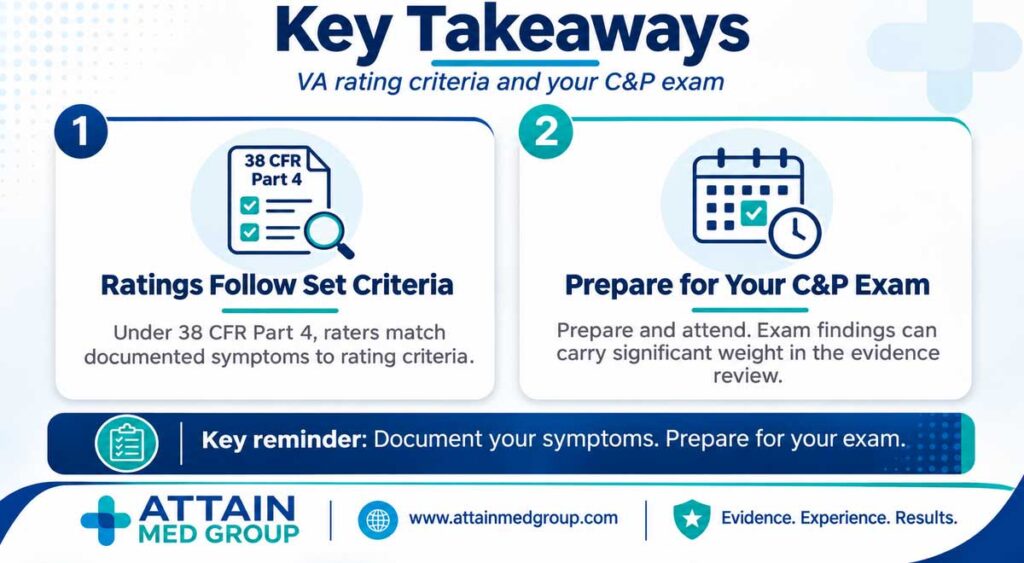
After granting service connection, the VA assigns a percentage from 0 to 100 in ten-point steps. Raters match your symptoms against criteria in 38 CFR Part 4, the Schedule for Rating Disabilities. That schedule reads like a menu, with each condition listing objective findings and the percentage each finding earns.
Frequency and severity drive the number. A veteran whose migraines force monthly prostrating attacks rates differently than one with occasional headaches. The details in your treatment notes matter as much as the diagnosis itself, and a va disability rating can rise later if the veteran’s condition worsens over time.
The C&P Exam Often Decides the Outcome
Many VA disability claims require a Compensation and Pension (C&P) exam, which helps the VA evaluate the severity of a veteran’s condition and determine an appropriate disability rating. The exam findings can significantly influence the decision alongside medical records and other supporting evidence. Treat the appointment seriously, describe your symptoms honestly, explain how your condition affects daily activities, and avoid downplaying your limitations. If your symptoms fluctuate, explain both your typical and worst days. Follow the VA’s claim exam preparation guidance to understand what to expect.
Combined Ratings Follow VA Math
Multiple disability ratings do not add together through simple addition. Instead, the VA uses a combined ratings formula based on the remaining percentage of the veteran’s overall ability. For example, a 50 percent rating combined with a 30 percent rating produces 65 percent, which rounds to a 70 percent combined VA disability rating. Veterans can review the official VA combined ratings table to understand how multiple conditions affect their overall percentage. A VA disability benefits calculator can also help estimate combined ratings before requesting an increase, although the VA makes the final determination.
The Bottom Line on Building a Stronger VA Disability Claim
A strong VA disability claim starts with preparation, accurate documentation, and clear medical evidence. Veterans who understand the VA’s disability eligibility requirements are better equipped to establish service connection, support an appropriate disability rating, and avoid preventable delays or denials.
Before filing, review your medical records, confirm that your evidence addresses the VA’s evidence requirements, and document how your condition affects your daily life. If you have secondary conditions or previously denied claims, submitting additional evidence through a Supplemental Claim may help strengthen your case when that review option is appropriate.
Remember, a successful VA disability claim is not about submitting more paperwork. It is about providing relevant, credible evidence that answers the VA’s questions. Taking time to organize your records and understand the VA disability rating criteria can make the process easier to navigate.