

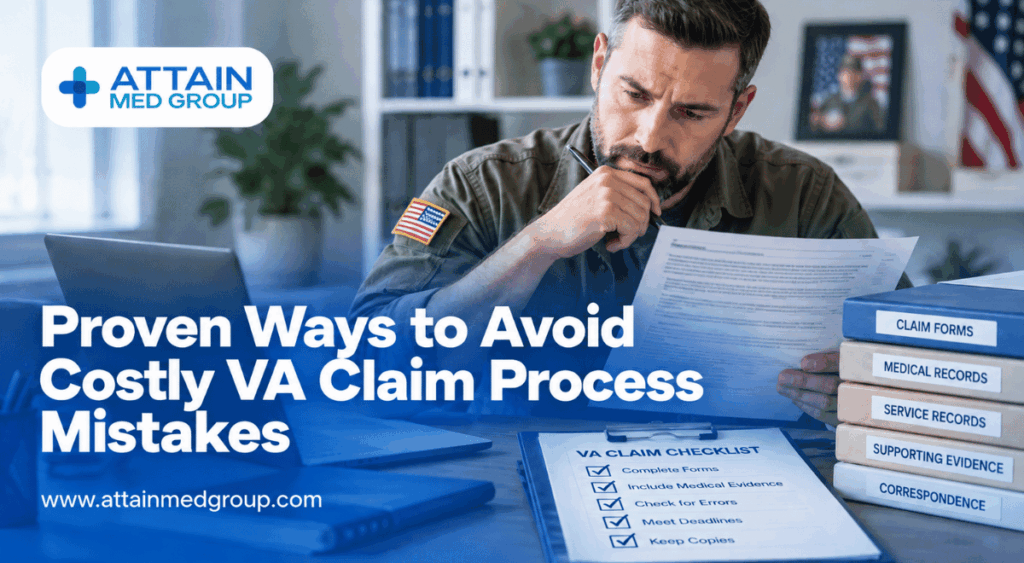
Filing a va disability claim requires thorough preparation and highly precise documentation from your medical providers. Understanding What Veterans Should Know About the VA Claim Process is essential for securing the veterans disability benefits you earned through your dedicated military service. Veterans often find the system frustrating because the federal government enforces incredibly strict evidentiary rules and timelines. Understanding exactly how the Department of Veterans Affairs operates will save you significant time and prevent unnecessary application denials. This detailed guide explains the entire administrative procedure from your initial document submission to the final monetary award.
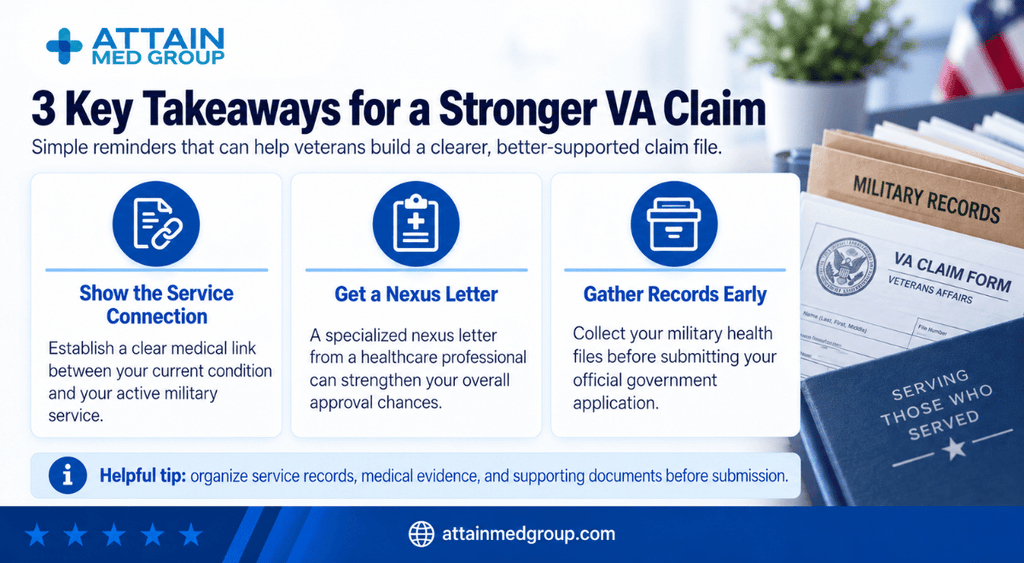
To receive disability benefits, you must prove your injury or illness directly relates to your active military service. This fundamental requirement represents the concept of service connection, which ultimately dictates your overall approval odds. Without proving this specific connection, the government will deny your disability claim regardless of your current health status. You must demonstrate a clear medical link between your time in uniform and the symptoms you experience today.
You must show you served on active duty, active duty for training, or inactive duty training periods. Next, you must provide official medical records linking your current diagnosis to a documented in-service event or injury. A qualified healthcare provider must supply a nexus letter that bridges the medical gap between service and symptom. These medical records serve as the primary evidence that the rating authorities use to validate your request for assistance.
Many veterans struggle with this initial step because old military injuries sometimes lack immediate or comprehensive clinical documentation. You should always request your complete military personnel and health files before you file your official va claim. Having comprehensive evidence from the very beginning makes your va disability claim application proceed much more smoothly through the system. Proactive gathering of evidence prevents the common delays associated with the government searching for archived paper files.
The “nexus” is perhaps the most critical component of a successful va disability claim submission. It acts as the legal and medical bridge connecting your current diagnosis to a specific event during your service. Without a strong nexus statement from a doctor, the VA may conclude your condition is simply a result of aging. Ensuring your physician understands the “at least as likely as not” standard of proof is vital for your success.
Before submitting your full application, you should consider filing an “Intent to File” to preserve your effective date. This simple step allows you up to one year to gather medical evidence while locking in your potential backpay. Many veterans lose thousands of dollars in veterans disability compensation by waiting until their evidence is perfect before notifying the agency. Starting the clock early is a strategic move that protects your financial interests during the long gathering phase.
What Veterans Should Know About the VA Claim Process: Step-by-Step Breakdown for Your VA Benefit
The Department of Veterans Affairs follows a highly structured eight-step system for processing every single veteran disability application. Knowing exactly where your personal medical file stands helps you properly manage expectations regarding your future va benefits. You can easily track your official va claim status at any time through the secure federal government web portals. This transparency allows you to see if the agency is waiting on specific evidence or if your file has moved to a rater.
The Four Major Evaluation Stages of the Claims Process
- Claim Received and Initial Review
The administrative claims process begins when the federal agency officially marks your digital or paper submission as claim received. Shortly after, a trained representative conducts the initial review to verify they have all fundamental application documents. If you accidentally miss a required signature on a standard va form, the entire process stalls right here until the error is corrected.
2. Evidence Gathering and Review
During the critical evidence gathering phase, government officials might request additional medical information from you or your doctors. They may also schedule a mandatory claim exam to clinically evaluate the current severity of your physical condition. Following this appointment, the agency transitions to evidence review, where professional raters analyze every submitted piece of data to determine service connection.
3. Preparing Decision and Final Review
Once the raters finish analyzing the medical facts, they begin preparing decision documents outlining your proposed financial compensation. The file then moves to final review, where a senior reviewer double-checks the proposed outcome for accuracy and legal compliance. This critical quality control step prevents major errors before they start preparing decision letter materials for official mailing to your home address.
4. Claim Decided and Notification
At the final administrative stage, your application is officially marked as claim decided in the central computer system. You will receive a formal decision letter detailing your approved physical percentages and granted monthly financial amounts. This comprehensive packet also explains your exact legal appeal rights if you disagree with the final agency ruling or the assigned percentage.
Moving through this structured sequence takes an average of one hundred to one hundred fifty calendar days. Administrative delays frequently happen if the government needs to request external files from private doctors or civilian hospitals. You must respond immediately if federal officials ask you to submit evidence during the middle evaluation stages. You can find the necessary va form templates online to expedite your response to these requests.
The Compensation and Pension (C&P) exam is often the most stressful part of the evidence-gathering phase for many applicants. During this clinical evaluation, a government-contracted physician will assess the range of motion or psychological impact of your service-connected conditions. It is vital to describe your symptoms as they appear on your worst days, not just how you feel at the moment of the exam. Providing a realistic picture of your functional limitations ensures the examiner records the data necessary for an accurate claim decision.
Some regional office locations process veteran files faster than others depending on their current staff workload and backlog. Veterans who submit complete application packets typically experience significantly shorter wait times than those missing critical medical files. Tracking your administrative progress online provides valuable peace of mind while you wait for the official physical mail. If your status remains stagnant for several months, it may indicate that the agency is waiting for a response from a third-party provider.
If you notice any unusual delays in your digital portal, you should immediately contact your assigned veteran service representative. These trained advocates can look directly into the federal computer system and identify exactly what is holding up your file. Proactive communication often resolves minor administrative issues before they turn into massive delays that stall your financial compensation indefinitely. Remember that you are your own best advocate throughout this complex bureaucratic journey.
Maximizing Your Veterans Disability Compensation and Rating

Your assigned disability rating directly determines the exact dollar amount of your tax-free government monthly payments. The government calculates this va disability rating based on how severely your service-connected condition impacts your normal daily life. Higher disability ratings correspond to significantly larger financial awards and increased access to free federal healthcare services. It is essential to understand that ratings are cumulative but follow a specific “VA math” formula rather than simple addition.
To receive the highest possible medical rating, you should strongly consider submitting a comprehensive fully developed claim. A fully developed application simply means you have already gathered every single necessary private and military medical record. Because the federal government does not need to gather evidence on your behalf, official decisions arrive much faster. This method puts you in control of the evidence that the senior reviewer will eventually evaluate.
Pro Tip: Filing your developed claim online through the official government portal remains the absolute most efficient submission method. The digital system instantly confirms receipt and drastically reduces the chances of lost or misplaced medical paperwork.
Veterans must accurately report all worsening physical symptoms to receive appropriate and fair veterans disability compensation amounts. Do not downplay your daily physical pain or psychological struggles during your mandatory government medical evaluation appointments. Accurate clinical symptom reporting guarantees you receive the exact va benefit level you deserve for your military sacrifices. If a condition has worsened since your last evaluation, you have the right to file for an increased rating.
Understanding “VA Math” is crucial because the agency uses a combined rating table that accounts for your remaining “efficient” self. For instance, if you have a 50% rating for one condition, the next condition’s percentage is taken from the remaining 50% of your health. This often results in a total rating that is lower than the simple sum of your individual disabilities. Additionally, the “Bilateral Factor” adds a small percentage boost if you have service-connected issues affecting both sides of your body, such as both knees or both shoulders.
Another way to maximize your disability compensation is by identifying secondary conditions that are caused by your primary service-connected disability. For example, a service-connected knee injury might lead to back problems due to an altered gait or favor of one leg. These secondary conditions are just as compensable as the primary injury and can significantly increase your total combined rating. Documenting these connections with medical evidence is a vital part of a comprehensive strategy.
Special Claims and Specific Conditions for Your VA Benefit
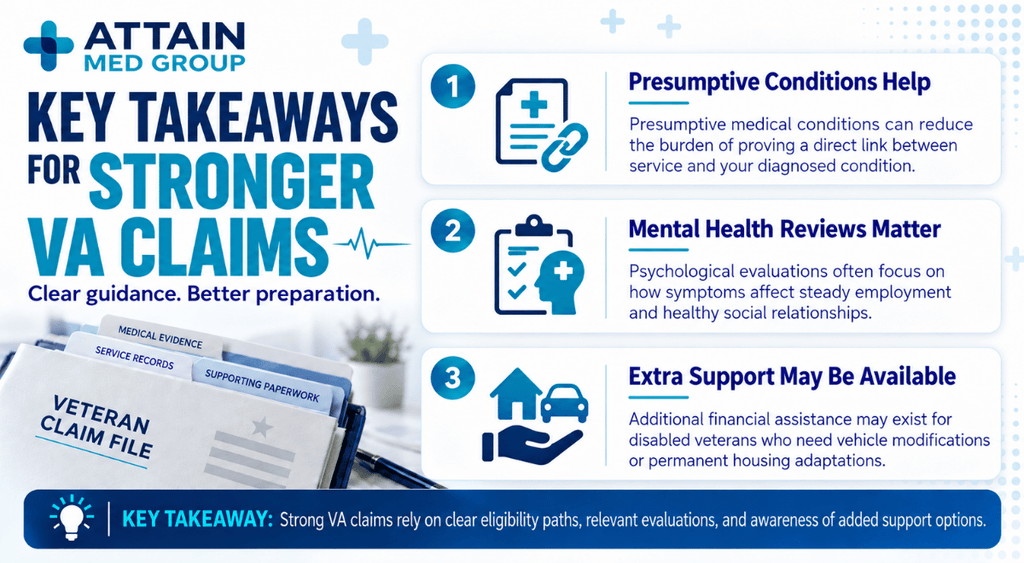
The federal system features distinct evaluation pathways for special claims involving complex or presumptive military medical conditions. For example, veterans exposed to agent orange or other hazardous materials receive an automatic presumed service connection. This special classification means you do not have to prove the toxic exposure directly caused your specific illness. The PACT Act has recently expanded these protections to include many more veterans exposed to burn pits and other environmental toxins.
Mental health conditions also follow slightly different clinical evaluation protocols compared to strictly physical bodily injuries or diseases. Medical evaluators look closely at how post-traumatic stress or severe depression limits your normal occupational and social functioning. Providing detailed written statements from family members helps paint a complete clinical picture of your daily behavioral challenges. These “buddy statements” can be the deciding factor in a va disability claim involving invisible wounds.
If your service-connected disabilities prevent you from maintaining “substantially gainful employment,” you may qualify for Total Disability based on Individual Unemployability (TDIU). This special benefit allows the VA to pay you at the 100% disability rate even if your combined rating is lower. To qualify, you generally need one disability rated at 60% or a combined rating of 70% with one condition at 40%. This provides a critical financial safety net for veterans whose injuries have effectively ended their professional careers.
The government administration also provides specific resources and dedicated coordinators for women veterans seeking specialized medical assistance through va health services. These specialized professional coordinators help process applications involving military sexual trauma or complex gender-specific military healthcare needs. Additionally, severely injured military veterans might qualify for extra government funds to purchase adaptive equipment for their vehicles. You can learn more about these medical options at the official va health portal.
Navigating the Appeals and Claim Decision Review Options
If you receive a denial or a rating that seems too low, you have several options for a decision review. The modern appeals system is designed to be more efficient than the legacy process, offering three distinct lanes for veterans to choose from. You can find detailed information on these paths at the official decision review page. Choosing the right lane depends entirely on the type of evidence you have and the specific reason for the initial claim decision.
The first option is a supplemental claim, which allows you to submit new and relevant evidence that the VA did not previously consider. This is often the best route if you have recently obtained a more detailed medical opinion or found missing service records. A supplemental claim keeps your original effective date active, ensuring you receive full backpay if the decision is eventually overturned. It is a powerful tool for correcting an incomplete record without starting the entire process from scratch.
The second option is a Higher-Level Review, where a more experienced adjudicator looks at your file to see if a mistake was made. In this lane, you cannot submit new evidence; the reviewer only looks at what was available at the time of the original decision. This is ideal if you believe the law was applied incorrectly or the rater overlooked a key piece of existing evidence. Finally, you can appeal directly to the Board of Veterans’ Appeals, which involves a judge reviewing your case in detail. This third lane allows for a hearing with a judge, which can be done virtually or in person at a regional office.
Navigating these legal pathways requires a deep understanding of the “Duty to Assist” that the government owes every veteran. If the agency failed to schedule a necessary exam or didn’t attempt to retrieve records you identified, a Higher-Level Review can often fix these errors quickly. However, the Board of Veterans’ Appeals is currently facing a significant backlog, so this route should be chosen carefully. Most veterans find that the supplemental claim lane offers the fastest resolution when new medical evidence is available to support their case.
Common Pitfalls in the Veterans Disability Claim Submission
One of the most frequent mistakes veterans make is failing to submit the correct va form for their specific situation. Using an outdated version of a document or the wrong form entirely can lead to immediate administrative rejection. Always verify that you are using the most current paperwork by checking the official federal repository before you begin your submission. A small clerical error should not be the reason your path to disability compensation is blocked for months.
Another common pitfall is missing the scheduled Compensation and Pension (C&P) examination without a valid medical or personal excuse. These exams are the government’s primary way of verifying the severity of your symptoms and their connection to your service. If you miss this appointment, the VA will likely deny your disability claim due to a lack of current clinical evidence. If you must reschedule, do so as early as possible to avoid being marked as a “no-show” in the system.
Furthermore, many applicants fail to realize that “lay evidence” can be just as important as clinical data in certain cases. A personal statement describing how your condition limits your ability to perform household chores or interact with family provides context that a medical chart cannot. If you omit these personal narratives, the rater may only see a list of symptoms rather than a human being struggling with a disability. Including statements from spouses, friends, or former service members can bridge the gap between a 70% and 100% rating.
Finally, many veterans fail to provide enough detail about how their condition affects their daily ability to work and live. Simply having a diagnosis is not enough; you must explain the functional limitations caused by your illness or injury. Whether it is the inability to lift heavy objects or the social withdrawal caused by PTSD, these details are what drive the final rating percentage. Be honest, be thorough, and do not be afraid to describe your worst days rather than your best ones.
Final Thoughts on Securing Your Veterans Disability Compensation

Securing your va disability benefits is a marathon, not a sprint, requiring patience and meticulous attention to every administrative detail. By understanding the nuances of the system, you can navigate the bureaucracy with greater confidence and a higher likelihood of success. Remember that these benefits are not a handout, but a legal obligation the government owes you for your service. Stay persistent, keep copies of every document you submit, and continue to advocate for the rating you deserve.
The impact of a successful claim extends far beyond the monthly financial payment, often providing access to life-changing medical care and vocational training. As you move through the process, lean on the community of fellow veterans and professional advocates who have walked this path before you. With the right evidence and a clear understanding of the rules, you can successfully navigate the system and secure your future. Your health and well-being are worth the effort it takes to see this process through to the end.
Ultimately, the goal of veterans disability compensation is to provide a level of parity for the physical and mental toll of military service. While the paperwork may seem overwhelming, each form and medical exam brings you one step closer to the support you earned. Do not let the complexity of the Department of Veterans Affairs discourage you from pursuing what is rightfully yours. With the right preparation and a commitment to accuracy, you can overcome the administrative hurdles and achieve a favorable outcome for your family.