


Learning how to win a va disability claim with a strong strategy is the most effective way to ensure you receive the compensation you deserve after your service. Are you tired of fighting the bureaucratic system for your rightfully earned government benefits? Getting approved for a va disability claim requires a highly strategic approach and incredibly solid proof. Many veterans file claims hoping for a positive outcome, but blind hope is never a winning strategy when dealing with the Department of Veterans Affairs.
You need specific, well-organized documentation to prove your legal case to the federal government. Applying for va disability is a strict legal process that demands absolute precision from every single applicant. This comprehensive guide breaks down exactly how to build a remarkably strong va claim from the very start to ensure your success. By following a proven roadmap, you can navigate the complexities of the system and secure the financial support you need for your future.
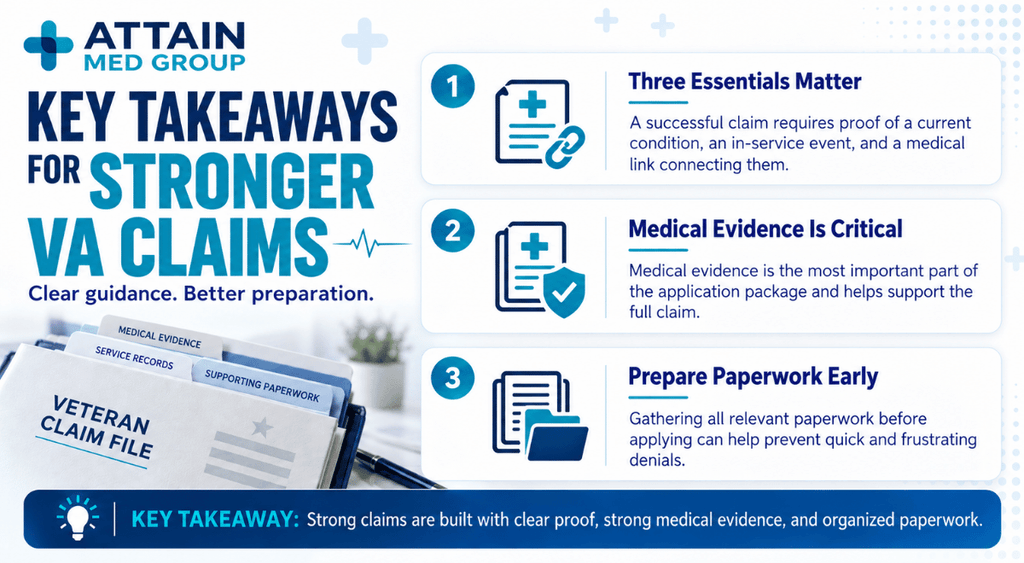
Every successful disability claim rests on three foundational pillars that the government requires for final approval. You must first demonstrate that you suffer from a current physical or mental health condition diagnosed by a professional. You must also prove that a specific in-service event or injury occurred during your active military service. Finally, you must establish a “nexus,” which is the formal medical link between your service and your current diagnosis.
This required medical link is often the absolute hardest part of the claims process for many applicants. Without clear medical evidence, your va claim will likely fail before it even reaches a final decision. You have to provide comprehensive documentation that leaves absolutely no room for doubt or misinterpretation by the rating official. A missing link in this “Caluza Triangle” is the most common reason for an immediate claim denial. Establishing a solid va rating foundation begins with understanding these three requirements before you ever submit your paperwork.
A successful va disability strategy means anticipating exactly what the government raters look for during their review. You must gather all relevant paperwork and medical files before you even submit your initial application to the agency. Rushing the application process without proper preparation usually leads to a quick and frustrating denial letter. Taking the time to organize your files now will save you months or even years of stressful appeals later. Your ultimate goal is to present a package so complete that the rater has no choice but to grant your benefits.
Gathering Strong Medical Evidence and Medical Records
Your military medical records serve as the structural backbone of your entire legal case for compensation. You should obtain everything from your service treatment files to your most recent private doctor visits. Private physicians and health va facilities both provide valuable documentation that supports your overall argument for benefits. Providing strong evidence through these channels ensures the rater has a complete picture of your health history.
You need compelling evidence to show exactly how your current condition severely impacts your daily life. A simple medical diagnosis alone will not get you a high disability rating from the government. You need highly detailed medical opinions that thoroughly explain the true severity of your daily symptoms and limitations. This includes functional loss, such as the inability to lift heavy objects or maintain focus during a workday. Many veterans find success by utilizing Disability Benefits Questionnaires (DBQs) to ensure their doctors address specific criteria.
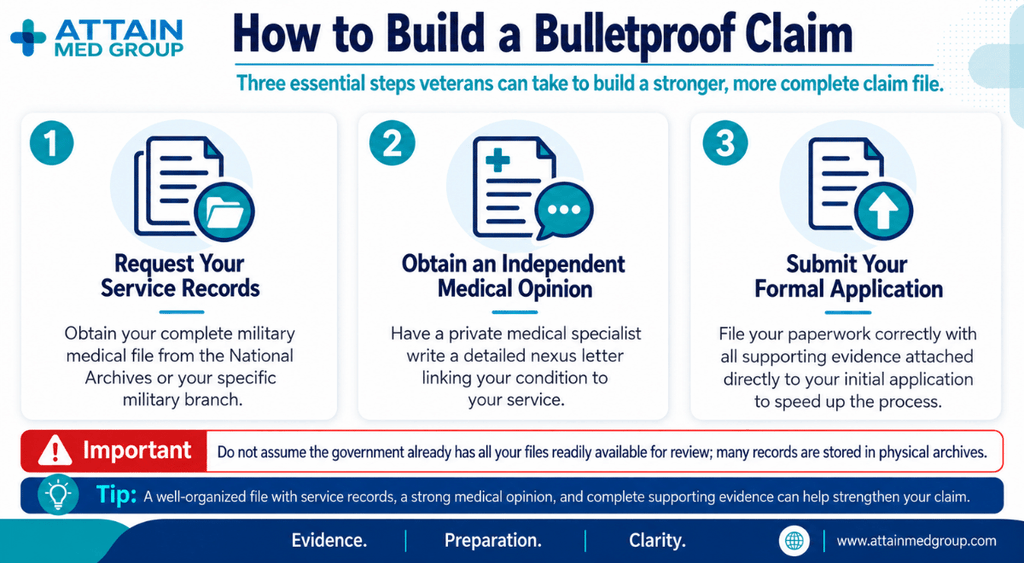
Sometimes, obtaining strong medical evidence means getting an independent medical opinion from a completely neutral specialist. This specialized expert can write a detailed nexus letter directly linking your condition to your service. Strong medical documentation makes it significantly harder for the va reviewer to reject your disability claim. Ensure that your doctor reviews your entire file before they provide their professional medical opinion for the record. This thoroughness prevents the VA from claiming your condition was pre-existing or unrelated to your time in the military.
Pro Tip: Always request your complete military medical file before filing your claim. Having this documentation upfront prevents unnecessary delays in the evaluation process and helps you identify potential gaps in your history.
How to Prove Service Connection Effectively for Your VA Claim
Establishing service connection requires a direct, undeniable line between your past service and your current disability. The government needs hard proof that your specific military duties directly caused your ongoing health problems. You absolutely cannot rely on assumptions or general statements about your previous time in uniform when filing a va claim. Precision in your narrative is the key to overcoming the skepticism of the rating board. Recent legislation like the PACT Act has expanded presumptive service connections for many veterans exposed to toxins.
Consider writing a highly detailed lay statement to clearly explain what happened during your active service. You can also ask fellow service members to write supporting buddy letters that corroborate your specific story. These personal statements provide vital context that your official medical records might unfortunately miss entirely. They help humanize your file and provide a timeline that clinical notes often lack. When you describe an event, be specific about the dates, locations, and the immediate physical impact you experienced.
When a fellow service member verifies your personal account, it adds massive credibility to your entire file. This is especially true for specific incidents that never actually made it into the official clinic logs. Combining these personal statements with relevant evidence creates a truly bulletproof argument for your va claim. Remember that the “benefit of the doubt” rule should apply when evidence is in relative equipoise. If the evidence for and against your claim is equal, the law requires the VA to rule in your favor.
Understanding Secondary Service Connection
Many veterans do not realize that they can receive compensation for conditions that were caused or aggravated by an already service-connected disability. This is known as secondary service connection and it is a vital part of a comprehensive claim strategy. For example, if your service-connected knee injury causes you to walk with an altered gait, leading to chronic back pain, that back pain can be service-connected. Proving these links requires a clear medical nexus explaining the physiological relationship between the two conditions. You should look at your body as a connected system rather than isolated injuries.
Mental health conditions often have secondary physical effects, and vice versa, which can lead to a higher overall disability rating. Chronic pain from a physical injury frequently leads to depression or anxiety, which are both compensable under the law. By identifying these secondary conditions, you can ensure that the full scope of your disability is recognized by the government. Always discuss these connections with your doctor to ensure they are documented in your medical files. Common examples include sleep apnea secondary to PTSD or gastrointestinal issues secondary to pain medication usage.
Furthermore, if you are unable to work due to your service-connected conditions, you may qualify for Total Disability based on Individual Unemployability (TDIU). This benefit allows the VA to pay you at the 100% rate even if your combined rating is lower. It is a powerful tool for veterans whose symptoms prevent them from maintaining substantial gainful employment. Including a TDIU claim in your strategy can provide the financial stability you need when traditional work is no longer an option.
Maximizing Your VA Rating and Retroactive Pay
Once officially approved, your va rating completely determines your monthly disability compensation for the foreseeable future. The government assigns a specific percentage based on how much your diagnosed condition affects your earning capacity and social life. A significantly higher va rating means a much larger monthly tax-free check for your family to cover living expenses. Understanding the VA Schedule for Rating Disabilities (VASRD) is essential for predicting your outcome and ensuring the rater applies the correct criteria.
Many approved veterans qualify for retroactive pay dating all the way back to their original filing date or intent to file. If your approval process takes two full years, you could potentially receive a massive lump sum payment upon final approval. You must submit your intent to file claim paperwork immediately to firmly secure your retroactive pay. This simple step can result in thousands of dollars in additional compensation for your household while you wait for the VA to process your claim.
If your physical condition worsens over time, you can always request a formal va rating increase to reflect your current health status. You will need to submit a specific va form and provide updated medical evidence for the reviewers to evaluate. Securing a va rating increase requires showing that your original symptoms have grown significantly more severe, which is a normal part of the va disability journey. Never settle for a lower rating if your health has declined since your last evaluation, as you are entitled to compensation that matches your current level of impairment.
Managing the Veterans’ Appeals Process After a Denial
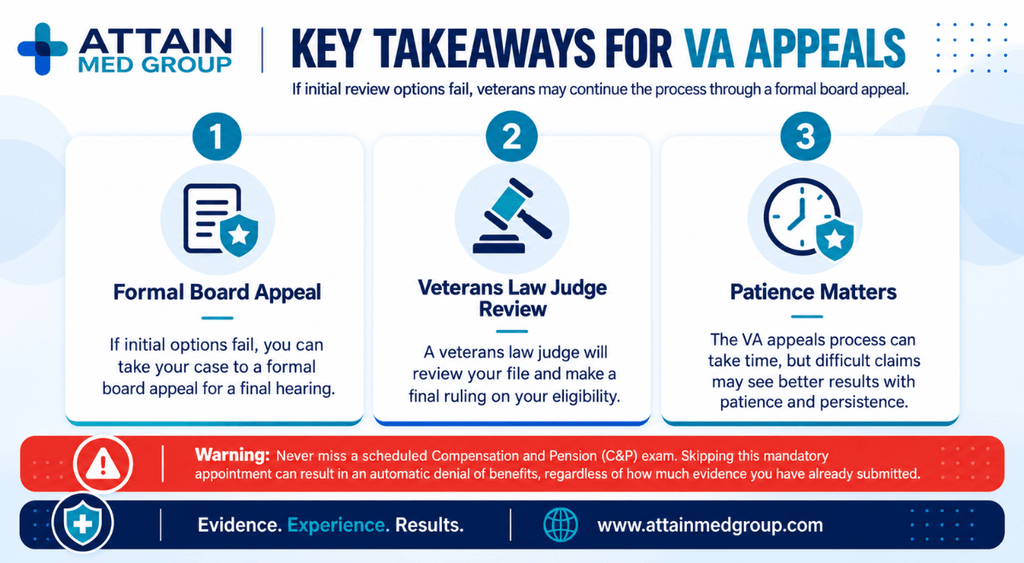
It is incredibly frustrating when the va denies your legitimate and well-documented request for disability benefits. However, an initial denial is just a temporary setback in the overall veterans’ appeals process. You have several distinct appeal options available to keep your legal case alive and moving forward toward a positive resolution. Understanding the different “lanes” of the Appeals Modernization Act is crucial for your success with va claims and ensuring you don’t lose your original effective date.
You might choose to file a supplemental claim if you have brand new evidence to submit to the agency. This specific appeal option forces the government to look at your file again with the added context of your new documentation. You can also request a higher-level review if you believe the original rater made a clear mistake based on the existing evidence. This review is conducted by a more experienced rater who was not involved in the initial decision and can often overturn simple errors in judgment.
Navigating the C&P Exam with Confidence
The Compensation and Pension (C&P) exam is perhaps the most critical moment in your entire disability claim journey. This is a medical examination conducted by a VA-contracted physician to evaluate the severity of your condition. It is vital that you are honest and thorough during this exam, describing your symptoms on your worst days, not just how you feel at that moment. Many veterans make the mistake of “toughing it out” during the exam, which leads to an inaccurately low rating that doesn’t reflect their true struggle.
Prepare for the exam by reviewing your own medical history and being ready to explain how your condition limits your daily activities. If the examiner asks how you are doing, do not simply say “fine” out of habit; instead, explain your daily struggles with specific examples. You should also bring a copy of your records to the exam in case the doctor has not had a chance to review them. Your performance and honesty during this brief meeting can make or break your entire strategy for winning your claim and securing a fair evaluation.
After the exam, you have the right to request a copy of the examiner’s report to see what they wrote about your condition. If the report is inaccurate or ignores key evidence, you can challenge it through the appeals process or by requesting a new exam. Being proactive about the results of your C&P exam is a hallmark of a strong strategy. Do not wait for a denial letter to address a poorly conducted examination that misrepresents your physical or mental health status.
Securing Your VA Disability Benefits Long-Term
Winning your initial va disability claim is a major victory, but you must also take steps to protect those benefits for the long term. The VA has the authority to re-evaluate your condition periodically to see if your symptoms have improved. Continuing to seek regular medical treatment is the best way to maintain a paper trail that supports your ongoing rating. If you stop seeing a doctor, the government may assume your condition has resolved and attempt to reduce your monthly payments without warning.
Keep a dedicated file of all your VA correspondence and medical records in a safe place. If you receive a notice of a re-evaluation, you will be prepared to show that your condition remains a significant burden on your life. Understanding the “5-year,” “10-year,” and “20-year” rules regarding benefit protection can also provide peace of mind as you age. Protecting your benefits is just as important as winning them in the first place, as it ensures your financial security remains intact for years to come.
In some cases, the VA may grant “permanent and total” (P&T) status, which means they do not intend to schedule any future exams. This status is usually reserved for conditions that are not expected to improve over time. Achieving P&T status is a significant milestone that provides the highest level of security for your disability benefits. Always check your decision letters to see if the VA has noted that your disabilities are considered permanent in nature.
Common Pitfalls in VA Disability Claims

One of the most common mistakes veterans make is failing to provide a clear timeline of their symptoms. If there is a large gap in your medical treatment history, the VA may argue that your condition is not related to your service. Another pitfall is failing to respond to VA requests for information in a timely manner. Missing a deadline by even a single day can result in your claim being closed or denied, forcing you to start over and potentially lose your original effective date.
Additionally, many veterans do not realize the importance of the “nexus” letter from a qualified medical professional. Without a doctor explicitly stating that your condition is “at least as likely as not” caused by your service, your claim faces an uphill battle. Avoid using vague language in your personal statements; instead, use specific examples of how your life has changed. Avoiding these common errors will significantly increase your chances of a successful outcome on your first attempt and minimize the need for lengthy appeals.
Finally, do not overlook the impact of your condition on your social and occupational life. The VA rating criteria often focus heavily on how your symptoms interfere with your ability to interact with others and perform work tasks. If you only focus on the physical pain without explaining the functional limitations, you may receive a lower rating than you deserve. Be thorough in describing how your service-connected issues affect every aspect of your daily existence, from your relationships to your career prospects.
Final Thoughts on Your VA Disability Journey
Winning a va disability claim is a marathon, not a sprint, and it requires a high level of dedication and organization. By focusing on strong evidence and a clear medical nexus, you can build a case that is difficult for the government to deny. Remember that you have earned these benefits through your service and sacrifice for the nation. Do not let the complexity of the bureaucratic process discourage you from pursuing what you are legally owed under the law.
If you feel overwhelmed, consider seeking assistance from a Veterans Service Officer (VSO) or a qualified attorney who specializes in veterans law. These professionals can provide the guidance and expertise needed to navigate the most difficult parts of the system. With the right strategy and a commitment to the process, you can secure the disability rating and compensation you deserve. Your journey toward a successful claim starts with the very first piece of evidence you collect today, so stay focused and persistent.
Ultimately, the key to success is being your own best advocate throughout the entire process. Stay informed about changes in VA regulations and keep your medical records updated at all times. By maintaining a proactive stance, you can overcome the hurdles of the VA system and achieve the positive outcome you need. Your service to the country was honorable, and receiving the proper disability compensation is a vital part of your transition to civilian life.