

Many veterans face frustration when a VA disability claim comes back with an unexpected denial or a low VA rating. Understanding the Higher-Level Review Mistakes Veterans Should Avoid is essential when navigating the appeals process under the appeals modernization framework. One popular option involves asking a senior VA adjudicator to look at your file again to identify rating errors. You must approach this VA higher-level review carefully to protect your earned benefits and ensure a fair outcome. A simple misunderstanding of the rules can cost you months of waiting during the claims process. Let us examine the most common errors veterans make during the decision review process and how you can prevent them.
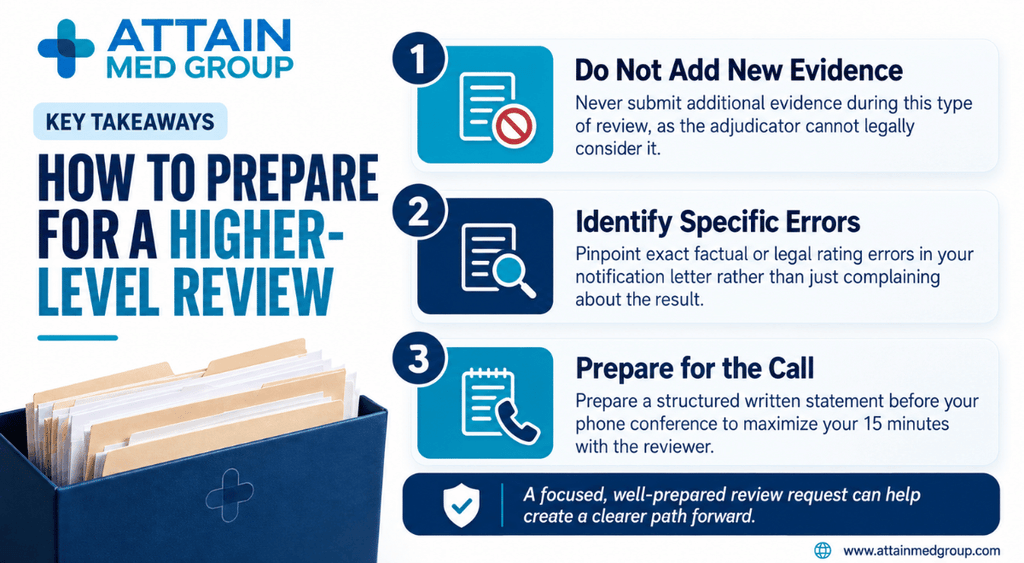
A higher-level review allows a senior VA reviewer to evaluate your va disability claim based on the exact same information available previously. The most frequent VA mistake veterans make involves trying to submit additional evidence during this specific decision review. By law, the adjudicator cannot look at any new medical records or a newly obtained nexus letter you provide. If you have new documents to support your disability claims, this particular path will automatically reject them.
You must understand that a VA higher-level review focuses strictly on finding legal or factual mistakes in the previous rating. The reviewer looks at the existing record to see if the previous adjudicator missed something obvious in your treatment records. If your case requires new medical records to succeed, you have chosen the wrong appeal path for your VA claims. You will waste valuable time waiting for a va decision that ultimately denies your claim again.
Many veterans assume that higher-level reviews automatically grant a better outcome simply because a senior official looks at the file. This assumption leads to poor preparation and repeated denials throughout the va claims process. You must prove that the original rater made a clear error based on the facts they already had in the service treatment history. Preparation is the most critical factor in overcoming a denied claim during this stage.
VA Decision Review: Failing to Identify Specific Errors in the Decision

Your decision letter contains the exact reasons why the agency denied your benefits or assigned a specific VA rating. Many veterans request a review without actually reading this document carefully to identify errors in the logic. You need to point out specific errors rather than just expressing general disagreement with the outcome of your initial claim. The reviewer needs to know exactly where the previous adjudicator went wrong regarding your service-connected conditions.
Perhaps the previous rater applied the wrong rating criteria for your specific symptoms or ignored key treatment records. Sometimes, they assign a wrong effective date that costs you thousands of dollars in back pay for your VA disability. You should create a clear error list before you submit your HLR request to the regional office. Pointing directly to these rating errors makes the reviewer’s job significantly easier and improves your chances of success.
Reading your decision letter a second time often reveals the exact logic the agency used to evaluate your VA disability claim. You should compare your symptoms directly to the Code of Federal Regulations Title 38 to spot exactly where the rater made a mistake. Clear communication about these rating errors forms the foundation of a successful appeal within the veterans affairs system. This level of detail is what separates successful higher-level reviews from those that are denied.
Pro Tip: Always keep a copy of the Code of Federal Regulations (CFR) Title 38 handy. Comparing your symptoms directly to the CFR helps you spot exactly where the rater applied the wrong rating criteria for your disability ratings.
VA Appeals: Mishandling the Informal Conference Request
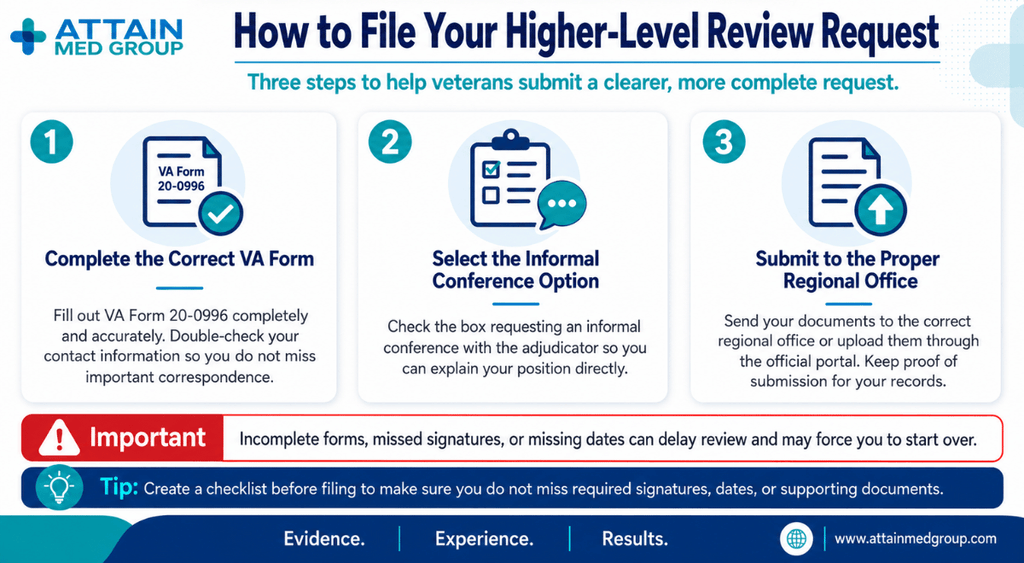
You have the option to request an informal conference when you file your VA appeals paperwork. This brief telephone call allows you or your representative to speak directly with the senior reviewer about your VA decision. Many veterans fail to prepare adequately for this critical conversation during the HLR process. They treat it like a casual chat rather than a formal legal argument to correct a VA mistake.
During the informal conference, you generally have about 15 to 20 minutes to make your case for a higher VA rating. You cannot use this time to introduce relevant evidence that was not in your file previously. Instead, you should prepare a brief written statement outlining your arguments regarding specific errors beforehand. Use this document as an outline during the call to keep your points focused and concise for the reviewer.
If you miss the phone call, the HLR process moves forward without your input or your written statement. The reviewer will make a VA decision based solely on the written record available in your va disability file. You must keep your phone nearby and answer unknown numbers during the scheduled time window for your HLR request. Missing this opportunity often leads to an unfavorable outcome for your VA higher-level review.
Overlooking VA Claims Duty to Assist Errors
The Department of Veterans Affairs has a legal obligation to help you gather relevant evidence for your VA claims. If the agency failed to obtain your service treatment records, this constitutes a significant assist error. A senior reviewer can identify this failure and return your claim for further development. Many veterans do not realize they can argue this point during a VA higher-level review to fix the record.
You should review your file to see if the agency actually requested all necessary medical records and documents. Sometimes they fail to request treatment records from private doctors you identified on your initial claim application. If you spot missing evidence that the agency should have gathered, point this out immediately during the HLR process. The reviewer will close the current review and open a new claim to fix the development problem.
This corrective action for an assist error extends the claims process, but it ultimately protects your wrong effective date. The agency will gather the missing evidence and issue a new VA decision based on a complete record. You maintain your place in line while the agency corrects its failure to assist you properly with your va disability benefits.=
Choosing the Wrong Lane for Your Denied Claim and VA Appeals
The appeals modernization system now features three distinct lanes for challenging a denied claim. You must choose between a higher-level review, a supplemental claim, or a board appeal. Picking the wrong option represents a massive setback in the va claims process and your timeline for benefits. You must evaluate your specific situation carefully before making this critical choice for your va appeals.
If you have new service treatment documents or a nexus letter to submit, you must file a supplemental claim. This lane specifically exists to handle additional evidence that supports your service-connected conditions. A board appeal involves sending your case to a Veterans Law Judge in Washington, D.C. This path takes much longer, so you should reserve it for complex legal arguments that regional office staff cannot resolve.
Filing the wrong type of appeal wastes months of your time in the va disability system. If you submit new medical records with a higher-level review, the agency simply ignores them by law. You must evaluate the strength of your current file before deciding which lane offers the best chance of success for your disability claims.
How to Submit Your HLR Request and VA Form Correctly
Filing your va appeals requires strict attention to procedural details and strict deadlines. You have exactly one year from the date on your decision letter to request this specific va higher-level review. Missing this deadline forces you to restart the entire process with a new initial claim. Let us break down the exact steps for filing va paperwork correctly to avoid a va mistake.
Disregarding Favorable Findings in Your VA Decision
Modern va decision letters include a specific section outlining favorable findings for your case. Once the agency makes a favorable finding, future adjudicators generally cannot reverse it during the appeals process. For example, if they concede your condition is related to service, that service connection remains established. Many veterans ignore this section when preparing their higher-level reviews and waste time arguing settled facts.
You should build your arguments around these established favorable findings to strengthen your case. If the agency already granted service connection, you only need to argue about the severity of your symptoms for a higher va rating. Focus your energy on proving you meet the rating criteria for an increased percentage. Highlighting favorable findings prevents the reviewer from unnecessarily reopening settled issues in your VA disability file.
Sometimes, veterans accidentally argue against their own interests by bringing up settled matters during the informal conference. Stick to the specific errors that caused your denied claim or low rating percentage. If the reviewer sees that your service-connected conditions are well-documented, they can focus purely on the rating errors. This targeted approach yields much better results for your VA disability benefits and overall compensation.
Conclusion

The VA appeals system offers powerful tools to correct unfair disability ratings and administrative mistakes. A VA higher-level review approach works exceptionally well when you can prove the agency made a clear VA mistake. However, you must follow the strict rules governing this specific decision review path under appeals modernization. Submitting new medical records or failing to prepare for your informal conference will ruin your chances of success.
Take the time to read your decision letter thoroughly and build a logical argument based on existing treatment records. If your case requires additional evidence, pivot to a supplemental claim lane that accepts new documents. By avoiding these common errors, you protect your rights within the veterans affairs system. A well-prepared HLR request maximizes your chances of securing the disability claims compensation you earned through your service. Remember that every successful va higher-level review starts with a thorough understanding of the claims process rules.