


Applying for your va disability often feels like fighting a frustrating second war entirely on paper. The federal government processes thousands of complicated applications from former service members every single week. Learning how to improve your chances of winning a VA claim requires a strategic approach to documentation and a deep understanding of the current va disability legal requirements.
Winning your case requires careful strategy, precise documentation, and a clear understanding of federal rules. You need solid medical evidence connecting your current physical or mental health struggles directly to your time in uniform. This comprehensive guide explains exactly how to strengthen your application and secure the monthly compensation you earned through your military service.
Every successful va disability claim rests on three foundational pillars established by federal compensation laws. First, you must have a current medical diagnosis from a qualified and licensed healthcare professional. Second, you need documented proof of an in-service event, injury, or illness that occurred during your active duty.
Finally, you must establish a clear medical link connecting your current condition to that specific military incident. The Department of Veterans Affairs calls this critical medical link a formal service connection. Without all three elements present in your file, the regional office will quickly deny your request for disability benefits.
Proving Your Condition Stems From Service
Your military service records play a major role in proving that an incident actually happened during active duty. You should track down buddy statements, deployment logs, and performance reports to corroborate your personal story. This supporting documentation becomes incredibly important if you suffer from conditions like sleep apnea or sustained exposure to toxic chemicals like agent orange.

Gathering Unshakeable Medical Evidence for Your Disability Rating
You cannot win a va claim based purely on your own personal testimony about your chronic pain. Strong medical evidence forms the absolute backbone of all successful va claims submitted to the government for review. You must provide comprehensive medical records that detail the severity and progression of your specific medical conditions.
Request all of your historical treatment records from both military hospitals and private civilian doctors immediately. Review these clinical documents carefully before submitting them to the veterans regional office for formal evaluation. Examiners look for consistent complaints and regular treatments that show a chronic problem rather than an isolated incident.
The Critical Role of a Strong Nexus Letter
A nexus letter is a detailed report written by a medical expert that explicitly connects your diagnosis to your military time. This specific document often makes the massive difference between a fast approval and a frustrating rejection. The doctor must review your complete file and state that your condition is at least as likely as not caused by your service.
Pro Tip: Always ask your private physician to use the exact phrase “at least as likely as not” in your documentation. The rating board actively looks for this specific legal terminology when approving disability claims.
Avoiding Common Mistakes in Disability Claims

Many veterans accidentally sabotage their own disability claims by missing strict deadlines or omitting crucial legal paperwork. Submitting an incomplete package forces the government to pause your evaluation while they request more information. You should always file a fully developed claim to significantly speed up your overall decision timeline.
Another frequent error involves downplaying severe symptoms during your official veteran disability evaluation or Compensation and Pension medical examination. You must describe exactly how your injury affects you on your worst days, rather than your best days. Examiners need to understand the true impact your condition has on your daily life and your ability to maintain steady employment.
How to Document the Impact on Your Daily Life
Keep a detailed symptom journal to track regular flare-ups, daily pain levels, and frequent missed days of work. This personal log provides highly valuable context that standard hospital charts might miss completely during a quick review. Consistent documentation helps the rater accurately calculate your official disability rating based on the published federal diagnostic codes.
How to File Your VA Disability Claim
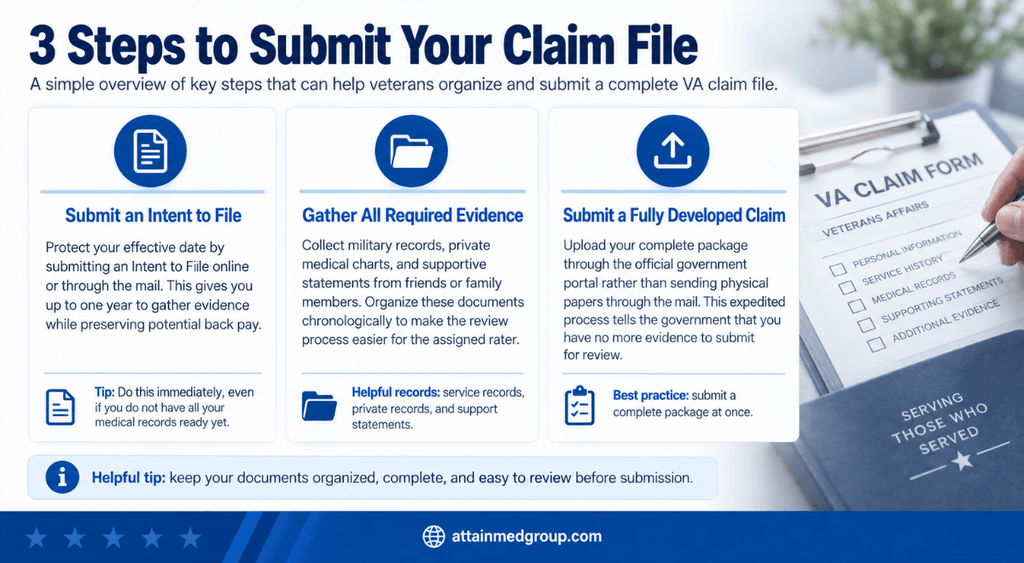
Starting the application process requires careful preparation and a highly organized approach to your personal files. The federal system processes thousands of forms daily, so extreme accuracy acts as your primary defense against delays. Follow these specific steps to submit a comprehensive application package and successfully receive va disability benefits.
What Happens if the VA Denies Your Claim? Filing a VA Appeal
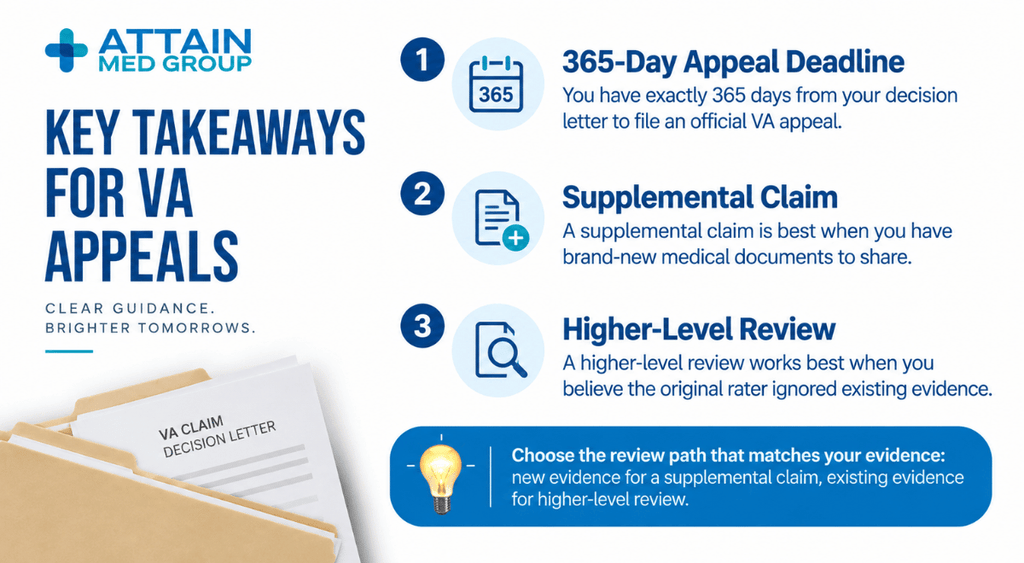
Receiving a formal denial letter does not mean your long fight for financial compensation is completely over. The appeals process exists specifically to correct administrative errors made during the initial review of your file. You have one full year from the date of your decision letter to formally challenge the negative ruling.
Federal data shows that determined veterans successfully overturn thousands of denied va disability claims every single year. You must read the official decision letter carefully to understand exactly why the rater rejected your application. If you receive a denial, starting a va appeal is the next logical step to secure your benefits and address the specific gaps identified by the rater.
Choosing the Right Path in the Appeals Process
The modern legal framework gives you three distinct lanes to challenge a negative decision on your file. You can file a supplemental claim if you have new and relevant medical evidence to add to your record. If you believe the rater simply made a legal mistake, you can request a higher-level review from a senior adjudicator.
The final option involves taking your case directly to a Veterans Law Judge through a formal board appeal. This specific path takes the longest but allows you to present legal arguments directly to a judge in Washington. Understanding these different va appeals options helps you choose the most effective strategy for your specific medical situation.
When to Hire a Disability Attorney
Handling complex veterans’ appeals on your own often proves frustrating and incredibly time-consuming for most families. An experienced va legal representative or attorney understands exactly how the rating schedule works and what specific evidence judges demand to see. Professional legal representation significantly improves your overall success rate, especially during difficult cases involving multiple overlapping medical conditions.
You might need a specialized disability attorney if you are pursuing individual unemployability or trying to reach total disability. These high-value cases face intense scrutiny from regional raters and often require extensive legal arguments to win. Most specialized law firms offer a completely free consultation to review your file before formally taking your case.
Federal law limits exactly how much legal professionals can charge for helping you receive va disability compensation. They generally take a standard percentage of your retroactive back pay only if they successfully win your case. You never pay money out of pocket to hire professional help for your ongoing va disability claim.
Maximizing Your Final VA Disability Rating

The government uses a highly complex math formula to determine your overall va rating for compensation purposes. They do not simply add your individual percentages together to get your final score under the current rules. You can use an online disability calculator to estimate your potential compensation before you even apply for benefits to ensure your disability rating reflects your true health status.
Many veterans suffer from secondary conditions caused directly by their primary service-connected disabilities over long periods of time. For example, severe knee pain might alter your walking gait and eventually cause a permanent service-connected disability in your back. You must formally claim these secondary issues to maximize the va disability benefits you receive each month.
Always attend your scheduled medical examinations and answer the federal examiner’s questions honestly without exaggerating your symptoms. If your physical conditions worsen over time, you can always request an increase in your current va disability benefits through the appropriate channels.