

If you searched for Medical Provider Attain Med Group, you are likely trying to answer one big question. Can this provider help build stronger medical evidence for a VA disability claim, and is it worth your time?
That question matters because a claim can rise or fall on medical proof. Medical Provider Attain Med Group is often discussed in that exact context. Veterans want clarity, not sales talk. The truth is simple. A lot of va disability claims stall because the medical evidence is weak, incomplete, or disconnected from military service.
That is where organized medical review can matter. The veterans affairs system looks closely at medical records, diagnosis history, symptoms, and whether a condition links back to service. According to the VA guidance on service records, records play a big role in proving when and where service happened. Those details often become part of the full claim picture.
For many veterans, that paperwork pile feels endless. You know something is wrong with your health, but proving it on paper is another story. This is why provider support gets so much attention. You need records that make sense, language that is medically sound, and documents that speak clearly.
Why searchers want an informational guide
Most people searching this term are not looking for a recipe, listicle, or breaking news piece. They are looking for a clear guide. They want to know what the provider does, how the claims process works, and whether the services fit a va disability claim. That makes this topic a strong fit for an informational guide.
It also helps that many veterans are comparing options across a wider provider network. They want to avoid wasted time, weak paperwork, and one more dead end. Some are active duty service members planning ahead. Others are former service members trying to strengthen old va claims after years of dealing with symptoms.
Medical Provider Attain Med Group and what it appears to do
Medical Provider Attain Med Group focuses on medical evidence used in va disability claims. That is the core point veterans need to know first. Instead of filing the legal claim itself, the provider appears to help build the medical side of the case. That can include medical records review, written medical opinions, diagnosis support, questionnaires, and mental health provider evaluations.
This distinction matters. The va claims process has legal, administrative, and medical parts, but the medical file often carries huge weight. Medical evidence is a major issue in disability decisions because the VA needs proof of a current condition, proof of an in-service event or exposure, and proof of a connection between the two. You can read more about current veteran health topics through VA Research Currents.
If your medical records are scattered or vague, your claim may be harder to prove. That is frustrating, especially when you know your symptoms are real. Many veterans simplify the search by looking for independent medical providers who focus on review medical records and explain what is missing. That kind of expert assistance can save time and cut down on guesswork.

Why medical evidence can make or break a VA disability claim
Veterans often think the hard part is telling their story. But the harder part is often backing it up in medical language. The VA reviews treatment notes, exams, prior diagnoses, symptom severity, and how symptoms affect daily life. Small gaps can turn into big problems. A trusted medical provider that organizes records and creates supporting documents can help make the file easier to understand.
That can matter a lot when an examiner or rater reviews the evidence. Federal health research also supports how serious long-term service-related conditions can be. The National Institutes of Health offers health research summaries that can help veterans learn more about specific diagnoses. For veterans trying to read medical studies on their own, Google Scholar can also help find published journal articles and clinical papers.
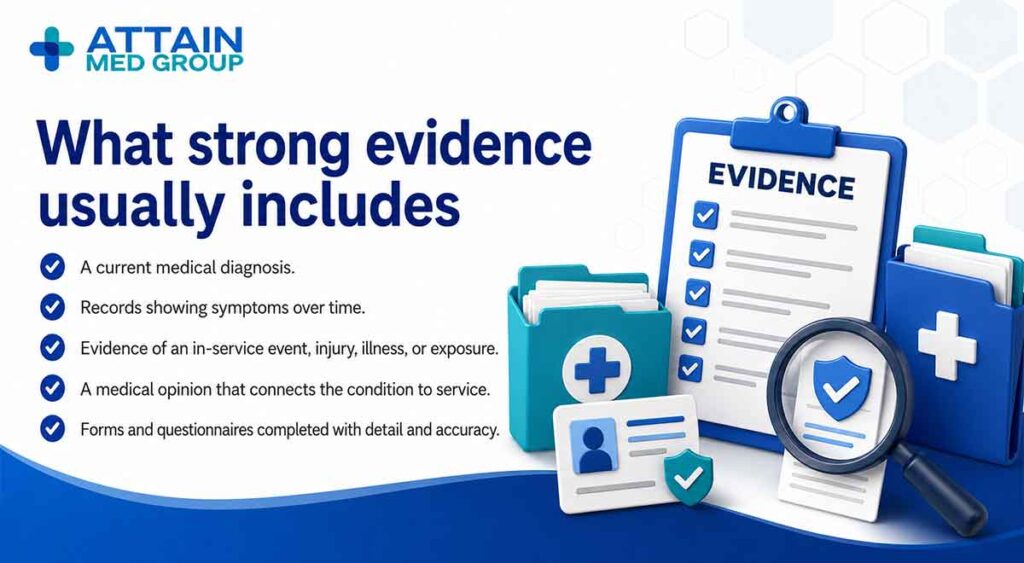
This may sound basic, but many veterans are missing one of these pieces. That is often why they search for help from a provider.
Strong evidence can also include credible medical evidence from specialists, a medicine physician in internal medicine, or a mental health provider. In some cases, the issue is not the lack of records, but the lack of a clear link between the records and the condition being claimed.
Services veterans often connect with Attain Med Group
The biggest value appears to be in building organized and usable medical support. That work touches several parts of a claim.
Medical records review
This usually starts with a full look at the veteran medical file. A solid medical records review can spot gaps, patterns, missing links, and overlooked records. That matters because your claim may involve years of treatment spread across military, VA, private health care clinics, and urgent care centers. One missed note can weaken the full story.
Many veterans need someone to review medical records from different systems and put them into a timeline that makes sense. That is one of the most practical parts of independent medical support.
Nexus letters
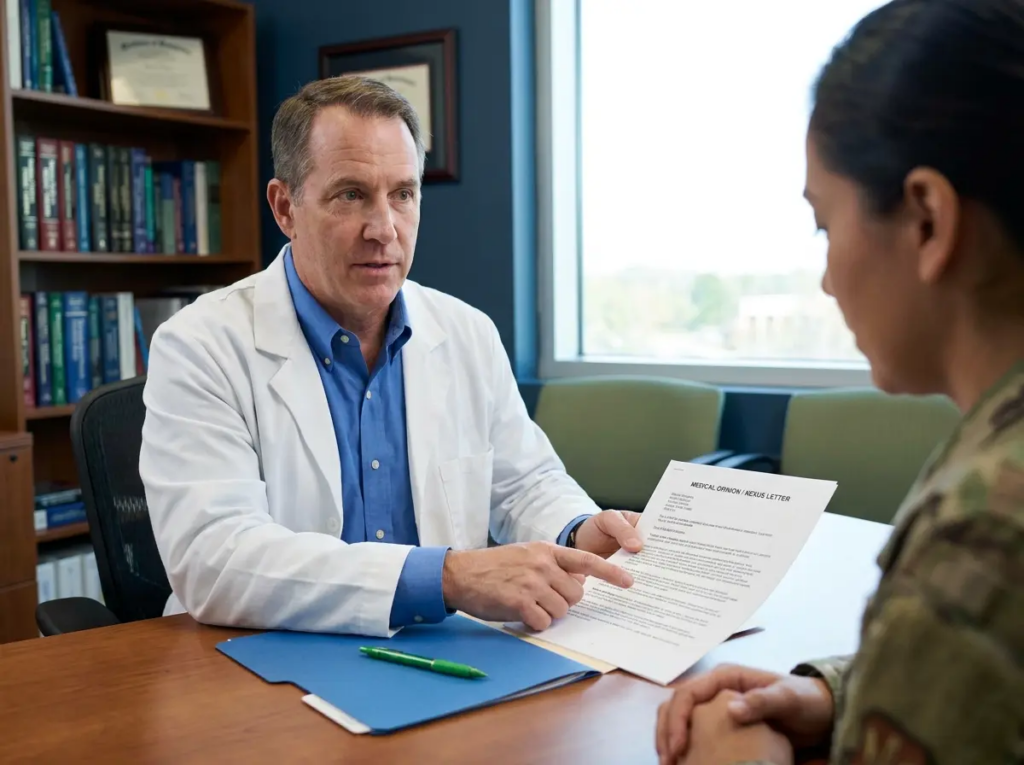
A nexus letter is a medical opinion that explains why a condition is connected to military service. This is one of the most talked about documents in va disability claims. The value is simple. It helps bridge the gap between your service history and your current diagnosis.
That bridge can be vital in secondary claims too. For example, some veterans file for Sleep Apnea Secondary to PTSD after medical review shows a strong link. Others may need support for Migraines Secondary to TBI when symptoms follow head injury or post-concussive issues.
In many va disability benefits cases, a nexus letter can be the piece that turns scattered facts into a clear medical opinion. Veterans face this issue often, especially if treatment started years after discharge.
Medical diagnosis support
A claim needs a current diagnosis in many cases. If your symptoms were discussed for years but never pinned down clearly, that can hurt the file. Diagnosis support helps put a firm medical name on what you live with. That gives the claim more structure.
This can be especially helpful for conditions related to internal medicine, chronic pain, sleep issues, and mental health. Good documentation from credible medical providers can support disability benefits more effectively than vague notes.
Disability benefit questionnaires
DBQs are forms that describe the condition, symptoms, and severity in a format the VA recognizes. A weak or rushed form can leave out details that matter. Good questionnaire work can help the file line up with rating criteria. That does not guarantee an outcome, but it can make the evidence stronger.
Many medical providers and health providers understand the form itself but miss how the answers fit into the wider claims process. A provider that handles va disability claims regularly may do a better job of connecting the facts.
Permanent and total disability letters
These letters matter to veterans dealing with long-term and severe conditions. The goal is to document lasting disability in a clear medical way. For some families, this part brings real peace of mind. It can affect benefits now and later.
It may also affect planning for care providers, household finances, and future support. If a veteran cannot work, a strong medical explanation can help support va disability benefits and related requests.
Independent psychological examinations
Mental health claims can be deeply personal and hard to explain. A strong independent medical exam can give structure to what the veteran is experiencing. This can matter for PTSD, anxiety, depression, trauma-related symptoms, and other service-connected mental health issues. A careful evaluation may help capture the severity more clearly.
For a combat veteran, linking PTSD symptoms to service treatment records, deployments, or specific incidents can be hard without a clear exam. That is why many veterans look for independent medical providers with mental health experience.
What veterans should look for in a medical evidence provider
Not every provider is a good fit. If you are already stressed, the last thing you need is more confusion.
Look for a provider that focuses on records, clarity, and medical reasoning. You want clean documentation that stands up to review.
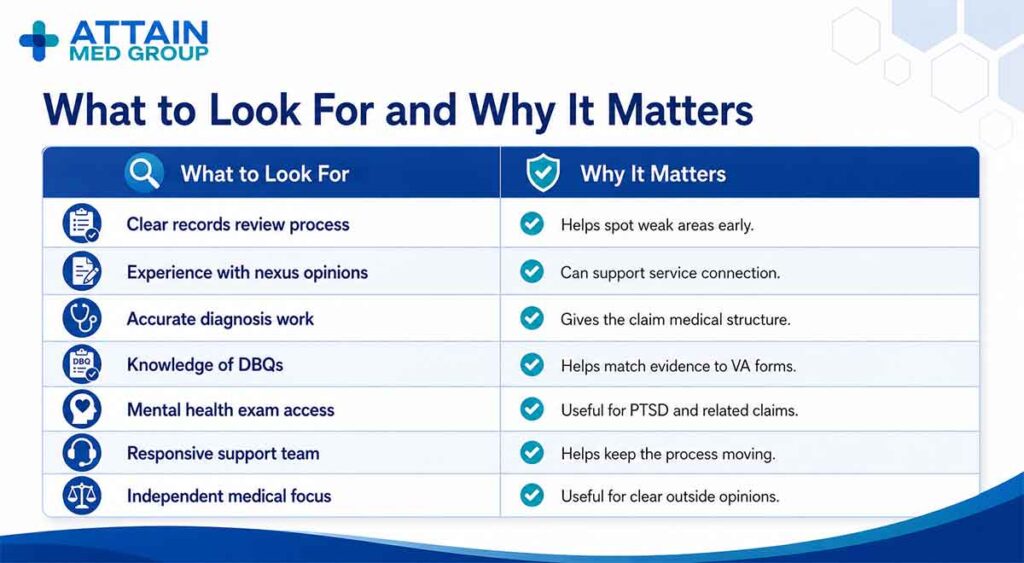
This is also why veterans do their homework before picking a provider. If you have ever looked at guides on choosing a medical provider, you know that fit matters.
That same idea shows up again in articles about your right to select a medical provider during claim-related care. Even though those pages discuss workers comp, the basic point still lands. The provider you choose can shape your case.
It is also helpful to understand how claims-related care is handled on the payment side. This overview of provider payment shows how medical documentation and claims systems often connect.
If you visit an official website for any provider, look for quick links, privacy policy details, contact information, and real service descriptions. Pages like Information Center, Success Stories, latest news, Provider Careers, Investor Relations, and Health Systems can tell you how the business presents itself, even if they do not answer every claim question.
What the process may feel like for a veteran
Most veterans do not start this process feeling confident. They start tired. Tired of paperwork. Tired of repeating their story. Tired of being told to get more proof. That emotional side matters because it affects how people handle deadlines, records, and forms. Good support should reduce stress, not add to it. A strong provider usually helps by breaking the process into smaller parts. First the records are reviewed.
Then the gaps are found. Then the right documents are built from there. That approach makes a hard process feel less scattered. It gives veterans something many of them have been missing for a while: a path. It also helps to have a support team that explains what happens next. Some veterans want email updates, while others just want a clear checklist and one point of contact.
How this fits the needs of veterans and military families
This topic is not just about one person. Claims often affect a spouse, kids, and the wider family too. If benefits are delayed, the stress spreads. If a veteran is dealing with severe mental or physical symptoms, the family carries that weight too.
That is why clearer medical support matters beyond the claim file. It can help families plan next steps with more confidence. For readers who track defense and service-related issues broadly, you may sometimes see unrelated stories using the phrase med group in very different contexts. Those pieces are not about va claims, but the wording overlap is one reason searchers can get mixed results.
The same goes for unrelated news links that use med group in headlines. Search intent can get messy fast. That is one reason people search directly for attain med group or attain med. They want to know whether this medical group works with veterans, whether the providers are credible medical reviewers, and whether the services are built around va disability claims.
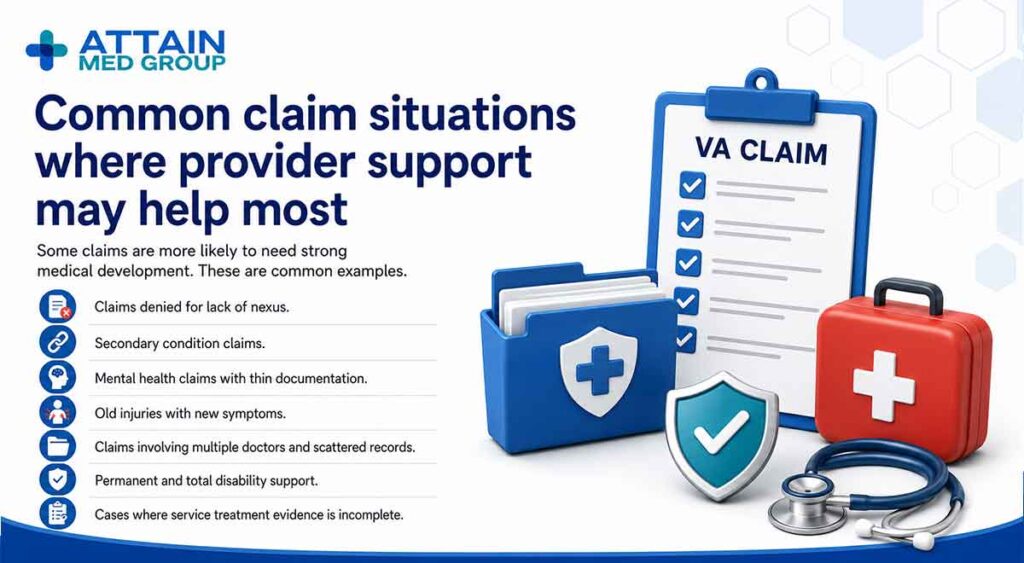
If you see your case in that list, you are not alone. Many veterans need help making the evidence clearer and more complete. This is also common for veterans who started filing va claims years after discharge. Symptoms can vary depending on age, work history, and changes in health care access over time.
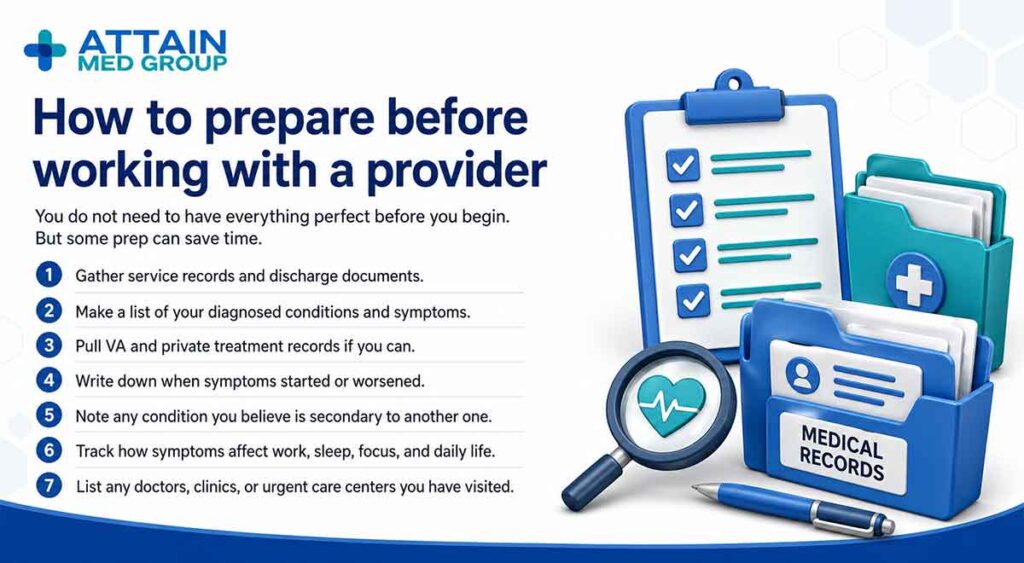
You do not need fancy language. Plain truth works best. Think of it like this. You are helping build a clean timeline that a reviewer can actually follow.
It also helps to note if you were active duty when symptoms first appeared, whether the issue was mentioned in service treatment notes, and whether family members saw changes after discharge. Those details can help medical providers review medical evidence in a more complete way.
Why clarity beats volume in a claim file
Some veterans assume more pages always means a stronger claim. That is not always true. A giant stack of records can still be weak if the key points are buried. Clear, focused evidence often does more than raw volume.
That is one reason structured reviews and strong letters matter so much. They help the important facts stand out. This does not mean every claim needs the same level of help. Some claims are simple. Others are tangled up and need far more support.
In practical terms, a provider may review medical records from a primary care doctor, specialist visits, imaging, emergency treatment, and mental health counseling. The goal is to turn a pile of records into a file that a reviewer can understand without guessing.
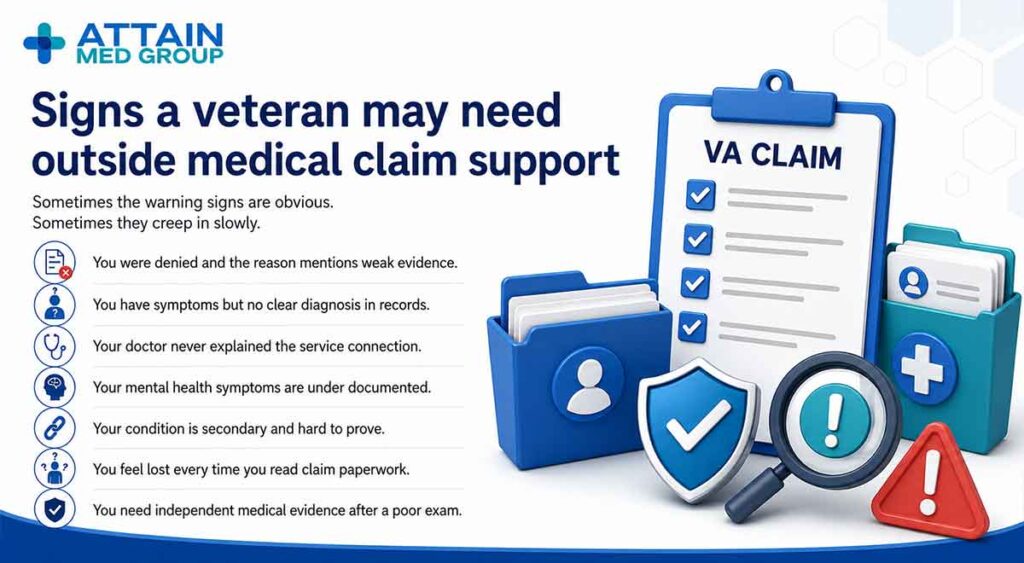
If several of these fit, outside support may help bring order to the process. Sometimes that alone makes a huge difference. That does not mean every provider is right for every case. Veterans should understand veterans affairs requirements, ask direct questions, and choose attain med group only if the services match the needs of the claim.
What sets a helpful provider apart
The best support usually feels calm, clear, and grounded in records. It should never feel rushed or sloppy. Veterans need medical writing that makes sense to reviewers. They also need providers who understand how service history, symptom patterns, and diagnoses connect.
That is why the work behind the scenes matters so much. Medical records review may sound dull, but it is often where the strongest case starts. A helpful provider also knows that veterans are people first. Some enjoy meeting with healthcare professionals who take time to listen, while others simply want fast, credible medical paperwork they can use in the va claims process.
Whether you choose attain, choose attain med, or choose attain med group is a personal decision. The bigger point is to work with medical providers who can review medical evidence carefully and explain what support is realistic for your case.
Conclusion
Medical Provider Attain Med Group appears to serve a very specific need. It helps veterans build the medical side of a va disability claim with clearer evidence.
That can include medical records review, nexus letters, diagnosis support, DBQs, permanent and total disability letters, and psychological evaluations. For veterans, service members, and families dealing with a difficult claim, that kind of help can bring real structure to a messy process.
If you are weighing your options, focus on one thing first. Choose support that makes your medical evidence easier to understand, easier to follow, and harder to ignore.
That is how attain med group fits into the bigger picture. In a system where va disability benefits often depend on credible medical evidence, a trusted medical review process can help veterans move through the claims process with a stronger file and a clearer next step.