

Navigating the complexities of a VA Sleep Apnea DBQ: How to Use It What Matters Most and What Gets Veterans Denied win va disability claim is essential for any veteran seeking disability benefits after their military service. Veterans face significant hurdles when filing a sleep apnea va claim, as the process requires substantial medical evidence and clear proof of a service-connected disability. Your sleep apnea claim often hinges on how the examining medical professional fills out the required paperwork during your evaluation. You must submit strong documentation to win your va claim, because missing records will stall the process and potentially lead to a lower va rating than you deserve.
The disability benefits questionnaire serves as the primary evaluation tool for the Department of Veterans Affairs to determine your va disability status. This critical document dictates your va disability rating and directly determines your monthly compensation level for sleep apnea. A poorly completed form frequently leads to a denied disability claim, leaving veterans without necessary support for their apnea claim. Understanding the mechanics of a va disability case requires careful attention to detail from the very beginning of your va claims journey.
Many veterans struggle to service connect their conditions without proper guidance and a strong nexus letter from a qualified doctor. You need a formal sleep study to confirm your sleep apnea disability diagnosis before filing your paperwork with the va sleep department. This sleep study must show the severity of your condition to justify a specific disability rating. Without this medical evidence, the va sleep apnea reviewers will likely deny your apnea va claim.
Securing a successful outcome for your sleep apnea claim requires a proactive approach to gathering clinical data and personal testimony. You should document how your sleep apnea affects your daily productivity and your ability to maintain substantial gainful employment. Many veterans find that keeping a sleep diary helps provide the medical professional with a clearer picture of their nocturnal struggles. This additional layer of evidence can be the deciding factor when the VA rater reviews your va disability file for service connection.
The sleep apnea disability benefits questionnaire provides the VA with critical health data about your breathing assistance needs and airway issues. When you undergo a Compensation and Pension (C&P) exam, the examiner uses this DBQ to document the severity of your sleep apnea. It is vital to ensure the doctor notes every symptom, from chronic fatigue to morning headaches, to secure a fair va rating. If the DBQ is incomplete, your apnea va file will not accurately reflect your service-connected disability.
To service connect your condition effectively, the DBQ must link your current sleep apnea to an event during your military service. This is where many va disability applications fail, as the link between military service and current health is often weak. A medical professional must clearly state that your apnea disability is “at least as likely as not” caused by your time in uniform. Without this specific language in the va claim, the va rating will likely be 0% or a total denial.
The DBQ form itself contains several sections that require precise clinical observations regarding your respiratory system and sleep patterns. Section I typically covers the diagnosis, while Section II focuses on the medical history and the onset of your sleep apnea symptoms. Section III is perhaps the most critical, as it details the specific findings from your sleep study and diagnostic testing. Ensuring that your medical professional accurately completes these sections is paramount to achieving a favorable va disability rating.
Furthermore, the examiner must indicate whether your sleep apnea is obstructive, central, or mixed in nature to provide a complete clinical picture. Obstructive sleep apnea is the most common form, often linked to physical blockages in the airway during sleep. Central sleep apnea involves a failure of the brain to send proper signals to the muscles that control breathing. Mixed sleep apnea combines both of these issues, requiring a more complex treatment plan and detailed medical evidence for your sleep apnea claim.
How to Service Connect and Prove a Service-Connected Condition for Sleep Apnea
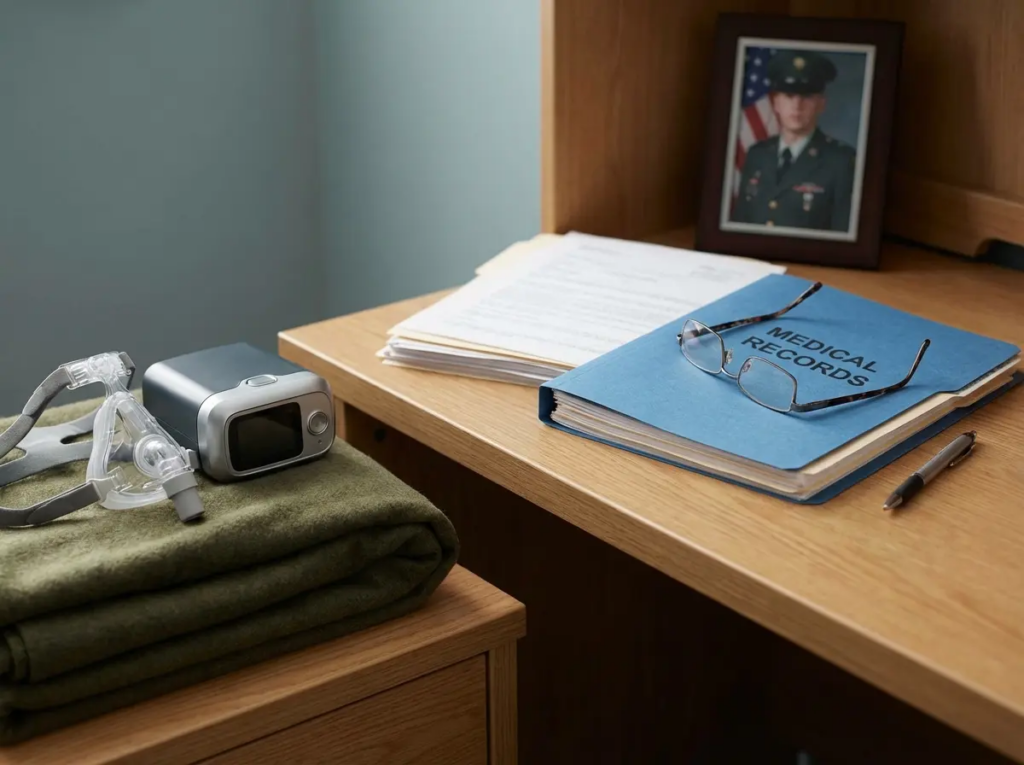
To service connect your sleep apnea, you must establish three things: a current diagnosis, an in-service event, and a medical nexus. The nexus letter is perhaps the most important document you can provide to support your sleep apnea va claim. This letter, written by a doctor, provides the bridge between your military service and your current apnea va claim. Without a strong nexus letter, the VA may argue your sleep apnea developed years after you left the military.
Establishing a service-connected condition requires a deep dive into your military medical records to find any mention of sleep disturbances. Even if you were not formally diagnosed with sleep apnea while on active duty, complaints of snoring or daytime fatigue can be vital. These early indicators serve as the foundation for your sleep apnea claim by showing the condition likely began during service. A medical professional can use these records to support their opinion that your current sleep apnea is related to your time in the military.
Direct service connection is often difficult for sleep apnea unless you were diagnosed while still on active duty. Many veterans did not have access to a sleep study during their military service, making the va disability claim harder to prove. In these cases, you might look for toxic exposure records or evidence of a presumptive condition that could have caused respiratory issues. If you can show that your sleep apnea started during service, your va rating chances increase significantly.
Another way to service connect is through aggravation, where a pre-existing condition was made worse by your military service. This requires detailed medical evidence showing your apnea disability worsened beyond the natural progression of the disease. Your va disability rating will depend on the degree of aggravation documented in your va sleep apnea file. Providing a comprehensive nexus letter that explains this aggravation is key to winning your disability claim.
Veterans should also consider the impact of environmental factors encountered during their deployments on their long-term respiratory health. Exposure to burn pits, sand, and other airborne hazards can lead to chronic inflammation that contributes to sleep apnea development. When filing your sleep apnea va claim, ensure that you mention any such exposures to your examiner. This context helps the VA understand the full scope of your military service and its impact on your service-connected condition.
Establishing Secondary Service Connection and Secondary Service Links

If you cannot prove direct service connection, you should explore secondary service connection for your sleep apnea claim. This occurs when your sleep apnea is caused or aggravated by another service-connected disability, such as PTSD or rhinitis. For example, many veterans with PTSD suffer from sleep apnea due to weight gain from medications or physiological changes. Establishing a secondary service link can be the most effective way to service connect your apnea va condition.
To succeed with a secondary service connection, you must provide a nexus letter that explains the biological link between the two conditions. The VA often denies these va claims because they claim the link is too speculative. However, a medical professional can cite peer-reviewed studies to support your sleep apnea va claim. This evidence is crucial for your va disability rating and ensures the apnea va claim is taken seriously by the rater.
Common conditions that lead to a secondary service connection for sleep apnea include asthma, back pain (leading to obesity), and sinus issues. When filing your va disability claim, make sure to list all related conditions that might impact your va rating. The goal is to show that your sleep apnea disability would not exist, or would not be as severe, if not for your primary service-connected disability. This strategy is a proven way to win va disability claim outcomes.
The “obesity bridge” is a common legal theory used to link sleep apnea to a primary service-connected condition like a knee or back injury. If a veteran’s primary injury prevents them from exercising, leading to weight gain, that weight gain can cause or worsen sleep apnea. A medical professional must clearly articulate this chain of causation in your sleep apnea claim documentation. This approach requires detailed medical evidence showing the progression from the initial injury to the current respiratory diagnosis.
Mental health conditions like anxiety and depression can also play a significant role in the development of sleep apnea symptoms. Medications used to treat these conditions often have side effects that relax the throat muscles or cause significant weight fluctuations. By establishing these links, you can strengthen your sleep apnea va claim and improve your chances of a fair va rating. Always ensure your nexus letter addresses these secondary factors with scientific precision and clinical clarity.
The Critical Role of the Sleep Study in your Apnea Claim
A sleep study, or polysomnogram, is the gold standard of medical evidence for any sleep apnea va claim. The VA requires a formal sleep study to confirm the diagnosis and determine the severity of your apnea claim. This test measures your breathing, heart rate, and oxygen levels while you sleep to identify episodes of airway pressure collapse. Without a recent sleep study, your va disability application will likely be deferred or denied immediately.
The results of your sleep study will directly influence your sleep apnea va rating. The VA looks at the Apnea-Hypopnea Index (AHI) to see how many times your breathing stops per hour. If the sleep study shows you need a cpap machine for breathing assistance, you are generally eligible for a 50% va rating. It is essential that the sleep study is conducted according to VA standards to be valid for your va claim.
If you haven’t had a sleep study recently, you should request one from your doctor before submitting your disability claim. You can often get a free case evaluation from veterans’ advocates to see if your current medical evidence is sufficient. A fresh sleep study provides the most up-to-date data for your va disability rating. Remember, the VA will often schedule their own sleep study, but having your own results provides a vital safety net for your apnea va claim.
Modern sleep study technology allows for both in-lab testing and home-based evaluations, depending on the veteran’s specific needs. While home tests are more convenient, the VA often prefers the comprehensive data provided by an overnight stay in a clinical sleep center. An in-lab sleep study can detect subtle variations in brain waves and muscle activity that a home test might miss. This level of detail is often necessary to confirm a diagnosis of central sleep apnea or other complex sleep disorders.
During the sleep study, technicians will monitor your oxygen saturation levels to determine if you suffer from nocturnal hypoxemia. This condition, characterized by low blood oxygen during sleep, is a significant indicator of the severity of your sleep apnea. The presence of hypoxemia can lead to more severe long-term health complications, such as hypertension and cardiovascular disease. Documenting these findings in your sleep apnea claim is essential for demonstrating the true impact of the condition on your health.
Why the VA Denies Sleep Apnea Claims and VA Disability Claim Requests

The VA denies many sleep apnea claims because of a lack of “nexus” or connection to military service. Even with a diagnosis and a cpap machine, you will not get a va rating without proving the condition started in the military. This is why the nexus letter is so critical; it fills the gap that the VA Sleep Apnea DBQ might leave open. Many veterans assume the diagnosis is enough, but the va disability process requires much more proof.
Another common reason for a denied disability claim is the “post-service” argument, where the VA claims your sleep apnea is due to age or lifestyle. To counter this, you need medical evidence showing symptoms began during your military service, even if you weren’t diagnosed then. Buddy statements from fellow service members can help support your sleep apnea va claim by documenting your snoring or gasping for air in the barracks. These statements add weight to your apnea va file and can help service connect the condition.
Finally, technical errors on the VA Sleep Apnea DBQ can lead to a lower va disability rating or a total denial. If the examiner fails to check the box for “requires use of a CPAP,” you might only receive a 0% or 30% va rating. Always review your va claims paperwork for accuracy before it is finalized. If you feel your va disability claim was unfairly denied, you have the right to appeal and provide a new nexus letter or sleep study results.
Many veterans also face denials because their sleep apnea claim lacks a clear medical rationale linking their symptoms to their service history. The VA rater is not a doctor and relies entirely on the opinions provided by the medical professional during the C&P exam. If the examiner’s opinion is “less likely than not,” the claim will be denied regardless of the severity of the symptoms. To avoid this, you must ensure your medical evidence is robust and addresses all potential counterarguments from the VA.
In some cases, the VA may argue that your sleep apnea is a pre-existing condition that was not aggravated by your service. This is particularly common for veterans who entered the military with a high Body Mass Index or a history of respiratory issues. Overcoming this hurdle requires a detailed nexus letter that explains how the rigors of military service worsened the condition. By providing a clear timeline of symptom progression, you can successfully win va disability claim appeals and secure your benefits.
Decoding the VA Disability Rating System and Disability Ratings
The va disability rating for sleep apnea is based on the severity of the symptoms and the required treatment. A 0% va rating is given if you have a diagnosis but no symptoms that interfere with your daily life. A 30% sleep apnea va rating is assigned if you experience persistent daytime hypersomnolence (extreme sleepiness). The most common va rating is 50%, which is granted if you require a cpap machine or other breathing assistance device.
To reach a 100% disability rating for sleep apnea, you must show chronic respiratory failure or other severe complications. These disability ratings are rare and require extensive medical evidence of total impairment. Most veterans aim for the 50% va rating, as it provides significant disability benefits and acknowledges the life-altering nature of the condition. Your apnea va rating is a reflection of how well you documented your need for airway pressure support.
It is important to note that the VA is currently considering changes to the sleep apnea va rating criteria. In the future, a cpap machine might not automatically guarantee a 50% va disability rating. This makes it even more important to service connect your condition now and secure your va rating under the current rules. Stay informed about va claims updates to ensure your sleep apnea disability status remains protected.
The current rating schedule for sleep apnea is found in 38 CFR § 4.97, under Diagnostic Code 6847. This code specifically outlines the criteria for each percentage level, focusing on the necessity of medical intervention. For a 30% rating, the veteran must demonstrate “persistent daytime hypersomnolence” that is not improved by sleep. For the 50% rating, the “use of assistance device” such as a CPAP, BiPAP, or dental appliance is the primary requirement. Understanding these legal definitions is crucial for anyone filing a sleep apnea claim.
Veterans should also be aware of the “pyramiding” rule, which prevents the VA from rating the same symptom under two different diagnostic codes. If you have both sleep apnea and another respiratory condition like asthma, the VA will typically only assign one va disability rating. They will choose the code that results in the higher compensation level for the veteran. This makes it essential to present your medical evidence in a way that highlights the most severe aspects of your sleep apnea disability.
Managing Your VA Sleep Apnea Case and VA Rating Strategy
Managing your va disability case requires organization and persistence throughout the va claims process. Keep a folder with every sleep study, nexus letter, and piece of medical evidence you have collected. When you attend your C&P exam, bring copies of these documents to ensure the examiner has all the facts for the VA Sleep Apnea DBQ. A well-managed va claim is much more likely to result in a favorable va rating.
If you are also applying for social security disability, remember that their criteria are different from the va disability system. While social security looks at your ability to work any job, the VA focuses on service connection and specific disability ratings. However, a 100% va rating can sometimes help speed up your social security application. Always mention your sleep apnea va claim status when dealing with other government agencies to ensure consistency.
Consider seeking a case evaluation from a professional who specializes in va sleep apnea cases. They can help you identify missing medical evidence and draft a more effective nexus letter. Many organizations offer a free case review to help veterans understand their chances of success. Taking advantage of these resources can be the difference between a denied apnea claims and a successful va disability rating.
An effective va rating strategy involves more than just submitting paperwork; it requires a deep understanding of the VA’s internal procedures. You should always file an “Intent to File” as soon as you suspect you have a service-connected condition. This preserves your effective date and ensures you receive back pay for the entire duration of your sleep apnea claim process. Staying organized and meeting all deadlines is the best way to avoid unnecessary delays in your va disability journey.
Furthermore, you should regularly check the status of your va claims through the official VA portal or by contacting your representative. If you notice any discrepancies in your medical evidence or the DBQ findings, address them immediately with a supplemental claim. Being proactive in managing your sleep apnea va claim shows the VA that you are serious about your health and your benefits. This persistence often leads to a more accurate va disability rating and better long-term support for your sleep apnea.
Taking the Next Steps for Your Sleep Apnea VA Claim
The first step to win va disability claim outcomes is to schedule a sleep study if you haven’t had one recently. Once you have a diagnosis, work with a medical professional to draft a nexus letter that clearly links your sleep apnea to your military service. Then, download the VA Sleep Apnea DBQ and review it so you know what to expect during your exam. Being prepared is the best way to ensure your sleep apnea va claim is successful.
Don’t be discouraged if your initial va claim is denied or if you receive a lower va rating than expected. Many veterans have to appeal their apnea claims multiple times before they receive the correct disability rating. Use the feedback from the VA’s denial letter to gather more medical evidence or a stronger nexus letter. Your military service earned you these disability benefits, and you should persist until you receive them.
Finally, stay proactive in managing your health and your va disability file. Use your cpap machine as prescribed, as the VA may check your usage data during a va rating review. Consistent treatment not only helps your health but also provides ongoing medical evidence for your sleep apnea disability. For more information on how to service connect your condition, visit the official VA disability site or consult with a sleep health expert to strengthen your apnea va claim. You can also check your potential compensation rates to see how a 50% va rating would impact your monthly support.
As you move forward with your sleep apnea claim, remember that you are not alone in this process. Thousands of veterans have successfully navigated the va disability system to receive the compensation they deserve for their sleep apnea. By following the steps outlined in this guide and focusing on high-quality medical evidence, you can improve your chances of success. Your health and your future financial security are worth the effort it takes to win va disability claim decisions.
Keep in mind that the VA Sleep Apnea DBQ is a tool designed to help you, provided it is used correctly by a knowledgeable examiner. If you encounter a C&P examiner who seems dismissive, do not hesitate to report the issue and request a new exam. Your sleep apnea va claim depends on a fair and thorough evaluation of your service-connected condition. With the right preparation and a commitment to the process, you can secure the va rating that accurately reflects your sacrifice and your current health needs.