

Veterans frequently encounter significant administrative hurdles when you’re filing a va claim for multiple concurrent health issues, especially when navigating Sleep Apnea Secondary to PTSD. Securing a proper service connection for sleep apnea secondary to post-traumatic stress requires exceptionally solid medical documentation. Proving the origin of this specific health condition demands precise paperwork, immense patience, and the right strategic approach. Many veterans eventually discover that their military service left them with hidden psychological scars that severely interrupt their nightly rest. Understanding exactly how to link sleep apnea secondary to your primary trauma is absolutely vital for protecting your future physical well-being.
Understanding the physiological relationship between these conditions forms the absolute foundation of your overall disability claim. Medical research clearly shows that a severe stress disorder or chronic sleep disorder significantly alters normal breathing patterns during periods of rest. Veterans living with service-connected ptsd frequently experience intense hyperarousal, which directly impacts their upper airway muscle control and sleep apnea symptoms at night. This ongoing neurological disruption often triggers obstructive sleep apnea, forcing the body to wake repeatedly throughout the entire night.
📝 Note: Psychiatric medications prescribed for post-traumatic stress disorder frequently cause significant weight gain. This added physical mass around the neck often creates airway blockages, providing a clear path for establishing secondary service connection.

The biological connection between severe psychological trauma and sleep apnea involves multiple complex physiological pathways within the human body. Psychiatric medications prescribed for post-traumatic stress disorder treatment frequently cause patients to experience rapid and significant weight gain. This added mass around the neck creates physical airway blockages, noticeably worsening existing obstructive sleep apnea over time. This distinct physical change provides a highly logical path for establishing a formal secondary service connection for your condition.
Many medical professionals recognize that chronic daytime anxiety heavily influences the overall severity of a patient’s sleep apnea. When psychological trauma keeps the nervous system constantly active, the resulting sleep apnea becomes exceptionally difficult to manage properly. Veterans suffering from these disruptive symptoms must carefully document every single instance of nighttime waking and sleep apnea symptoms in their medical files. Linking sleep apnea secondary to these established psychiatric symptoms requires detailed medical charting from a qualified healthcare provider.
Filing for sleep apnea secondary to mental health issues involves demonstrating a clear and undeniable chain of medical causation. Your doctor must explicitly state that the apnea secondary condition arose directly from the primary psychological trauma you experienced. Furthermore, proving sleep apnea secondary demands objective clinical testing alongside your own subjective daily symptom reporting. Without this two-pronged medical approach, establishing a valid service connection becomes incredibly difficult for most veterans.
Gathering Crucial Medical Evidence

Winning va disability benefits depends entirely on the overall quality and depth of your submitted medical documentation. You must provide comprehensive medical records that clearly document your ongoing breathing symptoms over an extended period. A formal sleep study serves as the definitive clinical proof of your diagnosis, measuring exact breathing interruptions. Without an official sleep study, the Department of Veterans Affairs will automatically deny your sleep apnea claim and sleep apnea diagnosis without further review.
To successfully establish secondary service connection, you need a highly qualified medical professional to review your entire military file. They must write a detailed nexus letter connecting your nighttime breathing interruptions directly to your mental health struggles. A strong nexus letter bridges the critical gap between your established service-connected disability and your current sleeping problems. This professional medical opinion acts as the absolute linchpin for your entire va claim moving forward.
Veterans must continuously update their medical evidence to reflect their current physical condition accurately and honestly. Every single instance of sleep apnea treatment should appear clearly in your ongoing medical treatment notes. When you file a formal claim for sleep apnea, the governmental reviewers look specifically for historical consistency. Consistent documentation of sleep apnea prevents medical examiners from dismissing your severe symptoms as merely temporary issues.
💡 Key Takeaways
- Always complete a formal clinical sleep study to obtain an official diagnosis before submitting any paperwork.
- Secure a detailed nexus letter from a qualified physician to explicitly link your breathing issues to your trauma.
- Maintain consistent medical records that track your symptoms and treatments over a long period of time.
How to Build Your VA Claim

Filing for sleep apnea secondary to psychological trauma requires a highly methodical approach to government paperwork. You simply cannot rely on basic assumptions when dealing with va claims and secondary service connection requests for service connection during your military service. The application process demands highly specific sequential steps to satisfy the strict requirements of the federal rating schedule. Proper preparation makes securing a favorable service connection for sleep apnea and sleep apnea treatment much more likely for disabled veterans.
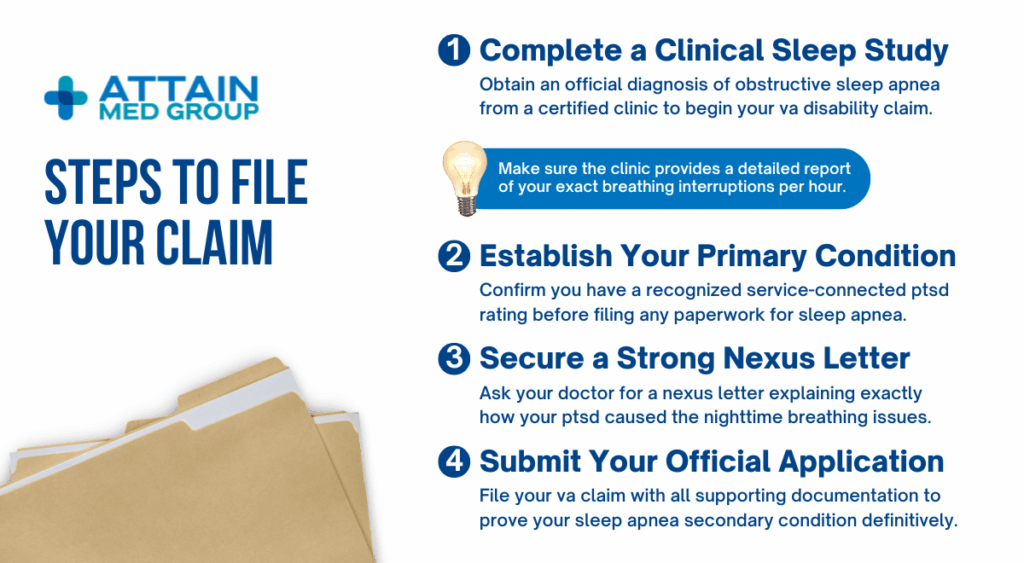
Every successful application for apnea secondary to military trauma follows this highly logical and structured progression. Rushing the application process often results in missing vital documentation regarding your ongoing sleep apnea treatments. A well-prepared disability claim clearly outlines the undeniable relationship between both of your diagnosed physical ailments. Take the necessary time to gather every single piece of medical evidence available before submitting anything.
Key Studies to Share With Your Doctor
Physicians frequently need peer-reviewed literature to draft highly compelling nexus letters for their veteran patients. Providing your doctor with specific medical studies strengthens the scientific rationale in their final written evaluation. Research published in the Journal of Clinical Sleep Medicine demonstrates a high prevalence of obstructive sleep apnea among veterans. Highlighting this published data helps your doctor write a much more persuasive nexus letter for your case.
Another critical resource involves extensive research regarding the documented sleep apnea ptsd link in military populations. Studies show that trauma-induced sleep disruptions severely exacerbate obstructive sleep issues through chronic nervous system activation. Sharing these clinical findings provides the necessary proof to confidently support your sleep apnea secondary application. Many doctors greatly appreciate having a reliable evidence guide to reference when determining the probability of causation.
Medical literature consistently links severe daytime anxiety directly to increased sleep apnea severity during the night. Veterans can present these published studies to strongly support their apnea ptsd theory of medical connection. When a doctor heavily cites published research, your va claim naturally gains substantial credibility with the reviewers. This solid scientific backing makes your apnea secondary argument much harder for the government to dismiss.
The clinical correlation between psychological trauma and sleep apnea is heavily documented in modern respiratory medicine. You should actively discuss these important sleep apnea studies during your routine clinical appointments with specialists. A doctor who fully understands the latest research will inevitably write a significantly stronger nexus letter. This professional collaboration directly improves your overall chances of establishing a permanent service connection for your breathing.
Understanding VA Disability Ratings for Sleep Apnea
The federal rating system evaluates the overall severity of your sleep apnea and the required daily treatments. When the agency rates sleep apnea, they assign a specific percentage based on your proven medical dependency. A standard va disability rating for this particular condition often revolves around the use of breathing machines and sleep apnea complications. If you require a CPAP machine nightly, the standard va rating typically reaches exactly 50%.
Veterans should clearly understand how the system rates sleep issues before submitting their final application paperwork. A 50 percent va rating provides significant financial support and immediately opens doors to better healthcare resources. Sometimes, disabled veterans also qualify for social security benefits if their health conditions prevent them from maintaining employment. Securing these crucial disability benefits can drastically improve your overall quality of life and financial stability.
💡 Pro Tip: Always bring your CPAP machine’s digital usage log to your medical appointments. Reviewers want to see consistent compliance with your prescribed sleep apnea therapy.
The way the government evaluates sleep apnea depends heavily on your documented symptom severity and frequency. Mild cases of sleep apnea might only warrant a basic zero percent rating from the evaluating officials. However, severe sleep apnea that causes extreme daytime sleepiness garners much higher disability ratings from the board. Proving the extreme severity of your sleep apnea is just as important as proving the medical causation.
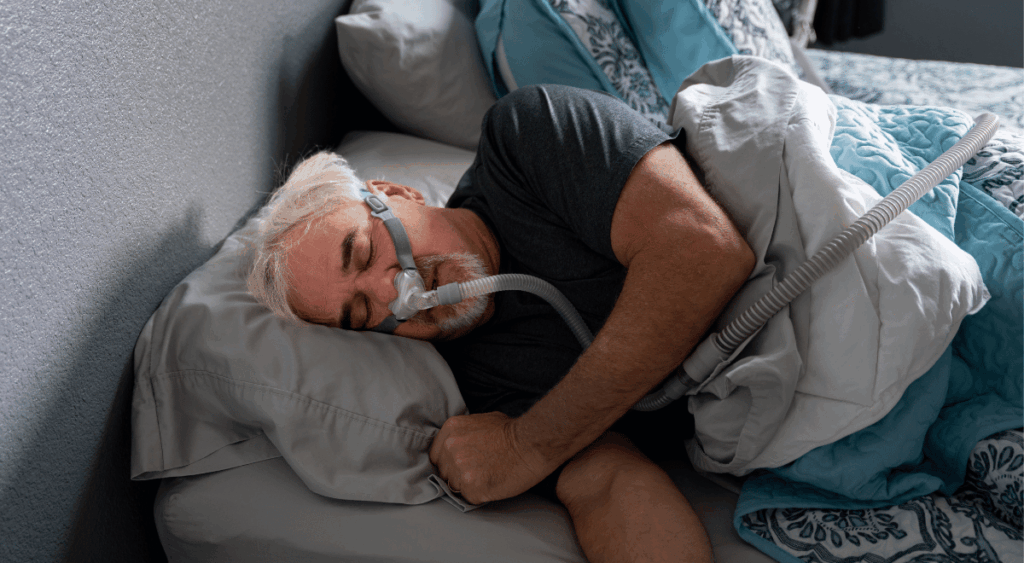
If your sleep apnea requires a continuous positive airway pressure device, you must document its daily usage. Reviewers look incredibly closely at CPAP prescriptions when evaluating sleep apnea claims for potential financial compensation. Consistent nightly use of your prescribed machine strongly validates the overall severity of your sleep apnea. This detailed documentation directly supports your secondary service connection argument and proves you are actively seeking treatment.
Avoiding Common Pitfalls in Secondary Claims
Many veterans completely fail to realize that sleep apnea va claims require strict and undeniable medical proof. You cannot simply state that you have sleep apnea and casually expect a favorable financial decision. The missing link in most denied applications is a highly robust nexus letter from a qualified specialist. Without this absolutely explicit connection, examiners will automatically classify your sleep apnea as an entirely unrelated ailment.
Another frequent mistake involves assuming this is a presumptive condition based solely on your military service. While certain toxic exposures create legal presumptions, sleep apnea secondary to mental trauma requires highly individualized proof. If you’re filing an apnea claim without current diagnostic records, you actively invite an automatic denial. Always submit comprehensive medical data to maximize your overall chances of winning your important va disability case.
Veterans often mistakenly file for sleep apnea secondary without properly establishing their primary psychological condition first. You must firmly secure your initial trauma rating before aggressively pursuing a sleep apnea secondary claim. Attempting to claim sleep apnea without a solid baseline rating usually leads to immense administrative frustration. Proper sequencing of your various va claims prevents entirely unnecessary administrative delays and rapid government rejections.
💡 Key Takeaways
- Never file a secondary claim before your primary psychological condition receives an official rating.
- Do not rely on the assumption that reviewers will automatically connect your conditions without explicit proof.
- Always submit fresh, up-to-date clinical evidence rather than relying solely on outdated military health records.