


Veterans face severe administrative hurdles when pursuing medical compensation after returning from military deployments across various global conflict zones. One specific challenge involves filing a narcolepsy and Agent Orange claim with the Department of Veterans Affairs to secure necessary disability benefits. While the government recognizes many diseases linked to this toxic herbicide, sleep disorders require substantial proof and strict legal documentation to establish a service connection. The complexity of the VA system often leaves veterans feeling overwhelmed when their symptoms do not perfectly align with the established presumptive list of conditions. Understanding the nuances of toxic exposure and neurological health is essential for any veteran seeking to prove that their chronic sleep issues originated during their time in service. As scientific research evolves, the connection between chemical defoliants and central nervous system disruption becomes increasingly difficult for the VA to ignore in modern disability adjudications.

VA Disability Benefits: Understanding the Agent Orange Presumptive List for a Narcolepsy and Agent Orange Claim
The Department of Veterans Affairs maintains a specific list of medical conditions tied directly to Agent Orange exposure during the Vietnam War era. This roster is officially known as the presumptive list for toxic exposure, which simplifies the claims process for thousands of aging veterans. If you have a listed disease and served in a qualifying location, the VA automatically assumes military service caused your illness without further proof. This legal presumption covers conditions like Type 2 diabetes, Parkinson’s disease, and various forms of respiratory cancers that have been scientifically linked to dioxin. For many, this list represents the only clear path to receiving the medical care and financial support they desperately need after decades of suffering.
However, narcolepsy does not currently appear on this official presumptive list, creating a significant barrier for those suffering from debilitating daytime sleepiness. Why does the government exclude certain severe conditions from automatic approval despite growing evidence of neurological damage from chemical defoliants? The VA classifies narcolepsy as a neurological sleep disorder rather than a recognized toxic exposure condition, requiring veterans to establish independent proof of causation. This means the burden of proof shifts entirely to the veteran, who must demonstrate a clear link between their service and their diagnosis. This evidentiary requirement often necessitates the help of specialized medical experts who can articulate the complex relationship between herbicide exposure and brain function.
Do not let this exclusion discourage you from pursuing your rightful VA benefits and the healthcare support you earned through your service. Many veterans successfully secure disability ratings for unlisted conditions through careful evidence gathering and specialized medical research that connects their symptoms to toxins. You will need substantial medical evidence to bridge the gap between toxic exposure and your current diagnosis of narcolepsy or other sleep-related ailments. By focusing on the scientific relationship between chemical exposure and brain function, you can build a compelling case for the rating you deserve. The key is to present a narrative that shows your symptoms began or were exacerbated by the environmental hazards present during your deployment.
💡 Key Takeaways
- Narcolepsy is not currently included on the VA presumptive list for Agent Orange exposure.
- Veterans must provide independent medical evidence to establish a service connection.
- Understanding the difference between direct and secondary claims improves your chances of approval.

Toxic Exposure and Dioxin: The Medical Link Between Toxin Exposure and a Narcolepsy and Agent Orange Claim
Medical researchers continue to study how tactical herbicides affect the human nervous system over extended periods of time following initial contact. Agent Orange contains a highly toxic chemical compound called dioxin, which accumulates rapidly in human fatty tissues and remains there for decades. Scientific studies indicate a correlation between heavy chemical exposure and disruptions in the complex brain systems that regulate sleep and circadian rhythms. Dioxin is known to cross the blood-brain barrier, potentially causing long-term damage to the hypothalamus, which is the brain’s primary control center for sleep and metabolic stability. This persistent toxicity can lead to a variety of neurological impairments that may not manifest fully until years after the veteran has left active duty.
Narcolepsy occurs when the brain loses its fundamental ability to control sleep and wake cycles properly, leading to sudden “sleep attacks” during the day. The condition often stems from a lack of hypocretin, a vital brain chemical that actively promotes daytime wakefulness and regulates REM sleep patterns. While direct studies on dioxin and hypocretin remain limited, toxic exposure broadly impacts overall neurological health and can trigger autoimmune responses that destroy hypocretin-producing cells. This biological mechanism provides a plausible pathway for veterans to argue that their narcolepsy is a direct result of their service-connected toxic exposure. Understanding this physiological link is vital when presenting your case to the Department of Veterans Affairs.
You should discuss your complete military exposure history with a qualified neurologist or certified sleep specialist who understands the impact of environmental toxins. These medical professionals can review available scientific literature regarding chemical exposure and progressive neurological degradation to support your claim for benefits. Their clinical findings will form the foundational argument when you submit your formal benefits application to the Department of Veterans Affairs. Providing your doctor with detailed records of where and when you were exposed to herbicides will help them craft a more persuasive medical opinion. Furthermore, documenting the progression of your symptoms from early service years to the present can provide the necessary context for a successful narcolepsy and Agent Orange claim.
⚠️ Warning
The VA requires peer-reviewed medical literature to support claims linking unlisted conditions to toxic exposure. Do not submit personal medical theories without backing them up with established scientific research and professional clinical opinions from board-certified specialists.
Establishing Direct Service Connection for a Narcolepsy and Agent Orange Claim
Filing a successful narcolepsy and Agent Orange claim requires you to prove three specific legal elements to the satisfaction of the VA adjudicators. First, you need a current, formal medical diagnosis of narcolepsy from a fully licensed physician, preferably supported by a comprehensive sleep study. Second, you must show evidence of an in-service event, such as documented exposure to herbicides or the onset of symptoms while on active duty. Finally, you must provide a medical nexus that links the current diagnosis to the in-service event or exposure through professional medical reasoning. This “Caluza Triangle” of evidence is the bedrock of any successful disability claim involving non-presumptive conditions.
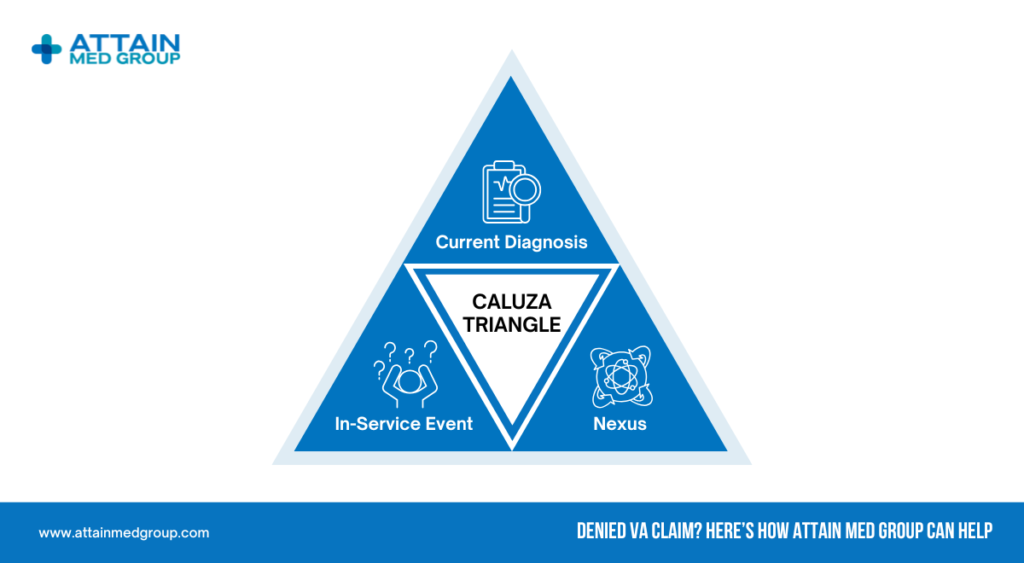
The medical nexus serves as the most critical component of your entire military disability claim when dealing with non-presumptive conditions like sleep disorders. A doctor must state that your narcolepsy is “at least as likely as not” caused by your chemical exposure during your military service. This specific legal phrasing tells the VA adjudicator that there is at least a fifty percent probability of connection between the two events. Without this specific language from a medical professional, the VA is highly likely to deny the claim based on a lack of evidence. It is often helpful to provide the doctor with copies of your personnel records and any relevant scientific papers that support the link between dioxin and neurological damage.
Gathering evidence for a direct connection often involves retrieving old military records and historical medical files from the National Archives or private providers. You should look for any documentation showing sleep issues, chronic fatigue, or unexplained exhaustion that began during your active duty service years. Even minor complaints about excessive daytime sleepiness in your service treatment records can strongly support your current claim by establishing a timeline of symptoms. Combining these records with modern medical research on dioxin creates a powerful narrative for the VA to review during the decision-making process. Remember that the VA has a “duty to assist” you in gathering records, but being proactive in your own evidence collection often leads to faster and more favorable outcomes.

Secondary Service Connection: Using Presumptive Conditions for a Narcolepsy and Agent Orange Claim
How can you bypass this strict requirement for direct proof when the scientific link is difficult to document with absolute certainty? Veterans often find more success by filing for narcolepsy as a secondary service-connected condition rather than a primary one. Secondary connection applies when an already established service-connected disability directly causes or aggravates a new illness or medical condition. This strategy allows you to leverage the presumptive list to your advantage by connecting your sleep disorder to a condition the VA already recognizes. For example, if you are already rated for a condition like ischemic heart disease or Type 2 diabetes, you may be able to link your sleep issues to those primary diagnoses.
Consider Parkinson’s disease, which stands as a recognized presumptive condition for tactical herbicide exposure and carries a high likelihood of approval for Vietnam veterans. Parkinson’s disease heavily impacts the brain’s neurological pathways and frequently causes severe secondary sleep disturbances, including narcolepsy and REM sleep behavior disorder. If you already hold a VA rating for Parkinson’s, your doctor can link your narcolepsy directly to that disease as a secondary complication. This approach often meets with less resistance from the VA because the primary link to Agent Orange has already been legally established. The medical professional simply needs to explain how the primary condition’s pathology leads to the secondary sleep disorder.
Other presumptive conditions might also contribute to the development or aggravation of a chronic sleep disorder like narcolepsy or sleep apnea. Type 2 diabetes can lead to severe weight gain and metabolic changes that exacerbate sleep-related issues and neurological fatigue in many patients. You must work closely with your medical team to identify these secondary relationships and document how your primary condition makes your sleep disorder worse. By presenting a comprehensive view of your health, you increase the chances of the VA recognizing the full impact of your service-connected illnesses. This holistic approach ensures that all aspects of your disability are appropriately rated and compensated.
VA Rating Criteria: How the VA Evaluates a Narcolepsy and Agent Orange Claim
When the VA evaluates a narcolepsy and Agent Orange claim, they do not have a unique diagnostic code specifically for narcolepsy. Instead, they use Diagnostic Code 8108, which rates narcolepsy under the same criteria as epilepsy, specifically petit mal seizures. This rating system is based on the frequency of “episodes” or sleep attacks that occur over a specific period. For a veteran to receive a high disability rating, they must document how often these attacks happen and how they interfere with daily activities or employment. For instance, a 100% rating typically requires daily episodes that are severe enough to preclude all gainful employment.
The rating percentages for narcolepsy generally range from 10% to 100%, depending on the severity and frequency of the symptoms. A 10% rating might be assigned if the veteran experiences infrequent sleep attacks, while a 40% or 60% rating requires more frequent episodes that impact social and industrial adaptability. It is crucial for veterans to keep a “sleep diary” to document every instance of sudden sleep, cataplexy (sudden muscle weakness), or sleep paralysis. This personal record serves as vital evidence during a Compensation and Pension (C&P) exam, providing the examiner with a clear picture of the condition’s daily impact. Without this documentation, the VA may assign a lower rating that does not reflect the true severity of the disorder.
In addition to the frequency of attacks, the VA also considers the “prostrating” nature of the condition. If your narcolepsy causes you to be unable to function for several hours or requires you to take multiple naps throughout the day, this should be clearly stated in your medical records. The impact on your ability to drive, operate machinery, or maintain a standard work schedule is a key factor in determining your final disability percentage. By understanding how the VA uses the epilepsy criteria to rate narcolepsy, you can better prepare your evidence to meet the specific requirements for a higher rating. This technical knowledge is often the difference between a minimal award and a rating that provides true financial security.
How to File Your VA Disability Claim for Sleep Disorders and Agent Orange
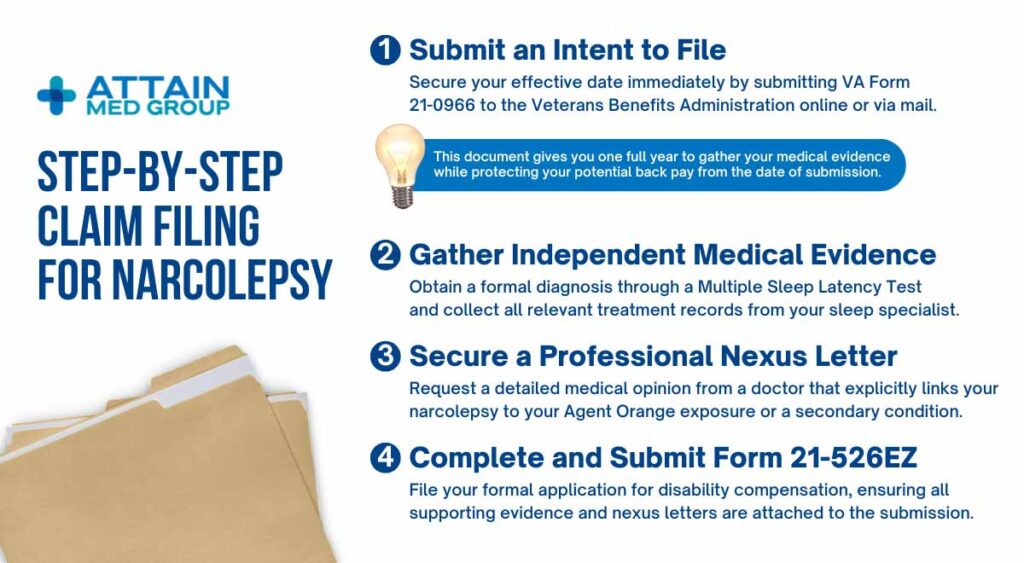
The administrative process of applying for VA disability benefits requires careful attention to procedural rules and specific filing deadlines. You must follow specific procedures to give your case the best possible chance of rapid approval and to avoid common pitfalls that lead to denials. Missing deadlines or submitting incomplete forms will result in frustrating delays and potential claim denials that can take years to resolve through the appeal process. Navigating the Veterans Benefits Administration requires patience and a methodical approach to paperwork. Review our complete guide on VA claim forms for additional guidance on navigating the bureaucratic requirements of the Veterans Benefits Administration.
The Importance of a Strong Nexus Letter for a Narcolepsy and Agent Orange Claim
A nexus letter is often the deciding factor in whether a narcolepsy and Agent Orange claim is approved or denied by the VA. This document must be written by a qualified medical professional who has reviewed your entire medical history and military service records. The letter should provide a clear, evidence-based rationale for why your sleep disorder is related to your time in the military. It is not enough for a doctor to simply state that a connection is possible; they must use specific VA-approved terminology to be effective. The strength of the letter lies in its ability to connect the dots between your exposure and your current clinical presentation.
The most effective nexus letters reference peer-reviewed medical studies that discuss the neurological effects of dioxin and other herbicides used in Vietnam. By citing established science, your doctor provides the VA adjudicator with a roadmap to approval that is difficult to ignore. The letter should also address any other potential causes for your narcolepsy and explain why toxic exposure is the most likely culprit. This level of detail helps to preemptively counter any arguments the VA might make during the Compensation and Pension (C&P) exam process. A comprehensive letter will also discuss the “chronicity” of the condition, showing that it is a long-term issue rather than a temporary ailment.
When requesting a nexus letter, ensure your physician understands the “at least as likely as not” standard required for VA claims. They should also detail how your symptoms impact your daily life and your ability to maintain gainful employment, which influences your final disability rating. A well-crafted letter can bridge the gap between a non-presumptive condition and a successful service connection, providing the legal weight necessary for a favorable decision. Investing the time to find a doctor familiar with veteran-specific health issues is a vital step in this journey. This professional partnership is often the most valuable asset a veteran has when fighting for their benefits.
Handling Appeals, Denials, and Higher-Level Reviews for Your Narcolepsy and Agent Orange Claim
If your initial narcolepsy and Agent Orange claim is denied, it is important to remember that this is a common part of the process for many veterans. The VA denial letter will outline the specific reasons why your claim was not approved, which usually involves a lack of medical evidence or a missing nexus. You have several options for appealing this decision, including filing a Supplemental Claim or requesting a Higher-Level Review (HLR). Each path has its own advantages depending on whether you have new evidence to present or believe the original adjudicator made a legal error. Understanding the nuances of the AMA (Appeals Modernization Act) can help you choose the most efficient route.
A Supplemental Claim is the best route if you have gathered new medical records, a stronger nexus letter, or additional buddy statements from fellow service members. This allows the VA to reconsider your case with the benefit of new information that was not available during the first review. On the other hand, a Higher-Level Review involves a more experienced senior adjudicator looking at the same evidence to see if a mistake was made. This is often faster than other appeal methods but does not allow for the submission of any new evidence or documentation. If both of these options fail, you may choose to take your case to the Board of Veterans’ Appeals (BVA) for a hearing with a judge.
Navigating the appeals process can be lengthy, often taking months or even years to reach a final resolution for complex toxic exposure cases. Persistence is key when dealing with the VA, as many successful claims are only approved after multiple rounds of review and additional evidence gathering. Do not lose hope; the system is designed to be adversarial, but the law is ultimately on the side of the veteran who can prove their case.

Conclusion: Securing Your Future with a Narcolepsy and Agent Orange Claim
Securing VA disability benefits for narcolepsy related to Agent Orange exposure is a challenging but achievable goal for dedicated veterans. By understanding the requirements for direct and secondary service connections, you can build a case that stands up to the VA’s rigorous scrutiny. Remember that the lack of a presumptive status does not mean your condition is not service-connected; it simply means you must work harder to prove the link. With the right medical evidence, a strong nexus letter, and a clear understanding of the filing process, you can obtain the compensation you deserve. The journey may be long, but the result is a lifetime of support and recognition for your sacrifices.
Your service to the country entitles you to comprehensive healthcare and financial support for the injuries and illnesses you sustained while in uniform. Do not let administrative hurdles or initial denials prevent you from seeking the benefits that will improve your quality of life. Continue to advocate for yourself, stay informed about changes in VA policy like the PACT Act, and lean on the support of the veteran community. Your health and well-being are worth the effort of pursuing a narcolepsy and Agent Orange claim to its successful conclusion. By staying persistent and methodical, you can ensure that your voice is heard and your service-connected disabilities are properly acknowledged by the Department of Veterans Affairs.