


How accurate are VA C&P exams. How to identify red flags and how medical evidence can contradict a poor exam is probably a question you ask after a bad rating or a confusing denial letter. Maybe you walked out of your C&P exam thinking, “That doctor barely looked at me.” Or you felt rushed, ignored, or misjudged, then later saw a report that did not sound like your exam at all.
You are not alone in this frustration. Across states like California, Ohio, and every part of the country, veterans share stories just like yours about flawed C&P exams. They also discuss the ripple effect these exams have on VA disability benefits. How accurate are VA C&P exams. How to identify red flags and how medical evidence can contradict a poor exam is not a simple yes or no topic. You can learn how to spot trouble and protect yourself with stronger evidence.

What A VA C&P Exam Really Is (And What It Is Not)
A Compensation and Pension exam is a medical evaluation ordered after you file a VA claim for disability benefits. The C&P exam may be done by a VA doctor or a contract examiner hired by the VA. The goal is simple on paper, but messy in real life.
The examiner is supposed to answer a few big questions for VA raters.
- Do you have a diagnosable condition?
- Is it linked to your military service?
- How severe are your symptoms today?
The exam report goes into your claims file. It is used with your records, lay statements, and any private medical records you submitted. Then a VA rater looks at all of it together to decide service connection and your rating. That is how the claims process is supposed to work.
Are VA C&P Exams Always Fair And Accurate
Short answer, no. Many exams are fair and careful, but enough are flawed that veterans’ advocates talk about it constantly. Stories keep coming in through veterans seeking help and online communities. Here is the hard truth regarding cp exams. These exams are often incredibly short. Some examiners are overbooked and rely on templates instead of your actual words and veteran’s symptoms.
An examiner rushes through the questions to meet a quota. For complex conditions like traumatic brain injury, PTSD, MST, or conditions that flare and fade, one quick visit rarely shows the full story. The report relies on that one snapshot, plus whatever records the examiner happens to see. That leaves plenty of room for mistakes, downplaying, or simple misunderstanding.
Understanding The Disability Benefits Questionnaire
To understand why errors happen, you must look at the tool the examiner uses. This is called the Disability Benefits Questionnaire, or DBQ. It is a form with checkboxes and short answer sections. The VA guidelines require examiners to follow these forms to assess disability ratings. Often, an examiner assess a condition based solely on these checkboxes.
If the examiner checks a box for “mild symptoms” when your reality is severe, your potential rating drops. This checkbox style can overlook the nuance of your daily life. It can fail to capture how a condition ruins your ability to work or socialize. Understanding the benefits questionnaire helps you see why the exam feels so impersonal.

How The VA Is Supposed To Treat Medical Evidence
Here is something many veterans never hear. The VA’s own M21-1 Adjudication Procedures Manual says VA is not allowed to favor a C&P doctor over another qualified provider. There is no preference for a treating doctor, a contract examiner, or an independent medical expert. All competent medical opinions are supposed to be weighed on equal footing.
This matters a lot if your own doctor, a private specialist, or an independent medical examiner has given you a strong report. Your evidence based documents can stand up beside the C&P report. The decision-making process must consider all evidence found in the claims file.
How accurate are VA C&P exams. How to identify red flags and how medical evidence can contradict a poor exam
So how do you actually spot a bad exam in the real world? It starts the moment you walk into the room. It happens long before a rating shows up in the mail.
Red Flags During The C&P Exam Itself
There are warning signs during the exam that tell you accuracy may be at risk. Pay attention to these as they happen. Trust your gut, but also write things down later.
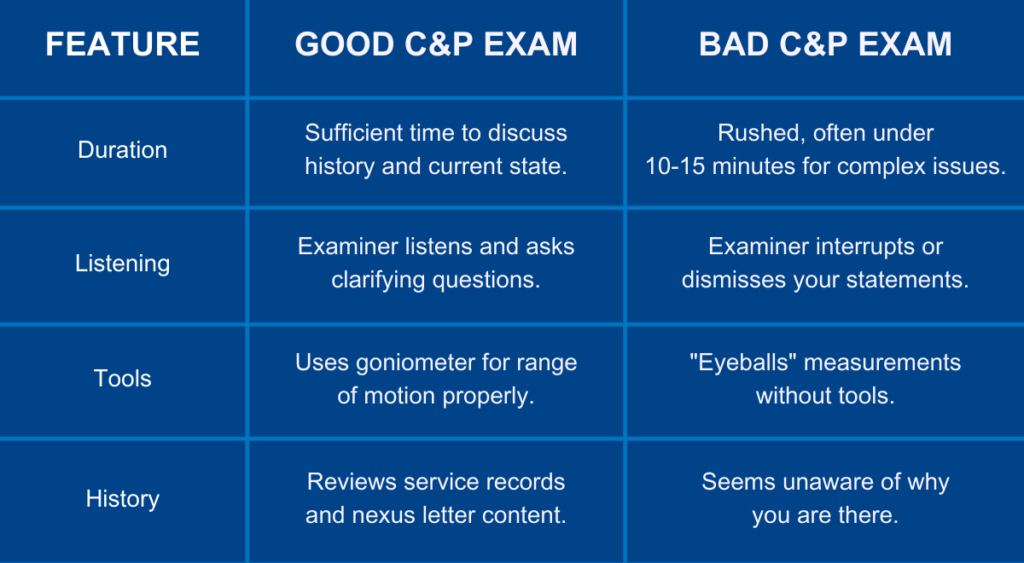
- The exam is extremely short, under ten minutes, yet covers multiple serious issues.
- The examiner never reviews your history with you or asks follow up questions.
- You are interrupted or brushed off when you talk about pain, flashbacks, or limitations.
- The examiner seems focused on your appearance more than your medical facts.
- You feel pressured to say you are “fine today” even though most days are not.
For mental health exams, a red flag might be an examiner who laughs, judges, or blames you. Or who clearly does not understand trauma, MST, or combat stress. If the examiner feels cold or dismissive, take note of it. If you feel worse walking out than walking in, that feeling is usually telling you something real.

Red Flags Inside The C&P Exam Report
The next set of red flags is inside the written report itself. You have the right to see that report. Most veterans never ask for it, and that is a mistake. You can pull the exam from your VA.gov account or your claims file once it posts. Read it slowly. Have a trusted spouse, friend, or advocate read it too.
Common signs of trouble include:
- Facts about your service that are just wrong.
- Symptoms you mentioned are left out or written in a softer way.
- The examiner checks “no” next to major symptoms you absolutely do have.
- Important past diagnoses or surgeries missing from the medical history.
- Copy paste language that sounds generic and not personal to your situation.
Many bad reports share one pattern. They treat you like a statistic instead of a person who served, got hurt, and lives with the fallout every day. Examiner bias can bleed into the language used in these reports.
Comparison of Good vs. Bad Exams
Why C&P Exams Often Miss The Full Picture
It helps to know why so many C&P exams go off track. This is not about you failing the exam. It is often about a system that moves fast and sometimes cuts corners.
Here are a few common reasons accuracy takes a hit.
- Limited time per exam, sometimes thirty minutes or less for complex cases.
- Heavy reliance on checklists and Disability Benefits Questionnaires instead of open questions.
- Missed medical records because your outside care was not uploaded or reviewed.
- Examiner bias about PTSD, MST, pain, or conditions that do not show up on a lab test.
- Lack of experience with conditions like TBI, Gulf War illness, or certain cancers.
Specific environmental hazards like burn pit exposure or Camp Lejeune water contamination require specialized knowledge. If an examiner lacks training on these toxic exposures, they may miss the connection entirely. If you are dealing with prostate cancer and a related exam, accuracy matters even more, both for rating and ongoing care. You can study how VA C&P exams for prostate cancer work and the pitfalls that show up there. The lessons there apply across many conditions.

How Strong Medical Evidence Can Overturn A Bad C&P Exam
The good news is this. A weak or unfair C&P exam does not have the final say. You can hit back with better independent evidence.
1. Use Your Treating Doctor And Nexus Letters
Your regular provider or specialist knows your story over time. They have seen the ups and downs, not just one day in a small exam room. That makes their opinion powerful if it is written well. This document is often called a nexus letter. A nexus letter links your current disability to your service.
Ask them to write a clear medical opinion that covers three things.
- Your diagnoses.
- How each diagnosis ties to your military service, using “at least as likely as not” language.
- How your condition limits your work, daily activities, and social function.
This type of statement can go right beside the C&P exam report. Remember, the M21-1 says there is no built in preference for VA examiners over outside providers. Your doctor’s words count.
2. Independent Medical Opinions (IMO) And Exams
Sometimes your regular doctor will not write a detailed letter or is just too busy. In that case, some veterans choose an independent examiner who focuses on VA disability work. They can review your file, your service records, and your C&P exam report. They then write a point by point independent medical opinion that highlights errors, missed facts, or flawed logic in the C&P exam.
Think of it as a second set of eyes with no contract to the VA. Advocates such as Brian Reese have talked for years about how the right medical opinions can change a case completely. His work through books like VA Claim Secrets and You Deserve It shows a clear pattern. Strong, focused medical evidence wins more often than not.
3. Buddy Statements And Lay Evidence
Do not underestimate the value of your own words. VA calls this “lay evidence.” It includes statements from you, family, friends, or coworkers about how your condition shows up day to day. These statements are often done on VA Form 21-4138. You can write about how often pain wakes you up at night. You can document how many panic attacks you have a week.
Explain why you cannot stand or sit very long. Others can write about what they see you struggle with. Lay evidence will not replace medical proof, but it fills in the gaps between appointments. It helps a rater picture your actual life, not just test scores.
Secondary Conditions And Sleep Apnea
Bad exams are particularly damaging when claiming secondary conditions. A secondary condition is a disability caused or aggravated by a service-connected disability. For example, you might file a claim for sleep apnea secondary to PTSD or weight gain from service-connected knee pain. Examiners often miss the link between these conditions.
They might look at the sleep apnea in isolation and deny it because it was not diagnosed in service. However, if you have a strong nexus letter explaining the physiological link, you can overcome this. The examiner failed to consider the progression of your health. Providing evidence of how one condition fuels the other is vital for these disability claims.

How To Use Your VA.gov Account To Back Up Your Case
Your online tools can support your case in simple ways. After you get a helpful medical opinion, nexus letters, or statement, scan it or save it as a PDF. Then upload it through your VA.gov account to the right claim. That way it becomes part of your official file.
Too many veterans hand things over in person and never check if it landed where it should. Using your online account gives you a record and some control. Always keep your login secure and review the privacy policy of any site you use.
Why VA Claims Navigation Help Can Change The Outcome
You should not have to battle this alone, especially after service and sacrifice. Professional VA claims navigation support can help you organize your evidence and push back on a bad exam. Many veterans have turned poor C&P results into higher ratings with the right strategy. Groups that focus on VA claims navigation often see the same patterns again and again. They know which exam red flags are strongest. They know how to point to M21-1 rules regarding va’s decision-making. They know how to argue that a contract exam is less persuasive than your long term records.
They can also tell you when an appeal makes sense. Sometimes just having a calm guide in your corner changes how you feel about the process. You move from feeling powerless to feeling prepared. That shift matters more than you might think. If you are stuck after a harsh decision or confused exam report, you can also reach out for direct support. You can schedule time at this consultation link.
How Appeals And New Evidence Can Beat A Bad Exam
A flawed C&P exam is frustrating, but it is not the end of the road. You have appeal options. You also have the right to send in more evidence that undercuts the exam findings. On appeal, VA must review the whole record again. This often happens through a supplemental claim or a higher-level review. A higher-level review asks a senior rater to look at the same evidence and spot errors. A supplemental claim allows you to submit new and relevant evidence, like a new independent medical opinion.
That includes your original exam, plus any new medical reports and lay statements. Veterans who stay persistent through this step often see ratings change for the better. This happens because they never learn the appeal path or disability law nuances. Others see hard stories from Vietnam era veterans like those discussed by commenters such as Gerald or Daisy May and decide to keep fighting their own battles rather than give up. Your case can be one of the success stories with the right approach.

Connecting Health Coverage And VA Care Decisions
Another layer that touches some veterans is regular health coverage outside the VA. Your choice of Medicare Advantage plan can affect where and how you see doctors who write opinions for you. This does not change your rating, but it changes the support team around you. Those factors may influence whether you seek care with specialists who understand VA disability claims.
You want providers willing to document your issues clearly. For some veterans, smart planning here means more access to providers ready to support their claim with strong, detailed notes. This is different from social security disability, but having good medical records helps both systems.
Understanding The Numbers
When you fight a bad exam, you are fighting for the correct disability rating. The difference between a 30% and a 50% rating can be significant financially. Using a VA disability calculator can help you estimate what your combined rating should be. Sometimes a bad exam drops a 70% rating down to 30% because they ignored the severity of symptoms.
Do not rely solely on the calculator, but use it to verify the math. Accuracy in the exam leads to accuracy in the final pay.
Practical Step By Step Plan After A Bad C&P Exam
Here is a simple plan you can follow if you think your exam was off.
Break it into steps so it feels more manageable.
- Write down your memory of the exam the same day, noting time, length, what was said, and what was not said.
- Download the exam result and report through your VA.gov account once it posts.
- Compare the report line by line to what really happened and identify where the examiner failed.
- Mark any errors in service dates, symptoms, diagnoses, or daily life impact.
- Ask your treating doctor for a written opinion or nexus letter that addresses those same points.
- Gather lay statements from people who see your symptoms and daily activities often.
- Upload all new evidence to your claim so it is part of the official file.
- Consider appeal options and talk with a claims navigation team if your rating still seems wrong.
None of this is quick. But it moves you from just being upset about a bad exam to actually doing something that can change the outcome.

Why Your Story Matters More Than One Exam
A C&P exam can feel huge at the moment. You sit in a small room, pour out your story, and hope this stranger “gets it.” It can feel like everything rests on that single day. But your case is bigger than that one interaction. It is built on years of service, injury, treatment, and daily struggle. Your ongoing medical records, expert opinions, and personal statements are all part of the picture.
Bad exam reports can slow your claim for VA compensation. They can hurt your access to the VA benefits you earned. But they are also just one piece of a file that you can keep strengthening over time. A veteran diagnosed with a lifelong condition deserves a lifelong rating that reflects it.
Conclusion
How accurate are VA C&P exams. How to identify red flags and how medical evidence can contradict a poor exam really comes down to understanding that the exam is important, but not all powerful. Many exams are rushed, shallow, or flat out wrong. The red flags are often visible if you know what to watch for before, during, and after the appointment.
Your power comes from building a stronger record around that bad exam. That means detailed opinions from doctors who know you, clear lay statements from people in your life, and smart use of your VA.gov account to get every document into your file. You gave your best years in service. You are allowed to push just as hard for the fair rating and steady support you were promised.