

Hypertension—or high blood pressure—is more than just a “common medical issue.” For veterans, it can be deeply tied to the stresses of service, combat, or other service‑connected conditions like PTSD. When properly documented, hypertension may qualify for VA disability compensation.
At Attain Med Group, we understand how critical detailed, expert medical evidence is to securing a strong hypertension claim. Whether you’re seeking to establish direct, secondary, or even presumptive service connection, the right strategy makes all the difference.
This guide walks you through what the VA looks for, how to build your medical evidence, and how to present a compelling case to strengthen your service connection.

1. Understanding VA Disability for Hypertension
- The VA rates hypertension under Diagnostic Code 7101 (Cardiovascular System).
- According to VA guidance, hypertension for rating purposes means:
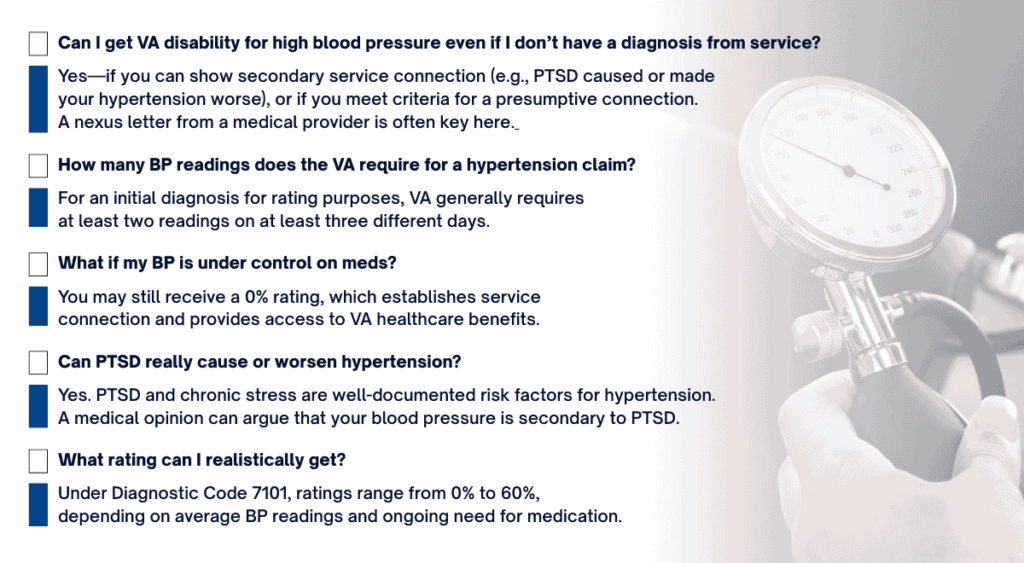
- For an initial diagnosis (for VA rating), VA requires readings taken at least twice on at least three different days.
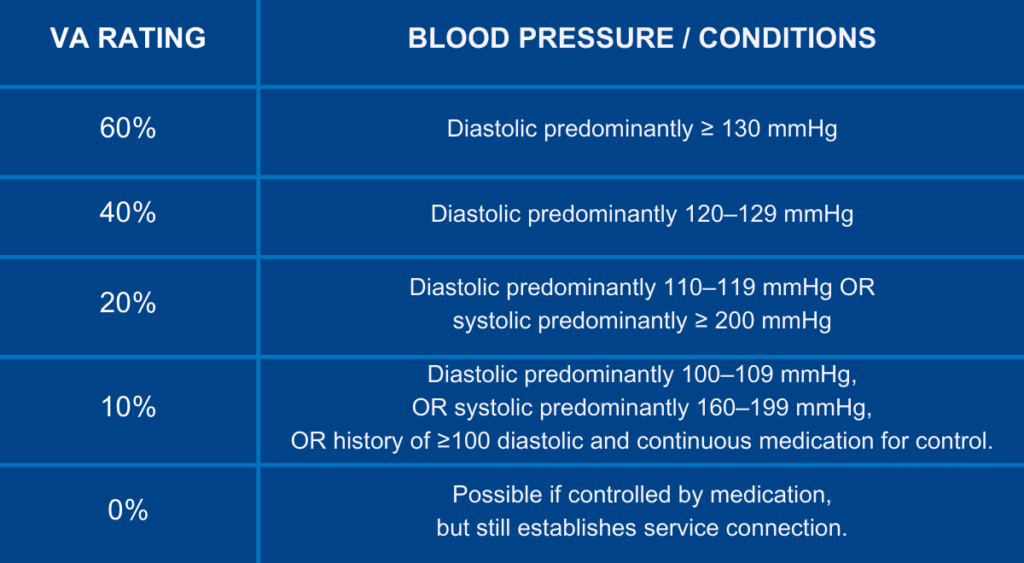
2. VA Rating Criteria for Hypertension
How the VA determines your disability rating depends on consistent blood pressure readings and whether you require ongoing medication. Here are the typical thresholds:
3. Paths to Service Connection for Hypertension
To receive VA disability compensation for high blood pressure, you must show that your hypertension is service-connected. There are three main ways to do that:
a) Direct Service Connection
- Your hypertension began during active duty, or
- Your in-service or immediate post-service medical records show elevated blood pressure.
- You’ll typically need a nexus opinion (medical letter) linking your BP to an in-service event or stressor.
b) Secondary Service Connection
- Hypertension can be secondary to another service-connected condition (i.e., caused or worsened by it).
- Common connections include PTSD, sleep apnea, kidney disease, or other cardiovascular conditions.
- A medical opinion (nexus letter) should explain how and why your hypertension is linked to that primary service-connected disability.
c) Presumptive Service Connection
- Under certain circumstances (e.g., Agent Orange exposure), hypertension may be presumed to be service-connected.
- Also, if hypertension is diagnosed within one year after service, it may qualify under certain regulatory provisions.
4. Why High Blood Pressure Is Often Connected to Stress & PTSD
Understanding why hypertension frequently ties back to service is key both medically and legally:
- Chronic stress during service, combat exposure, disrupted sleep, and extreme physical exertion can contribute to long-term cardiovascular damage.
- PTSD and other mental health conditions are strongly linked to hypertension: studies and legal analyses recognize that PTSD can cause or aggravate high blood pressure.
- Because of this, many hypertension claims rest on the secondary service connection pathway — showing how stress-related or mental health service-connected conditions have contributed to or worsened high BP.

5. Building a Strong Medical Evidence Package
To strengthen your hypertension claim, you’ll need a well-organized and medically sound evidence package. Here’s how:
A. Gather Blood Pressure Records
- Service Treatment Records (STRs)
Search for any BP readings during service. Even “pre-hypertension” readings can help. - Post‑service / civilian medical records
Collect your blood pressure readings over time, especially those taken on different occasions. - Log new measurements
Ask your current doctor (VA or civilian) to take multiple readings over different days to build a pattern. Remember VA wants at least 2 readings in 3 days for a diagnosis.
B. Use the VA Hypertension DBQ
- Your provider should complete the VA Disability Benefits Questionnaire (DBQ) for Hypertension.
- The DBQ asks for:
- Diagnosis (yes/no) using VA criteria
- Blood pressure history
- Medication usage and response
- Functional impact or complications (if any)
C. Obtain a Medical Nexus Opinion
An expert doctor can write a medical opinion tying your hypertension to service (directly or secondarily). A strong nexus letter:
- Reviews your service records, BP readings, and your medical history
- Explains why your hypertension is “at least as likely as not” related to service or another service-connected condition
- References relevant medical literature or accepted mechanisms (e.g., stress, PTSD, etc.)
D. Lay & Buddy Statements
- Provide a personal statement: describe how high blood pressure affects your daily life, symptoms (e.g., headaches, heart racing), and how it started.
- Ask friends, family, or fellow service members for buddy statements: they can corroborate onset, observed symptoms, and impact on your life.
E. Document Secondary Effects or Complications
- If you have related health issues (e.g., kidney problems, heart disease, stroke risk), make sure those are documented.
- A nexus opinion can also support secondary service connection to these conditions.
6. Common Challenges & How to Address Them
- Fluctuating blood pressure
BP varies day to day. Multiple readings over time (via DBQ or clinic visits) help establish a reliable pattern. - Controlled BP under medication
Even if meds keep your BP low, VA may still rate you. A 0% rating may be assigned, but service connection is still valuable. - Lack of in-service documentation
If your service records don’t show high BP, rely on secondary connection (e.g., PTSD) + a strong medical opinion + current evidence. - Appeals or increase requests
If denied or rated too low, you can use a new nexus letter, updated DBQ, or more recent BP readings to strengthen an appeal.
8. Why Working With Attain Med Group Makes a Difference
Navigating a hypertension claim isn’t just about putting together blood pressure numbers—it’s about building a medical narrative that links your high blood pressure to your service in a way the VA understands and respects.
Here’s how Attain Med Group helps:
- Veteran‑Owned, Veteran‑Centered Experience
We know how service stress, PTSD, or combat injuries can contribute to hypertension—and we approach your case with empathy and precision. - Expert Medical Providers
Our network includes qualified physicians who understand VA disability standards, and who can provide strong nexus letters and DBQ support. - Comprehensive Record Review
We analyze your service treatment records, BP logs, and medical history to identify gaps and build a compelling case. - Strategic Evidence Planning
We help you organize BP records, buddy statements, DBQ responses, and medical opinions into a cohesive, persuasive package. - Appeal Support
If your claim was denied or given a low rating, we can identify what’s missing and recommend the right next step — whether that’s a stronger medical opinion, updated evidence, or a DBQ re‑submission.

Conclusion
High blood pressure is more than just a “health issue” — for many veterans, it’s a service-connected condition with real impact. With the right documentation, expert medical opinions, and strategic planning, you can strengthen your hypertension claim and secure VA disability benefits that reflect your reality.
If you’re ready to build a strong case, Attain Med Group is here to help. Contact us today to:
- Schedule a free consultation
- Start gathering your BP records and medical evidencea
- Get support preparing your DBQ or obtaining a nexus letter