

Many veterans struggle with chronic, widespread pain, fatigue, “fibro fog,” and other symptoms—but when it comes to VA disability claims, fibromyalgia can be harder to prove. Unlike some conditions that show up on blood work or imaging, fibromyalgia is primarily a clinical diagnosis. That means even without lab tests, the right medical evidence can make all the difference.
At Attain Med Group, we specialize in helping veterans translate their lived experience into legally and medically sound documentation: nexus letters, medical record reviews, DBQs, and more. In this guide, we’ll explain what the VA looks for, how to collect strong evidence, and how expert medical opinions can help you build a compelling fibromyalgia claim.

1. What Is Fibromyalgia — and Why No Lab Test Is Needed
Clinical Diagnosis, Not Lab Diagnosis
- Fibromyalgia does not have a definitive blood test or imaging study to confirm it.
- Instead, diagnosis is based on a combination of symptoms: widespread musculoskeletal pain, fatigue, sleep disturbance, cognitive issues (“fibro fog”), stiffness, tender points (or their modern equivalents).
- According to VA guidance, tender points are part of the exam, but symptoms like fatigue, paresthesia (tingling), headaches, or irritable bowel syndrome may also support a diagnosis.
Relevant Clinical Criteria
- The VA Fibromyalgia Examination form (used at C&P exams) requires widespread pain (pain on both left/right sides of the body, above and below the waist, and including the spine/extremities), plus additional symptoms like fatigue or mood issues.
- There’s a Disability Benefits Questionnaire (DBQ) for fibromyalgia that providers complete to assess your diagnosis, history, severity, and functional impact.
- Because fibromyalgia is a “diagnosis of exclusion,” clinicians will often rule out other conditions with overlapping symptoms.
Why Labs Aren’t Always Helpful
- According to VA and pain-management guidance, basic labs may be “normal” even when a veteran has clear fibromyalgia symptoms.
- The Whole Health System Approach used by VA clinicians cites that for nociplastic pain (which includes fibromyalgia), lab testing is not routinely recommended.

2. VA Disability: Requirements to Establish Service Connection
To get VA disability for fibromyalgia, you generally need to satisfy three elements:
- Current Diagnosis
- A formal fibromyalgia diagnosis by a qualified provider (e.g., primary care doctor, rheumatologist) documented in your medical records.
- Use of the DBQ (Disability Benefits Questionnaire) helps the VA see the diagnosis in terms they need.
- In-Service Event, Injury, or Illness
- You must show how your fibromyalgia relates to your military service: an in-service injury, infection, repeated stress, or other event.
- For Gulf War veterans, fibromyalgia is presumptive under certain conditions: if symptoms manifested during or soon after service in Southwest Asia, the VA may presume service connection.
- Medical Nexus (Link)
- A nexus letter or opinion from a medical professional stating it is “at least as likely as not” that your fibromyalgia is connected to your service (or another service-connected condition).
- The provider should review your service records, medical history, and symptom timeline and provide a reasoned medical explanation.
3. How the VA Rates Fibromyalgia
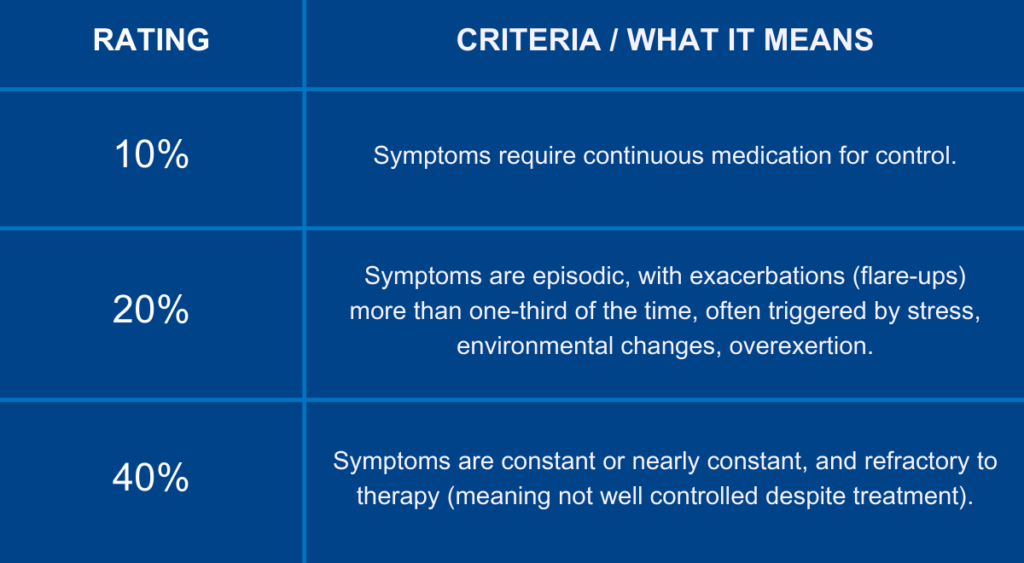
The VA uses Diagnostic Code 5025 (under 38 CFR § 4.71a) for fibromyalgia.Here’s how the rating generally works:
4. Building a Strong Medical Evidence Package for Fibromyalgia
Because fibromyalgia doesn’t rely on lab tests, you need to be diligent in collecting clinical, subjective, and functional evidence. Here’s how to build your case.
A. Medical Documentation & Provider Support
- Obtain your diagnosis: Make sure a qualified doctor has formally diagnosed fibromyalgia and documented the criteria used (e.g., widespread pain, symptom severity).
- Use the VA DBQ: Ask your provider to complete the Fibromyalgia Disability Benefits Questionnaire so VA sees your diagnosis, history, and symptom impact in their standard format.
- Nexus Letter: Work with a physician (or a specialist) who can review your service and medical history and write a well-reasoned opinion that links your fibromyalgia to service or to other service-connected conditions. Use proper VA medical probability language (“at least as likely as not”).
- Exclude other causes: Document how other possible causes (e.g., rheumatoid conditions, neurological conditions) have been evaluated and ruled out.
B. Lay Evidence & Symptom Journals
- Personal statement: Use VA Form 21-4138 (“Statement in Support of Claim”) to describe how fibromyalgia affects your daily life — pain, fatigue, sleep, cognitive issues.
- Buddy statements: Family, fellow service members, or friends who have observed your symptoms can write statements confirming how fibromyalgia affects your functioning (work, social, physical limitations).
- Symptom journal: Record day-to-day symptoms — pain, where it hurts, how widespread, how often, what triggers or relieves, how long flare-ups last, and how they impair your daily life.
C. C&P Exam Preparation
- Prepare for your VA Compensation & Pension (C&P) exam: Bring your journal, buddy statements, and previous medical records. Be ready to describe onset, duration, and severity of pain, fatigue, and associated symptoms.
- Tender point evaluation / WPI & SSS: During the exam, the examiner may assess tender points or use ACR criteria like the Widespread Pain Index (WPI) and Symptom Severity (SS) scale.
- Functional impact: Clearly articulate how fibromyalgia limits your daily function — physical activities, work, social, personal care — and how symptom severity fluctuates.

5. Special Considerations for Veterans
Presumptive Service Connection (Gulf War)
- For veterans who served in the Southwest Asia theater, fibromyalgia may be presumptively service-connected, meaning you don’t always need a nexus letter to link it to service.
- However, to qualify for the presumptive connection, your fibromyalgia must be at least 10% disabling.
Secondary Service Connection
- Fibromyalgia can also develop secondary to another service-connected condition, such as PTSD, migraine, or sleep disorders.
- In those cases, a medical opinion should explain how your primary service‑connected disability caused or aggravated fibromyalgia.
Addressing Denials
- If your claim has been denied, a thoughtful appeal may include: a stronger nexus letter, more lay evidence, more detail in your DBQ, or even new buddy statements.
- Consult with medical professionals experienced in VA claims to strengthen your medical evidence package.
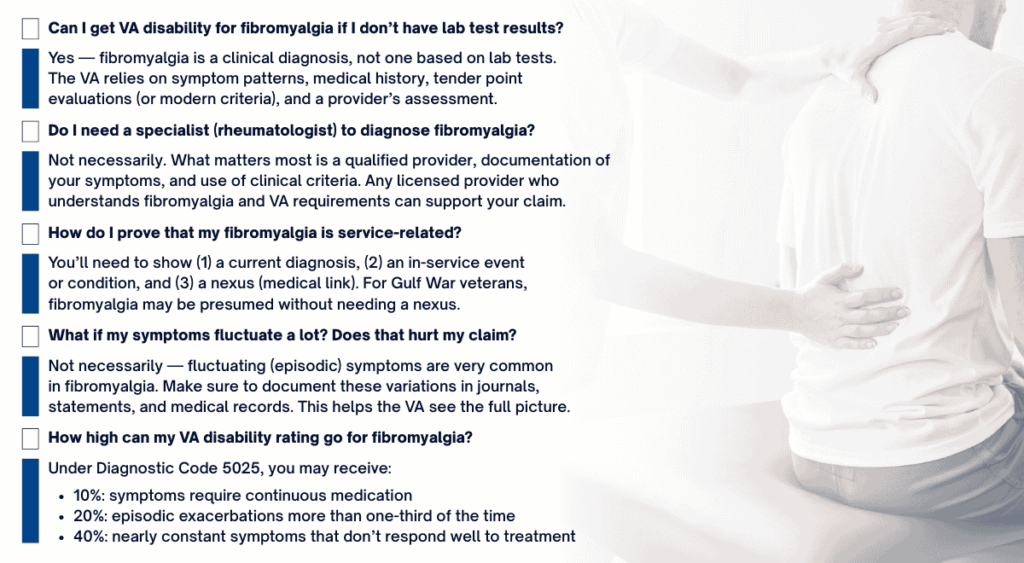
6. Frequently Asked Questions (FAQs)
7. Why Expert Medical Opinions Matter — and How Attain Med Group Helps
Getting the right medical opinion is often the turning point in a fibromyalgia VA claim. Here’s how Attain Med Group can support you:
- Veteran-Centered Expertise
- As a veteran-owned company, we deeply understand both the medical and VA system sides.
- As a veteran-owned company, we deeply understand both the medical and VA system sides.
- Qualified Providers Who Understand VA Standards
- We work with physicians who are experienced writing nexus letters and using VA‑friendly clinical reasoning.
- We work with physicians who are experienced writing nexus letters and using VA‑friendly clinical reasoning.
- Clinical Documentation Support
- We guide you on how to complete your DBQ accurately, with your provider.
- We guide you on how to complete your DBQ accurately, with your provider.
- Strategic Evidence Planning
- We help you organize your service records, treatment history, symptom journal, lay statements, and more, building a cohesive narrative.
- We help you organize your service records, treatment history, symptom journal, lay statements, and more, building a cohesive narrative.
- Appeal Assistance
- If your claim was denied, we help identify gaps (e.g., missing nexus, insufficient evidence), recommend remedy strategies, and support you in preparing for appeals.
- If your claim was denied, we help identify gaps (e.g., missing nexus, insufficient evidence), recommend remedy strategies, and support you in preparing for appeals.
Conclusion & Call to Action
Fibromyalgia may not show up on lab tests, but that doesn’t mean it’s invisible — especially not to the VA. With the right documentation, clinical diagnosis, and expert medical opinion, you can build a strong case for service connection and a fair rating.
At Attain Med Group, we’re committed to helping veterans like you translate your experience into compelling, evidence-based claims. Contact us today to schedule a consultation, get help with a DBQ or nexus letter, and build the medical evidence package you need to win.
→ Book Your Free Case Review
→ Download Our Fibromyalgia Claims Checklist