


Joint pain is one of the most common conditions veterans face, often stemming from years of physically demanding service. Many assume that X-rays or other imaging are required to prove a VA disability claim—but this isn’t true. X-rays aren’t required to prove chronic joint pain. Learn how medical documentation, symptoms, and expert opinions can establish service connection.

At Attain Med Group, we help veterans bridge the gap between their health history and VA claims. By leveraging independent medical evaluations, nexus letters, and thorough documentation, even veterans without imaging can build strong, evidence-backed claims.
1. Understanding VA Claims for Joint Pain
What Constitutes a Joint Disability? The VA recognizes joint conditions under 38 CFR §4.71a, including:
- Arthritis (osteoarthritis, rheumatoid arthritis)
- Bursitis, tendinitis, or other soft tissue injuries
- Chronic joint pain or limited range of motion
Joint pain may not always show up on X-rays, especially in early-stage osteoarthritis, soft tissue injuries, or chronic pain syndromes. This is why medical evidence beyond imaging is critical.
How the VA Evaluates Joint Pain
When evaluating joint pain, the VA doesn’t rely solely on imaging. Instead, they consider a combination of factors that demonstrate the impact of the condition on your daily life and function. Understanding these criteria is critical to building a strong claim—even if X-rays or MRIs are normal.
1. Range of Motion
The VA measures how far your joint can move compared to normal limits, using degrees of motion as a key determinant for disability ratings.
- Examiners will test both active range of motion (how far you can move the joint yourself) and passive range of motion (how far a doctor can move the joint for you).
- Even minor reductions in range of motion can affect your rating if they impair function.
- Importantly, the VA considers painful motion: if movement is limited because of pain—even if imaging looks normal—that limitation is taken seriously under VA rules.
2. Functional Loss
The VA evaluates how joint pain affects your ability to perform everyday tasks, work, or maintain an active lifestyle. Functional loss can include:
- Difficulty lifting objects, walking, climbing stairs, or reaching overhead
- Limitations in household tasks, such as cooking, cleaning, or dressing
Pain-induced weakness or instability, increasing risk of falls or injury
Even if your joint appears structurally intact on imaging, loss of function due to pain, stiffness, or fatigue is a legitimate basis for VA disability.
3. Frequency of Episodes
Some joint conditions flare intermittently rather than remaining constant. The VA considers:
- How often your joints swell, lock, or “give out”
- The severity of flare-ups, including pain levels and functional limitations
- Episodes that temporarily incapacitate you or prevent you from performing work duties
Chronic joint pain doesn’t need to be constant to qualify—the VA recognizes that intermittent flare-ups can significantly impact quality of life and justify higher ratings.
4. Objective Findings
While imaging like X-rays or MRIs can support a claim, they are not required to establish service connection. The VA also considers:
- Clinical exam findings, including tenderness, swelling, deformity, or abnormal gait
- Medical history, such as service treatment records noting in-service injuries or recurrent pain
- Symptom documentation, including diaries or reports of pain, stiffness, and functional limitations
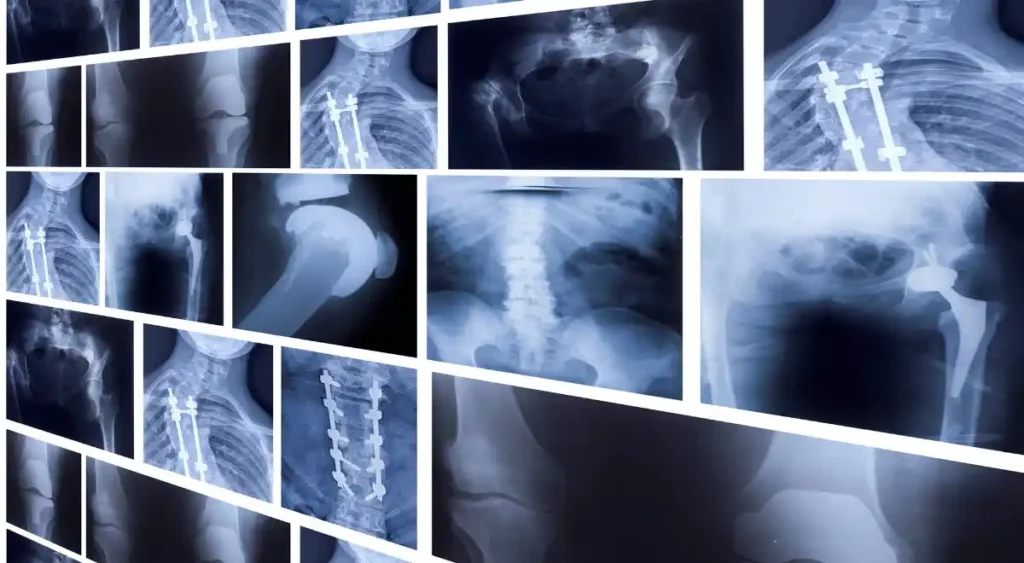
A comprehensive evaluation often combines these objective findings with independent medical opinions or nexus letters, especially when imaging is normal or inconclusive.
In short, the VA’s approach is holistic: it prioritizes how the joint pain affects you functionally, not just how it appears on an X-ray. For veterans, this means you can successfully prove service connection even when imaging doesn’t show obvious damage.
2. Why Imaging Is Not Required
Many veterans worry that their claim will fail without X-rays or MRIs. The VA acknowledges that pain itself is a disabling symptom:
- Pain and limited range of motion documented by a physician or independent examiner can establish a disability. (legalclarity.org)
VA C&P examiners can measure functional loss during flare-ups, even without imaging. - The “painful motion doctrine” allows VA to rate a joint based on reported pain that limits function. (vet.law)
3. Key Evidence to Build Your Claim
Even without imaging, you can create a strong VA claim using the following evidence:
A. Medical Records
- Primary care and specialist visits noting joint pain, swelling, stiffness, or tenderness.
- Arthritis or orthopedic evaluations, even if no X-rays were ordered.
- Medication history, showing chronic pain management (NSAIDs, joint injections, physical therapy).
B. Symptom Documentation
- Keep a joint pain diary: record the severity, frequency, triggers, and limitations on daily life.
Include flare-ups and functional loss: VA often considers whether joint pain limits your ability to work, exercise, or perform routine tasks.
C. Lay Statements
- Buddy statements from fellow service members or family can confirm how pain affects your daily activities.
- These statements are especially helpful if service treatment records are limited.
D. Nexus Letters
A nexus letter is often the most decisive piece of evidence:
- Written by an independent medical provider familiar with VA claims.
- Explains how your joint pain is connected to military service (“as likely as not”).
- Supports your claim even if imaging is negative.
At Attain Med Group, our veteran-friendly providers craft VA‑compliant nexus letters that clearly link your joint pain to in-service events or injuries.
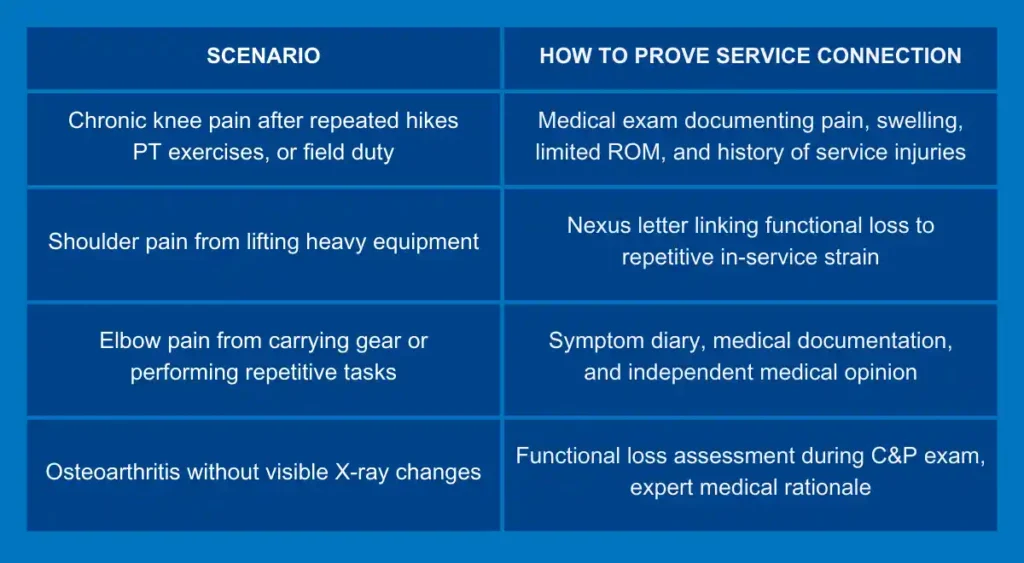
4. Common Scenarios Where Claims Succeed Without Imaging
5. Strategies to Maximize Your VA Claim for Joint Pain
Winning a VA claim for joint pain—especially without imaging—requires careful preparation and a strategic approach. Below are proven steps to strengthen your case and increase your chances of a successful outcome.
1. Schedule an Independent Medical Exam (IME)
- Why it matters: While VA C&P exams are standard, an IME provides an objective, detailed medical assessment that can uncover issues a standard exam might miss.
- What it includes: Specialists can identify soft tissue injuries, cartilage deterioration, early-stage arthritis, or other degenerative changes that might not show up on X-rays or MRIs.
- Benefit: An IME strengthens your claim by offering expert medical opinions, documenting pain, functional limitations, and the connection to military service.
- Pro tip: Choose a physician familiar with VA claims and comfortable writing nexus letters linking your joint pain to your service history.
2. Document Functional Loss
- Why it matters: The VA evaluates disability not just by structural damage, but by how pain affects your daily life.
- How to do it: Maintain a detailed pain and activity diary including:
- Difficulty performing work duties or lifting objects
- Limitations in hobbies, sports, or exercise routines
- Household challenges, like cooking, cleaning, or carrying groceries
- Example: “I cannot kneel for more than five minutes without sharp knee pain that prevents me from gardening or helping my children with activities.”
Benefit: Provides concrete evidence for the VA that your joint pain limits function and quality of life, even in the absence of imaging.
3. Leverage Medical Nexus Letters
- Definition: A nexus letter is a medical document stating, “to a reasonable degree of medical certainty,” that your joint pain is related to your military service.
- Why it’s powerful:
- Bridges gaps when service records or imaging are limited
- Provides a professional explanation of the mechanism of injury or deterioration
- Helps the VA connect symptoms, medical history, and functional limitations to service events
- Pro tip: Ensure the nexus letter references peer-reviewed studies or accepted medical reasoning, especially when imaging does not show damage.

4. Include Lay Statements
- What they are: Statements from family, friends, coworkers, or fellow service members describing how joint pain affects you.
- Why they matter: Lay statements can corroborate medical evidence, particularly when service records or imaging are limited.
- What to include:
- Observations of flare-ups, swelling, or stiffness
- Impact on your ability to work or complete daily tasks
- Changes over time, showing progression of the condition
- Example: “I’ve seen my brother struggle to climb stairs or lift groceries because of his knee pain, which has worsened over the years.”
5. Prepare for the C&P Exam
- Why it matters: The Compensation & Pension (C&P) exam is a key part of the VA evaluation process. How you present your symptoms can significantly impact your rating.
- How to prepare:
- Demonstrate painful motion consistently during the exam
- Describe functional limitations clearly and honestly
- Bring your pain diary, lay statements, and any prior medical evaluations or nexus letters
- Pro tip: Don’t minimize your symptoms—document flare-ups, frequency, and impact on daily life. The examiner’s assessment heavily influences the VA’s decision.
6. Additional Tips to Strengthen Your Claim
- Submit thorough service and medical records: Ensure all in-service injuries, treatments, and follow-ups are included.
- Highlight early symptoms: Even mild pain or stiffness noted in service records can establish a continuity of symptom history, which is critical for secondary or delayed-onset claims.
- Consider multiple claims if applicable: If pain affects more than one joint, each may be rated separately based on function and range of motion.
Combining these strategies—medical evaluations, documented functional loss, nexus letters, lay statements, and thorough C&P exam preparation—creates a robust claim package that maximizes your chance of VA approval, even without X-ray evidence.
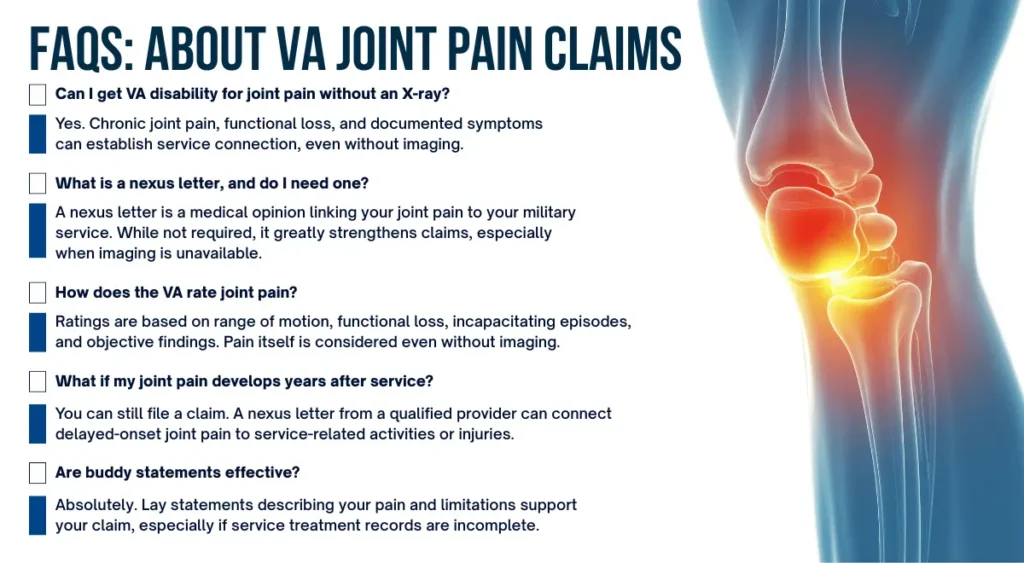
7. Veteran Success Story
- Case Study: Veteran A experienced chronic shoulder pain after military service. Initial claim was denied due to lack of X-rays. Attain Med Group coordinated an independent medical evaluation and nexus letter documenting functional loss and connection to repetitive lifting during service. The claim was approved at 30%, without imaging.
- Case Study: Veteran B had knee pain from multiple marches and training exercises. With a detailed symptom diary, buddy statements, and a DBQ, the VA granted service connection despite normal X-ray results.
8. Take Action: Strengthen Your Joint Pain Claim Today
At Attain Med Group, we help veterans:
- Review service records and medical history.
- Schedule independent medical evaluations with VA-compliant providers.
- Prepare nexus letters linking joint pain to service.
- Complete DBQs and documentation for the strongest VA claim possible.
Don’t let the lack of X-rays stop you from getting the benefits you deserve. Contact us today to schedule a consultation and take the first step toward securing VA disability for your joint pain.
Conclusion
Joint pain claims don’t have to fail just because imaging is absent. With the right combination of medical evidence, symptom documentation, nexus letters, and functional loss records, veterans can successfully prove service connection. Attain Med Group is here to guide you every step of the way—so you can focus on recovery, not paperwork.